Stock Code: 831045
Industrial Automation & Intelligence Solutions
SUMMERY: When you fabricate steel structures for bridges, high‑rise buildings, or industrial plants, the margin for error is zero. A single defective weld can compromise an entire frame. That is why more fabricators are turning to an arc welding ...
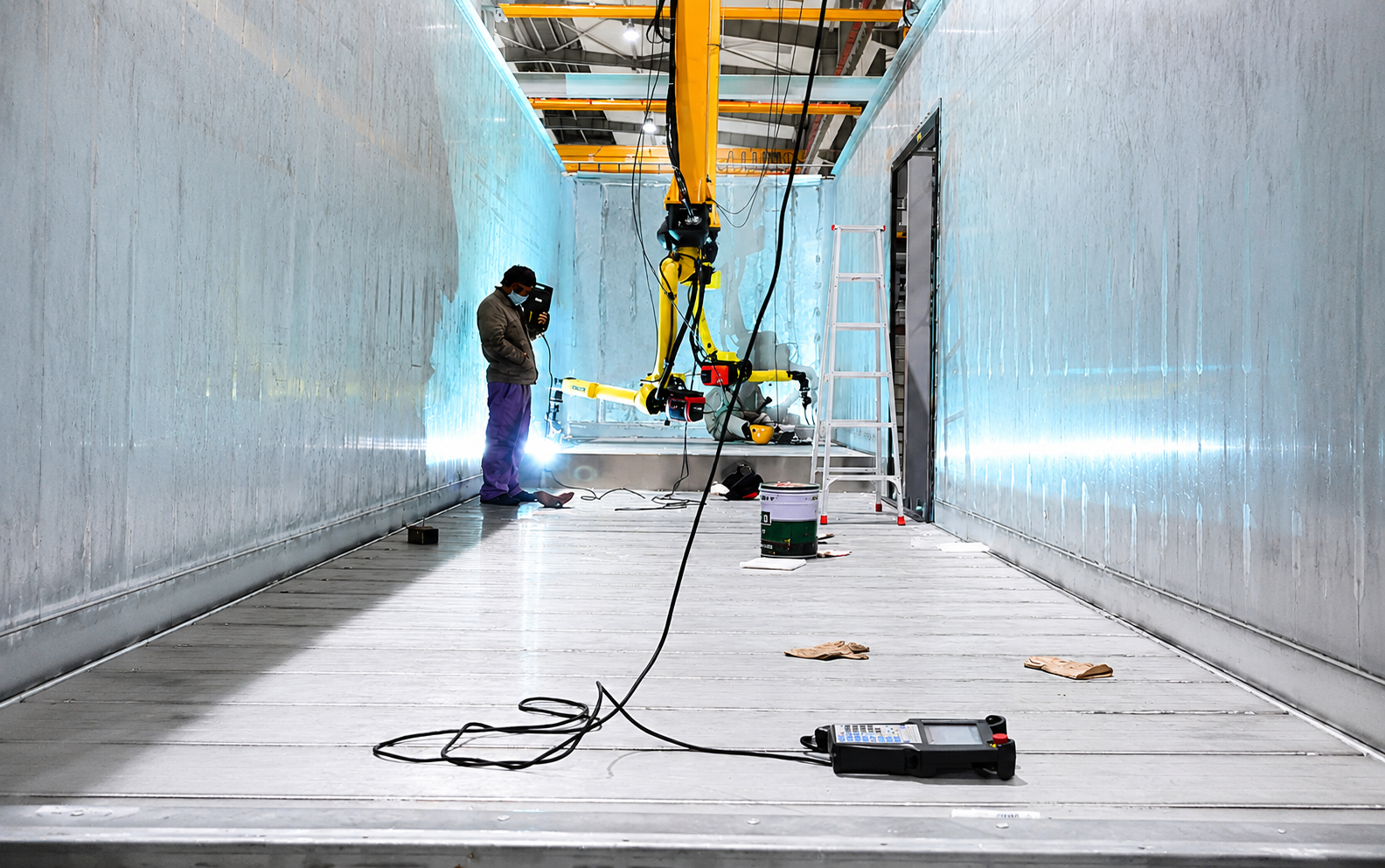
When you fabricate steel structures for bridges, high‑rise buildings, or industrial plants, the margin for error is zero. A single defective weld can compromise an entire frame. That is why more fabricators are turning to an arc welding robot for critical joints. But deploying an arc welding robot in a steel structure manufacturing environment is not the same as putting one in a automotive line. The material is thicker. The parts are larger. The codes are stricter.
This article explains how structural steel robotic welding actually works on the shop floor, where a spot welding robot fits into the picture, and why spot welding automation still has a role even in heavy fabrication.
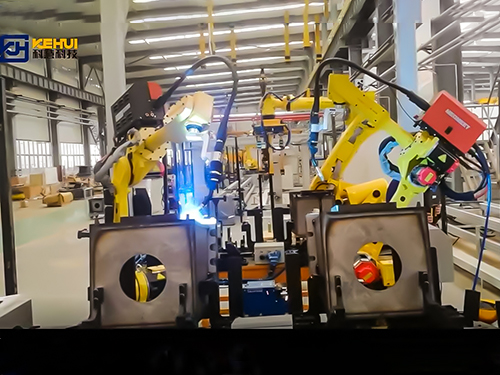
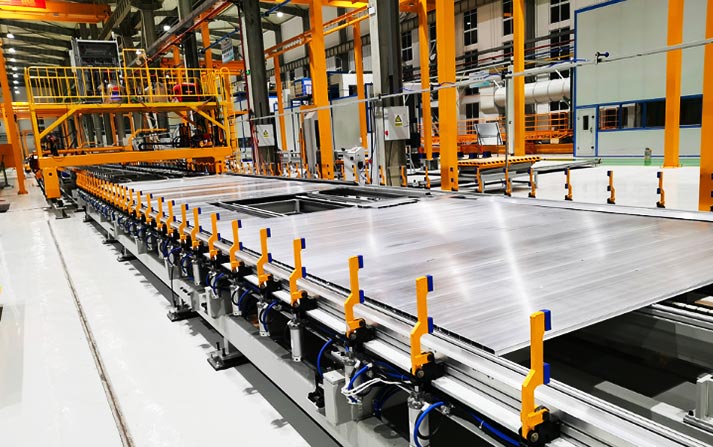
A typical beam for a commercial building might have a flange thickness of 20mm. A column for an industrial facility could be 50mm or more. Welding these requires high heat input, precise wire feed control, and multi‑pass techniques. An arc welding robot handles this by using a combination of weave patterns, interpass temperature monitoring, and real‑time seam tracking.
Unlike a spot welding robot, which pinches two sheets together and discharges a burst of current, the arc welding robot lays down continuous filler metal. The difference in process is fundamental. Spot welding automation works beautifully for lap joints on thin steel (think car doors). But for butt joints on 30mm plate, you need an arc.
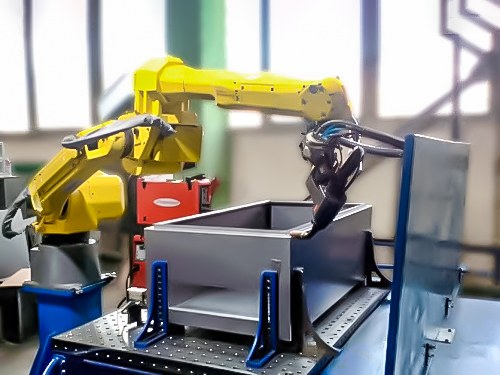
Even in a heavy steel structure manufacturing shop, spot welding automation has applications. Before a main seam is arc welded, components often need tacking. A spot welding robot can position tacks quickly and consistently, holding flanges to webs while the part moves to the arc welding station. Some fabricators also use a spot welding robot for attaching shear connectors or lifting lugs—small components that do not require full‑penetration welds.
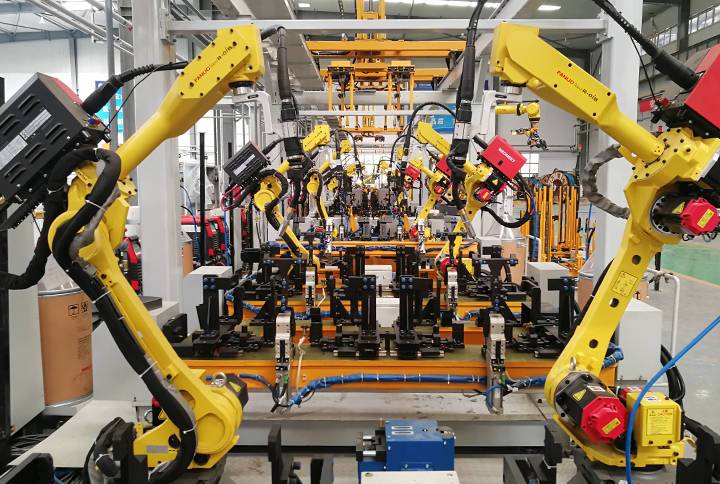
So the modern structural steel robotic welding line is often hybrid: a spot welding robot for tacking and light joining, and an arc welding robot for the primary structural seams. Both are integrated into a single production flow.
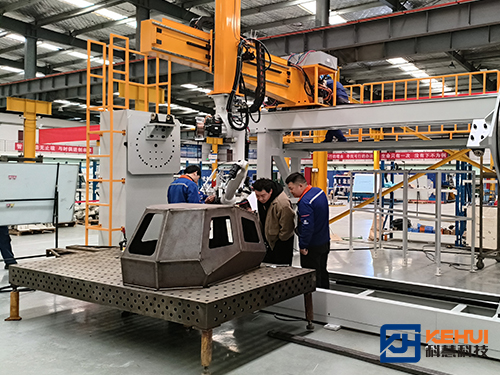
Structural steel robotic welding presents challenges that general automation does not face:
– Part straightness: Rolled beams are never perfectly straight. An arc welding robot must use through‑arc sensing or laser vision to follow the actual joint line.
– Tolerance stack‑ups: Flange widths vary from beam to beam. The robot’s program must adapt, not just repeat.
– Joint access: Deep web‑to‑flange fillets require long stickout and special torch angles. An arc welding robot with a slim neck and extended reach is often necessary.
– Preheat and pass sequencing: The controller must manage interpass temperature. If the part cools too much, the robot pauses and reheats.
These are not problems that a general integrator understands. They require experience specifically in steel structure manufacturing.
| Feature | Arc Welding Robot | Spot Welding Robot |
| Joint types | Butt, fillet, groove, lap | Lap only |
| Material thickness | 2mm to 100mm+ | 0.5mm to 4mm |
| Penetration | Full (with preparation) | Shallow (surface fusion) |
| Duty cycle | 100% (with cooling) | Typically 5-10% |
| Weld inspection | UT, MT, RT | Peel test, chisel test |
This table explains why structural steel robotic welding relies on the arc welding robot as the primary tool, while spot welding automation serves secondary roles.
A bridge fabricator producing box girders needed to increase throughput without adding welders. They installed two arc welding robot cells with integrated positioners. Each cell welds the internal stiffeners and the external longitudinal seams. A separate spot welding robot station applies tacks to hold stiffeners in place before the girders enter the arc cells.
By combining spot welding automation for tacking with arc welding robot for the main seams, the fabricator reduced fit‑up time by 40% and increased overall weld output by 65%. Weld rework fell by more than half because the robots produced consistent root penetration on every pass.
We have been delivering structural steel robotic welding solutions since 1994. That is three decades of welding heavy plate, wide flange beams, box columns, and custom fabrications.
Our arc welding robot systems are installed in over fifty countries. We hold CE certification and all necessary export documentation. Our engineers travel to your facility for installation, commissioning, and training. We do not disappear after sign‑off.
We also offer spot welding automation cells and spot welding robot stations for tacking and secondary joining, fully integrated with your main arc welding line.
Our pricing is competitive. Our lead times are short. We maintain inventory and know our supply chain because we have done this thousands of times.
If you are fabricating steel structures and want to scale production without sacrificing quality, an arc welding robot is the answer. And when you need supporting spot welding automation, we deliver that too.
Send us your typical beam sizes, material grades, and production volumes. We will propose a structural steel robotic welding solution that fits your shop floor and your budget.
 TAG:
TAG: We value your message!
Please fill the below, We will customized the solution to your needs.