Stock Code: 831045
Industrial Automation & Intelligence Solutions
SUMMERY: You’d think the question “what type of gas for TIG welding” would have a simple answer. Argon. Done. But when you move to automated processes – specifically orbital tig welding – the gas question gets more complicated. We’ve seen shop...
You’d think the question “what type of gas for TIG welding” would have a simple answer. Argon. Done.
But when you move to automated processes – specifically orbital tig welding – the gas question gets more complicated. We’ve seen shops ruin weeks of work because they assumed the same gas setup that worked for manual welding would work for their orbital tig welding machine. It didn’t.
We’ve been building automatic tig pipe welding machine systems since 1994. We’ve shipped to over fifty countries. And we’ve watched the same gas-related mistakes destroy orbital tig welding results over and over again.
Here are the most common gas mistakes we see with orbital tig welding machine setups – and how to avoid them.
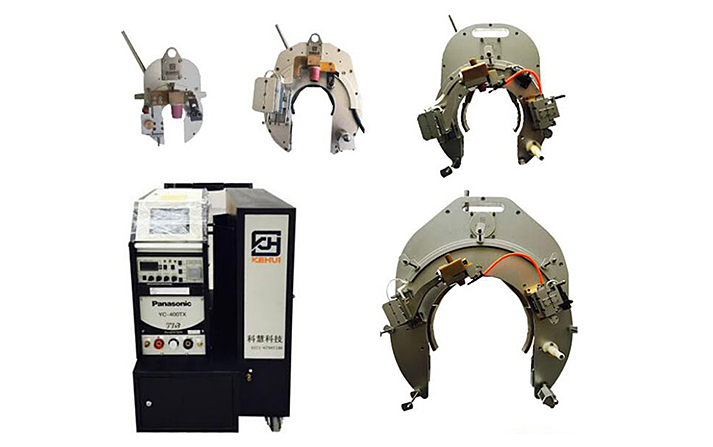
The most frequent error we encounter is treating gas flow as a “set it and forget it” parameter on an automatic tig pipe welding machine.
Here’s what happens. A shop qualifies orbital tig welding procedures on 2-inch pipe with flow at 15 CFH. The welds look great. Then they run the same orbital tig welding machine on 8-inch pipe with the same 15 CFH. Suddenly they see porosity and oxidation.
The gas isn’t reaching the entire weld zone on the larger diameter. The orbital tig welding head travels a much longer distance. The same flow rate that works for 2 inches is inadequate for 8 inches.
For orbital tig welding on larger diameters, you need higher flow. As a rule of thumb on an automatic tig pipe welding machine with an open head:
– Up to 4 inches: 15-20 CFH
– 4 to 8 inches: 20-30 CFH
– Above 8 inches: 30-40 CFH
Your orbital tig welding machine doesn’t know the pipe size. You have to adjust the gas manually. And requalify your orbital tig welding procedures for each diameter range.
Here’s a scenario we’ve seen countless times with orbital tig welding machine users.
A shop qualifies orbital tig welding procedures on a calm day. The automatic tig pipe welding machine produces perfect welds. Then they run production near an open bay door, or under an HVAC vent, or next to a fan. Suddenly, welds that were perfect are now full of porosity.
The orbital tig welding head is exposing the weld zone to moving air. Even a light draft can disrupt gas coverage on an open-head orbital tig welding machine.
The fix isn’t complicated. Use wind screens. Close bay doors. Move the automatic tig pipe welding machine away from vents. Or switch to a closed-head orbital tig welding system (like our KHGC) that seals the weld zone completely.
But the first step is recognizing that the gas – not the orbital tig welding machine – is the problem.
Another gas mistake that kills orbital tig welding quality: trusting the cylinder label without verification.
We had a customer running an automatic tig pipe welding machine on pharmaceutical lines. Their welds kept showing small porosity clusters. They blamed the orbital tig welding machine. They replaced torches, changed tungstens, rewrote procedures. Nothing worked.
We tested their gas. The supplier’s label said 99.995% pure argon. The actual moisture content was 20 times higher than specification. The gas had been contaminated in the cylinder or during filling.
The orbital tig welding process requires clean, dry gas. For critical orbital tig welding machine applications – pharma, semiconductor, aerospace – we recommend installing a dew point monitor on the gas line. It measures moisture in real time. If the gas exceeds your specification, the orbital tig welding process stops until you fix the supply.
Most shops skip this. Then they wonder why their automatic tig pipe welding machine produces inconsistent results.
We covered this in the previous article, but it bears repeating because we see it so often.
For standard orbital tig welding on carbon steel and stainless, 100% argon works. But for some stainless applications, an argon-hydrogen blend (95/5 or 98/2) improves wetting and penetration. We’ve seen automatic tig pipe welding machine users cut weld time by 15% just by switching to Ar-H2.
However, never use hydrogen blends on duplex stainless, ferritic stainless, or titanium. The hydrogen can cause embrittlement. For those materials, stick with 100% argon on your orbital tig welding machine.
And for titanium, you need ultra-high purity argon (99.999%) and a closed-head orbital tig welding system. No exceptions.
Your orbital tig welding machine can handle these different gases. But you must adjust your orbital tig welding procedures accordingly. The same parameters won’t work for pure argon and Ar-H2.
Here’s a gas mistake that’s surprisingly common with automatic tig pipe welding machine users who come from manual welding backgrounds.
They focus all their attention on the torch gas and ignore the purge gas inside the pipe. For orbital tig welding on stainless steel, the root needs protection just as much as the face. Without proper purge, the inside of the weld oxidizes. The weld looks fine on the outside. But the corrosion resistance is compromised.
We’ve seen orbital tig welding machine operators run beautiful beads on stainless pipe, only to cut a coupon and find blue or grey oxide on the root. The automatic tig pipe welding machine did its job. The purge gas did not.
For stainless orbital tig welding, you need:
– Torch gas (argon or Ar-H2) at 15-30 CFH
– Purge gas (argon) inside the pipe at 10-20 CFH, depending on diameter
– Oxygen measurement below 100 ppm before striking the arc
Your orbital tig welding machine can’t control the purge gas. That’s on you. But the orbital tig welding procedure should specify both.
If you’re new to orbital tig welding, here’s a simple gas setup checklist for your automatic tig pipe welding machine.
Step 1: Verify gas purity. Request certificates from your supplier. For critical work, install a dew point monitor.
Step 2: Choose the right blend. 100% argon for most materials. Ar-H2 for austenitic stainless if you want faster travel. No hydrogen for duplex or titanium.
Step 3: Set flow rate based on pipe diameter. Start with the ranges above, then test and adjust.
Step 4: Set up purge. For stainless, purge the inside with argon. Monitor oxygen levels at the vent port. Don’t start orbital tig welding until oxygen is below 100 ppm.
Step 5: Protect from drafts. Use wind screens or move to a still area. Or use a closed-head orbital tig welding machine.
Step 6: Qualify procedures. Weld test coupons. Cut them. Inspect the root. Adjust gas settings as needed. Document everything.
This process takes time. But it’s the only way to get reliable results from your orbital tig welding machine.
When you buy an orbital tig welding machine from us, we don’t just ship the hardware. We send an engineer to your facility. He works with you to set up gas – torch gas, purge gas, flow rates, purity checks – as part of your orbital tig welding procedure qualification.
He’ll show you how to test for drafts, how to measure oxygen in the purge, and how to adjust gas settings when you change materials or diameters. He’ll stay until your operators can run the automatic tig pipe welding machine without help.
Because we’ve learned that the best orbital tig welding results come from getting the gas right. And getting the gas right takes more than a cylinder and a regulator.
The question “what type of gas for TIG welding” doesn’t have a single answer for orbital tig welding. It depends on your material, your pipe diameter, your shop environment, and your quality requirements.
But the mistakes are predictable. Wrong flow rate for the diameter. Ignoring drafts. Trusting gas purity labels. Using the wrong blend for the material. Forgetting the purge.
Avoid those mistakes, and your orbital tig welding machine will perform. Make them, and no automatic tig pipe welding machine – no matter how expensive – will save you.
We’ve been doing orbital tig welding since 1994. We’ve shipped automatic tig pipe welding machine systems to over fifty countries. We know the gas mistakes that ruin welds – and we know how to fix them.
If you’re setting up an orbital tig welding machine and you’re not sure about your gas strategy, call us. We’ll help you get it right – with qualified orbital tig welding procedures that work on your pipe, in your shop, with your gas supply.
 TAG:
TAG: We value your message!
Please fill the below, We will customized the solution to your needs.