Stock Code: 831045
Industrial Automation & Intelligence Solutions
SUMMERY: In industrial welding automation, arc welding robots and laser welding robots are often compared side by side.However, experienced manufacturers know this is not a question of “which technology is more advanced,” but which technology act...
In industrial welding automation, arc welding robots and laser welding robots are often compared side by side.However, experienced manufacturers know this is not a question of “which technology is more advanced,” but which technology actually fits the production reality.
This article starts from real-world arc welding in robotics applications and compares them with laser welding robot systems, focusing on manufacturability, integration complexity, and long-term performance rather than marketing claims.
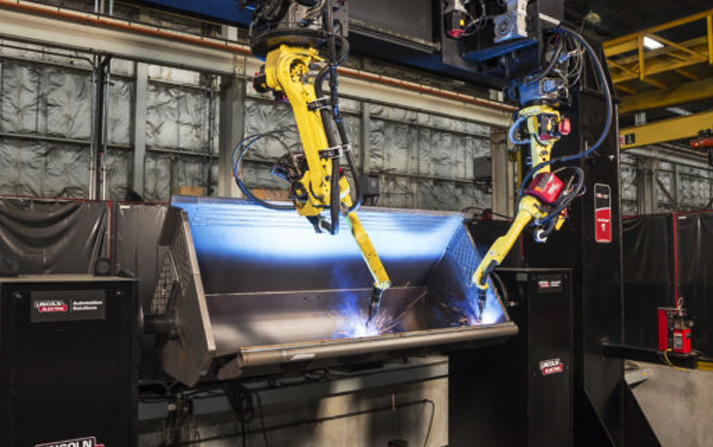
Arc welding robots use an electric arc as the heat source, melting filler wire and base material to form a weld. This makes them extremely tolerant of part variation, which is why they dominate arc welding automation across heavy and medium-duty industries.
Laser welding robots, by contrast, rely on a high-energy-density laser beam. The result is high speed and minimal heat input—but also much tighter process windows.
In simple terms:
arc welding in robotics is a high-tolerance process
a robot laser welding machine is a high-precision process
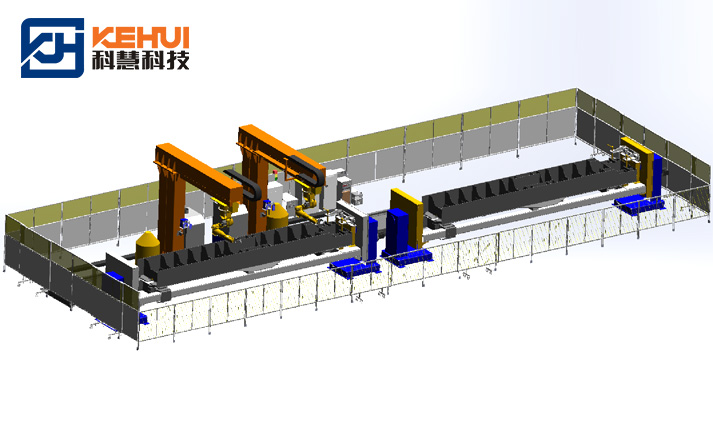
In real factories, parts are rarely perfect. Common challenges include:
assembly gaps
dimensional variation
thermal distortion
This is where arc welding robots clearly excel. Through weave control, adaptive parameters, and sensor-based correction, arc welding automation remains stable even when part consistency is less than ideal.
Laser welding robots, however, are highly sensitive to joint fit-up. To perform reliably, a laser welding robot system usually requires:
high-precision fixturing
excellent part repeatability
robust robot welding laser seam tracking
Without these, even advanced laser systems struggle to maintain weld quality.
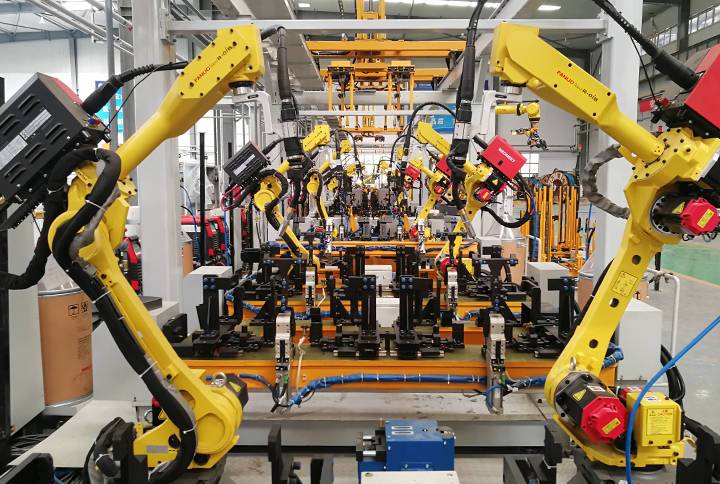
A common misconception is that laser welding is always stronger. In reality, strength depends on application.
Arc welding robots are ideal for medium to thick materials, multi-pass welding, and structural joints with high load requirements
Laser welding robots are best suited for thin materials, precision assemblies, and low-distortion requirements
That is why arc welding in robotics remains dominant in construction machinery, vehicle frames, and heavy steel structures, while robot laser welding machines are favored in automotive body panels, battery housings, and stainless enclosures.
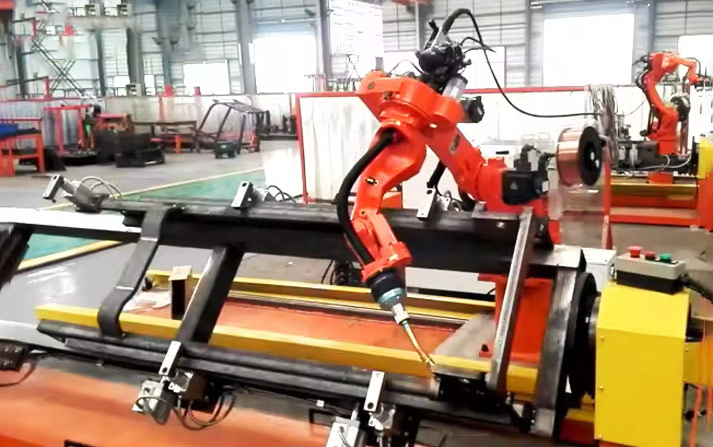
From a system integration perspective, arc welding automation is mature and well understood:
stable power sources
wide process windows
manageable maintenance costs
A laser welding robot system, however, is a tightly coupled precision system involving:
laser source stability
optical path protection
advanced cooling
high-accuracy robot welding laser seam tracking
As a result, laser welding robots demand significantly higher system-integration expertise than arc welding robots.
For many manufacturers, arc welding robots still offer the best overall return:
reasonable initial investment
lower maintenance and consumable costs
easier operator and technician training
Laser welding robots can deliver high throughput, but only when production volume, consistency, and part value justify the investment.
This is why advanced factories often deploy both technologies in parallel, rather than replacing one with the other.
In modern manufacturing, the smartest automation strategies are not about choosing sides.
Arc welding robots remain the backbone of structural and heavy-duty welding
Laser welding robots are a powerful solution for high-precision, high-speed applications
Understanding the real differences between arc welding in robotics and laser welding robot systems is far more valuable than chasing trends.
 TAG:
TAG: