Stock Code: 831045
Industrial Automation & Intelligence Solutions
SUMMERY: Manual welding has been used in pipeline construction for decades, but its weaknesses become obvious when pipe runs get longer. On projects involving dozens or hundreds of joints, welding stops being a single operation and turns into a c...
Manual welding has been used in pipeline construction for decades, but its weaknesses become obvious when pipe runs get longer. On projects involving dozens or hundreds of joints, welding stops being a single operation and turns into a continuous process challenge. This is where the value of an automatic welding machine for pipeline becomes clear, especially when consistency matters more than individual skill.
In long-distance pipeline welding, fatigue is unavoidable. Even the most experienced welder cannot maintain the same concentration, hand stability, and rhythm over an entire shift.
As fatigue builds up:
Arc length starts to fluctuate
Travel speed becomes irregular
Weld bead appearance changes
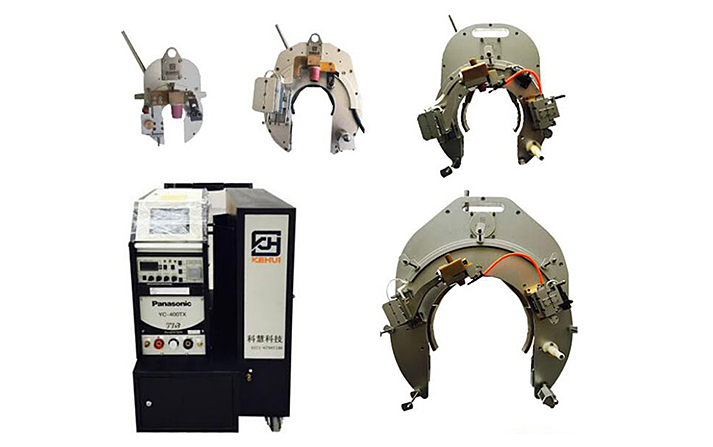
An automatic welding machine for pipeline eliminates this variable completely. Once parameters are set, the machine delivers the same result repeatedly. Compared with manual work, an automatic welding machine for pipes produces uniform welds from the first joint to the last, regardless of working hours.
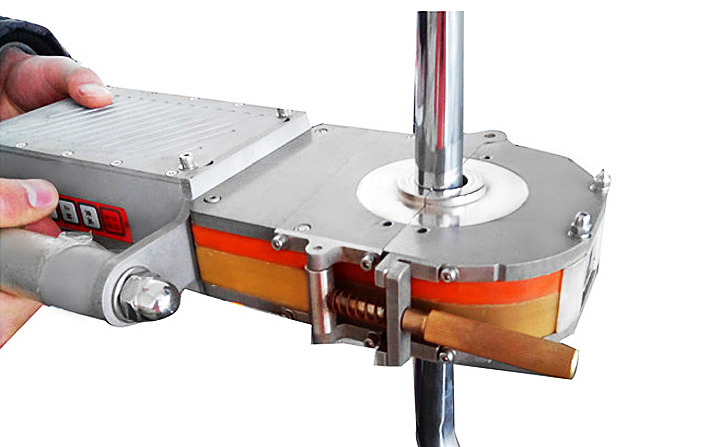
One of the biggest problems with manual welding is that changes happen slowly—and often go unnoticed. A slightly higher heat input here, a slower pass there, and suddenly inspection results start failing.
With an automatic welding machine for pipeline, key parameters such as current, voltage, and travel speed remain fixed. An automatic welding machine for pipes does not “adjust itself” based on feeling or habit, which is exactly why quality control becomes easier on long pipelines.
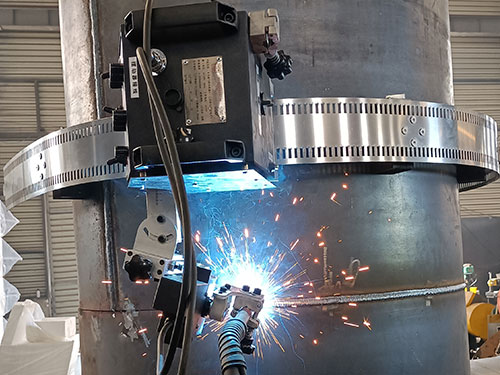
On short pipe sections, small welding errors are manageable. On long pipelines, those same small errors multiply into serious problems:
Increased repair rate
Delays in NDT inspection
Higher overall project risk
Using an automatic welding machine for pipeline reduces cumulative error. Each weld follows the same process logic, and an automatic welding machine for pipes ensures repeatability that manual welding simply cannot sustain over long distances.
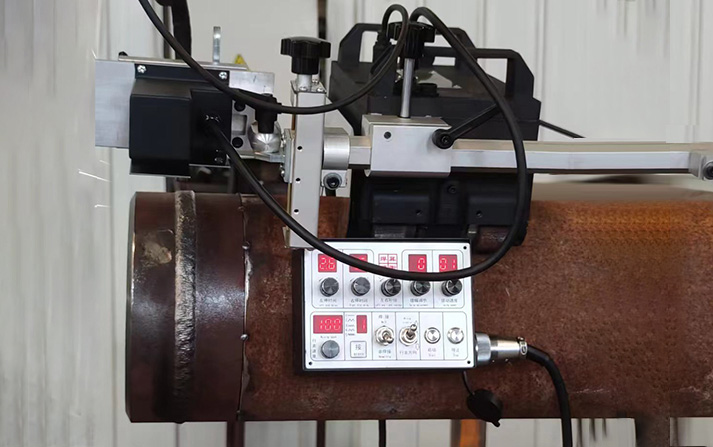
Long pipelines rarely stay in one position. Welders must constantly adapt to changing orientations: flat, vertical, overhead, and restricted spaces.
Manual welding quality drops as positions change, especially on site. An automatic welding machine for pipeline maintains stable torch movement regardless of orientation. Similarly, an automatic welding machine for pipes supports full-position welding without relying on operator posture or physical strength.
Another real-world issue is labor continuity. Long pipeline projects require stable teams over extended periods, but skilled welders are often reassigned or unavailable.
This is one reason more contractors are considering an automatic pipe welding machine for sale instead of relying solely on manpower. With proper setup, an automatic welding machine for pipeline allows one operator to manage the process, while an automatic welding machine for pipes reduces dependence on highly specialized welders.
Manual welding may look cheaper at first, but hidden costs accumulate:
Rework
Inspection failures
Schedule delays
These factors explain why demand for an automatic pipe welding machine for sale continues to grow. Many buyers now specifically look for a china automatic pipe welding machine for sale, aiming to balance automation capability with investment cost.
Choosing an automatic welding machine for pipeline is not about replacing welders. It is about converting welding from a labor-dependent task into a controlled process. An automatic welding machine for pipes provides predictable output, stable quality, and better project planning—especially on long pipeline runs.
Manual welding can handle short pipelines. Long pipeline construction exposes its limits quickly. When consistency, speed, and risk control matter, an automatic welding machine for pipeline becomes the logical solution. For contractors facing long runs and tight schedules, an automatic welding machine for pipes is often the difference between firefighting problems and delivering a stable project.
 TAG:
TAG: