Stock Code: 831045
Industrial Automation & Intelligence Solutions
SUMMERY: Walk onto a modern factory floor, and the first thing you notice isn't the noise—it's the precision. Components move into position with millimeter accuracy. Welding guns fire in exactly timed sequences. Robots pass workpieces to each oth...
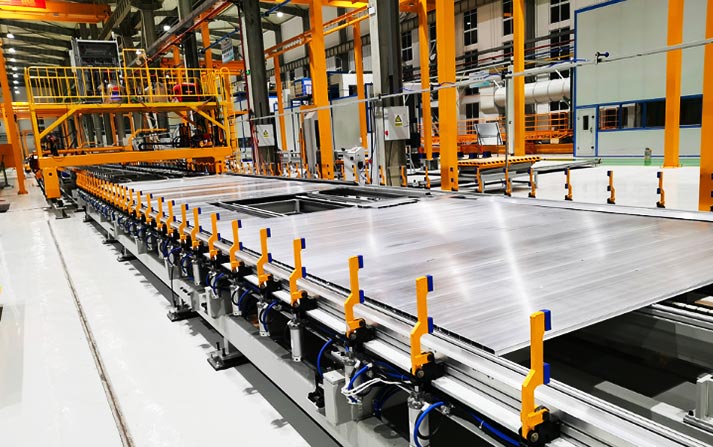
Walk onto a modern factory floor, and the first thing you notice isn’t the noise—it’s the precision. Components move into position with millimeter accuracy. Welding guns fire in exactly timed sequences. Robots pass workpieces to each other without hesitation. This is automation and robotics in manufacturing at its most fundamental level: machines executing tasks with a consistency that human hands cannot replicate.
But beneath that surface precision lies a deeper story. The real advances in automation and robotics in manufacturing aren’t about speed anymore. They’re about intelligence—systems that sense, adapt, and decide in real time.
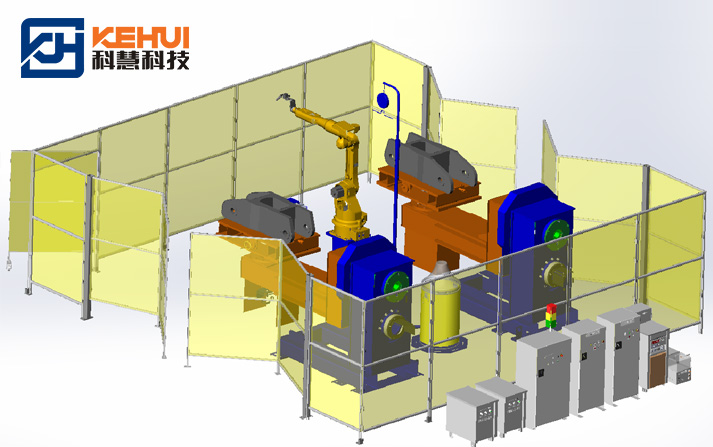
Traditional automation was blind. A robot followed a path. If the part shifted, the weld missed. If the material varied, the quality suffered. That era is ending.
Today’s spot welding automation systems see the joint. Laser vision systems map the seam milliseconds before the arc strikes. If the gap varies, the robot adjusts its weave. If the material thickness changes, the controller modifies current and force. This isn’t programmed motion—it’s adaptive response.
For manufacturers running high-volume production, this sensing capability transforms what’s possible. A spot welding automation cell can handle part variations that would have stopped older systems cold. The robot adapts to the part, not the other way around.
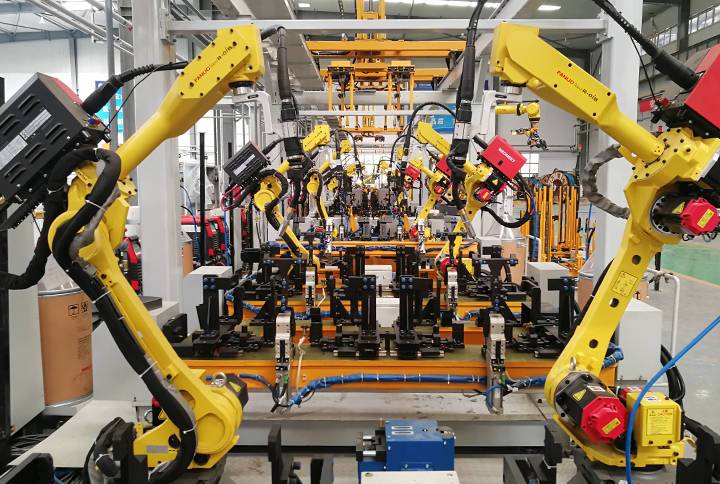
Sensing is only half the equation. The other half is deciding what the data means. This is where robotic process automation in manufacturing enters the picture—not as a physical robot, but as the software intelligence that makes robots smarter.
Consider a welding cell running multiple shifts. Over time, electrodes wear. Cooling water temperature fluctuates. Material properties drift. A system with robotic process automation in manufacturing doesn’t just log these changes—it responds. It detects that dynamic resistance is trending upward and adjusts parameters before the weld quality degrades. It notices that cycle times are stretching and alerts maintenance to check the dressing station.
This intelligence layer turns robots from repeaters into responders. And it’s why the role of a Welding robot integrator has evolved from equipment installer to system architect.
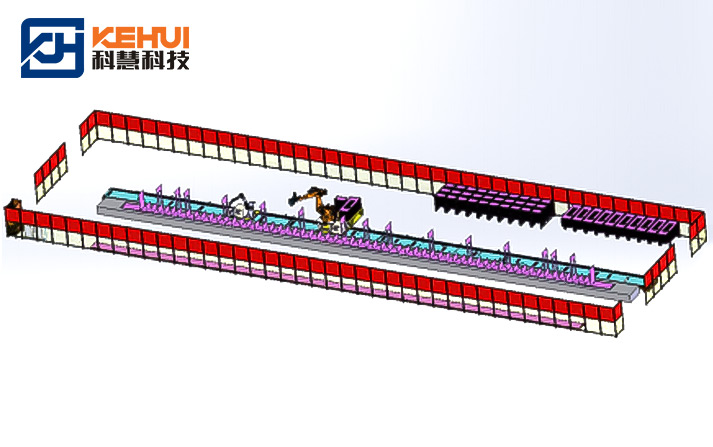
Here’s what the automation brochures don’t explain: integrating robotic welding solutions into a live production environment is fundamentally different from installing them in a lab. The lab has perfect parts, consistent conditions, and unlimited time. The factory has variation, disruption, and the relentless pressure of production targets.
A skilled Welding robot integrator bridges this gap. They understand that robotic welding solutions must account for real-world variables: the way parts arrive from stamping, the skill level of operators, the maintenance schedule of upstream equipment. They design systems that work despite these variables, not only under ideal conditions.
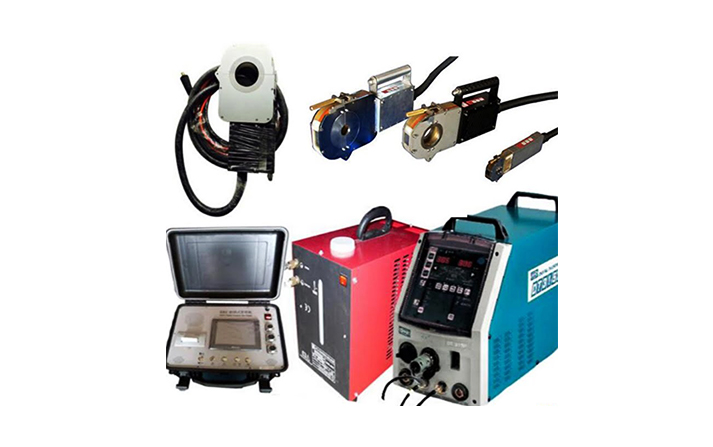
This is particularly critical in spot welding automation, where electrode condition, cooling efficiency, and part fit-up all affect quality. An experienced Welding robot integrator specifies not just the robot, but the dressing unit, the water chiller, the vision system—every component that determines whether the cell delivers consistent results.
Modern manufacturing uses materials that didn’t exist a decade ago. Press-hardened steel. Aluminum alloys. Advanced high-strength steels. Each behaves differently under the welding arc. Each requires specific parameters, specific cooling rates, specific joint designs.
Developing robotic welding solutions for these materials requires deep metallurgical knowledge. It’s not enough to program a path—you must understand how heat affects the material structure, how cooling rates influence strength, how coating thickness changes resistance.
Leading automation and robotics in manufacturing providers invest heavily in process development. They weld thousands of test coupons to validate parameters. They analyze cross-sections to verify penetration. They build databases that capture the relationship between material, thickness, and welding parameters. This knowledge becomes the foundation for reliable robotic welding solutions.
Every modern welding robot generates data. Current, voltage, resistance, force, time—each weld produces a digital signature. Most manufacturers ignore this data. The smart ones use it.
With proper robotic process automation in manufacturing, weld data becomes a quality goldmine. Trending analysis predicts electrode failure before it happens. Statistical process control flags parameter drift while it’s still correctable. Traceability systems link every weld on every part to the conditions when it was made.
For manufacturers supplying safety-critical components—automotive chassis, pressure vessels, structural steel—this traceability isn’t optional. Regulators demand it. Customers require it. And spot welding automation systems with robust data capture deliver it automatically.
Here’s the conversation we have with every client: automation isn’t about replacing people. It’s about redeploying them.
When you introduce automation and robotics in manufacturing, your best welders don’t become obsolete. They become more valuable. They program the robots, troubleshoot the edge cases, and interpret the data. They transfer decades of craft knowledge into the machines, making the whole operation smarter.
This transition requires training, patience, and the right partner. A Welding robot integrator who understands workforce dynamics designs systems that operators can learn, maintain, and improve. They build interfaces that welders can understand, not just engineers. They create documentation that works on the floor, not just in the office.
We’ve been delivering automation and robotics in manufacturing since 1994. Before “Industry 4.0” was coined, we were helping manufacturers figure out how to make robots weld profitably. We learned that the technology is the easy part. The hard part is making it work with real parts, real schedules, real people.
Our spot welding automation systems operate in factories across the globe—automotive assembly lines, heavy equipment fabricators, job shops serving every industry. Every installation includes on-site engineering support because we know that success isn’t automatic. It’s earned through attention to details: cooling water quality, electrode maintenance, program optimization for each part variant.
As a Welding robot integrator, we’ve developed robotic welding solutions for every major material type and industry application. Our process database spans three decades of learning—what works, what fails, and why. Our field service engineers understand that stopping production costs thousands per minute, so prevention beats reaction.
And we’re embracing the next wave: robotic process automation in manufacturing that connects weld data to quality systems, that predicts failures before they happen, that turns robots from isolated tools into integrated production assets.
The factory of the future isn’t a distant concept. It’s being built today, one cell at a time. Whether you’re deploying your first spot welding automation cell or scaling toward full automation and robotics in manufacturing, the right partner makes all the difference.
We’ve spent thirty years proving that. Let us prove it to you.
 TAG:
TAG: