Stock Code: 831045
Industrial Automation & Intelligence Solutions
SUMMERY: In the process of upgrading automotive manufacturing automation, many companies start with equipment: buying a few robots to automate the "most laborious processes." However, looking back a few years later, the real difference isn't w...
In the process of upgrading automotive manufacturing automation, many companies start with equipment: buying a few robots to automate the “most laborious processes.”
However, looking back a few years later, the real difference isn’t who used more expensive robots, but who understood the systemic nature of automotive assembly line robots earlier.
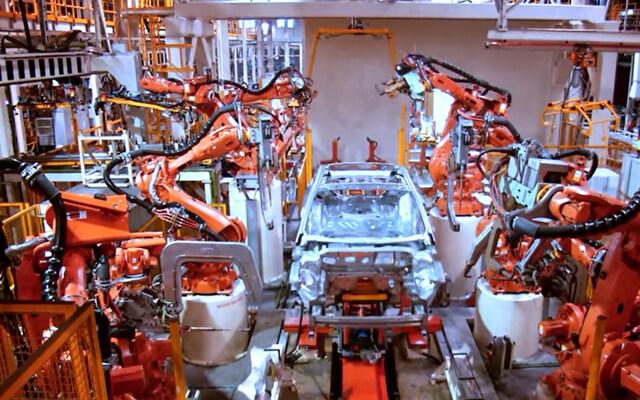
On the factory floor, automotive assembly robots are often used as “efficiency tools” to replace a specific human job. But the reality is that a single robot can only solve “local actions,” not “overall operation.”
Common problems include:
These problems are not due to insufficient robot capabilities, but because the project wasn’t planned from the perspective of automotive assembly line automation from the outset.
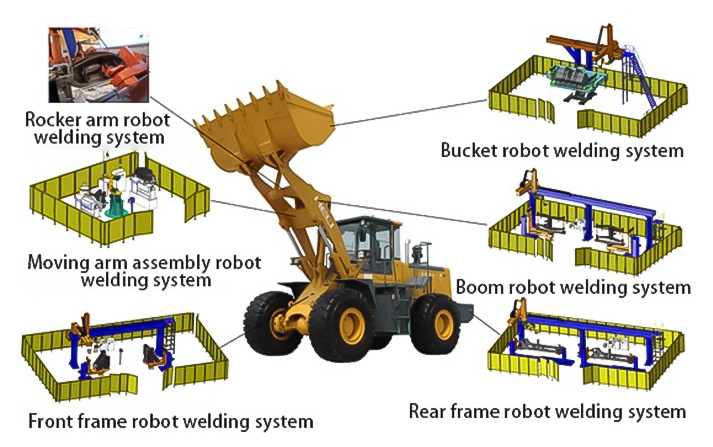
Truly mature automotive assembly line robots are essentially continuously operating systems, not simply multiple robots arranged side-by-side.
From an engineering perspective, it includes at least:
If these factors are not considered uniformly in the early stages, even with high-end automotive manufacturing robots, the production line operation will still be riddled with “human patching.”
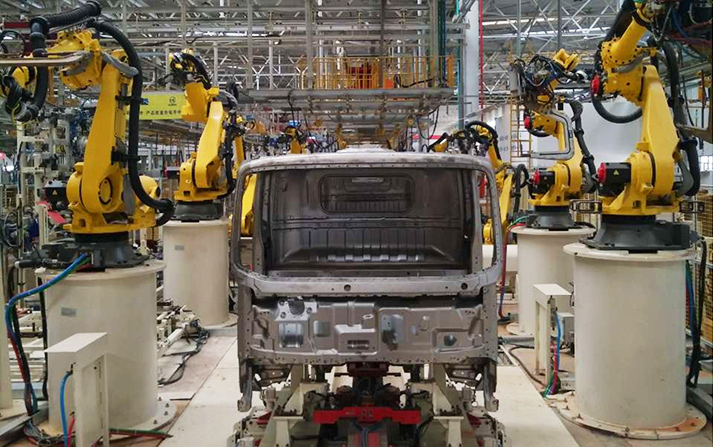
In automotive assembly, what truly matters is not how fast a single robot is, but the smoothness of the entire line.
In many car assembly line robot projects, we see this situation: Robot utilization is not low, but the overall line capacity consistently falls short of expectations.
The reasons are often:
This is the fundamental difference between automotive assembly line robots and simply “buying robots.”
Collaborative robots are becoming increasingly common in automobile assembly. The advantage of cobots for automobile assembly lines lies in flexibility and human-robot collaboration, not in being “cheaper.”
However, if collaborative robots are merely used to replace manual labor without redesigning the process logic, their value will be severely underestimated.
In system-level design, collaborative robots typically handle:
They must also be integrated into the overall planning of automotive assembly line automation, not exist in isolation.
At the beginning of a project, many clients spend a lot of time comparing the parameters, brands, and prices of automotive manufacturing robots, but overlook a more practical question: How will these robots be organized into an assembly line that can operate sustainably in the long term?
Robot brands address “can it be done?”
While system integration addresses “can it be done stably?”
This is why, in automotive assembly line robots projects, the engineering capabilities of the system integrator are often more important than the equipment itself.
In practice, companies typically go through three stages in automation upgrades:
Purchasing several automotive assembly robots
Discovering that partial automation cannot improve overall efficiency
Shifting to whole-line automotive assembly line automation design
Companies that treat automation as a “systems engineering” approach from the outset often achieve stable mass production more quickly.
As an automated welding and assembly system integrator founded in 1994, we have always viewed automotive assembly line robots as “long-term operating systems,” not one-off equipment projects.
In projects, we focus on:
We provide car assembly line robots and whole-line automation solutions to customers in multiple countries worldwide. Our engineers can provide on-site guidance for installation and commissioning to ensure the system is truly implemented.
In the automotive manufacturing industry, the real competitive advantage does not come from “how many robots are used”, but from whether the robots are properly integrated into the production system.
 TAG:
TAG: