Stock Code: 831045
Industrial Automation & Intelligence Solutions
SUMMERY: Buying a robotic arm for welding looks simple on paper. Payload, reach, axes, price—done.In reality, a robotic arm for welding behaves very differently from a robot used for palletizing or handling. Welding is not about movement alone; i...
Buying a robotic arm for welding looks simple on paper. Payload, reach, axes, price—done.
In reality, a robotic arm for welding behaves very differently from a robot used for palletizing or handling. Welding is not about movement alone; it is about controlled motion under arc load, heat input, and positional uncertainty.
This article focuses on the welding robot arm itself—what it must do, how to evaluate it, and why the wrong choice often leads to unstable weld quality even when the robot looks “powerful” on paper.
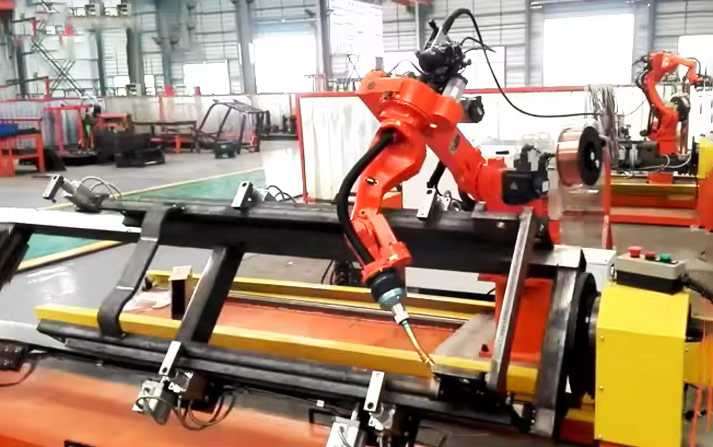
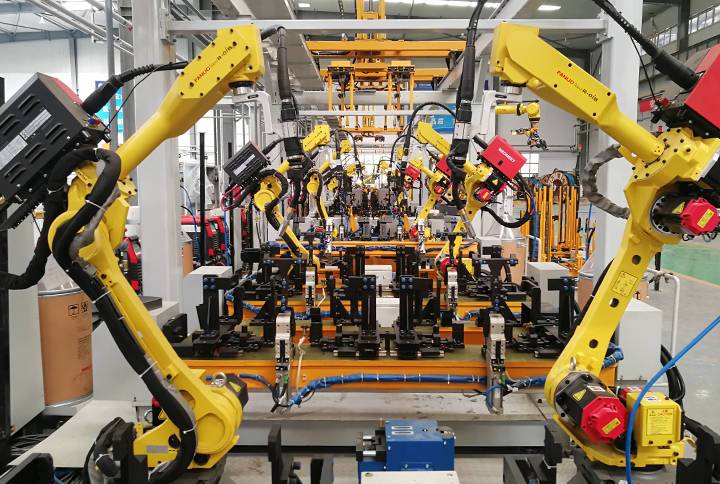
A true robotic arm welding machine operates in a harsh environment: arc radiation, spatter, electromagnetic interference, and continuous thermal cycles.
That’s why a robotic arm for welding must be evaluated beyond basic specifications.
Key mechanical differences include:
Wrist rigidity under continuous arc load
Axis backlash behavior during slow, constant-speed welding
Cable routing design to avoid torch twisting
Repeatability stability during long weld paths
Many buyers comparing a robotic welding arm for sale focus on payload only. In welding, payload matters far less than motion smoothness and stiffness.
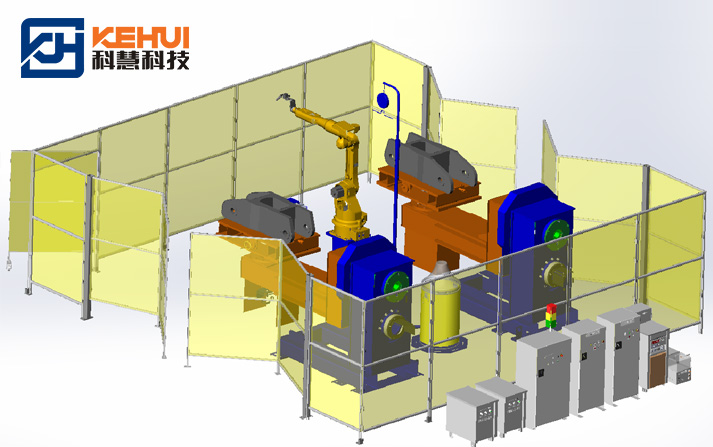
Selecting industrial robot arms for welding is about matching motion behavior to weld physics.
For example:
Long fillet welds require extremely stable TCP speed
Multi-pass welds demand repeatable path recovery
Thick structural steel needs high wrist torque, not just reach
A low-cost robotic arm welding machine may look identical to a premium one, yet fail during continuous welding due to micro-vibrations. This is why selecting industrial robot arms for welding must be done together with welding process design—not separately.
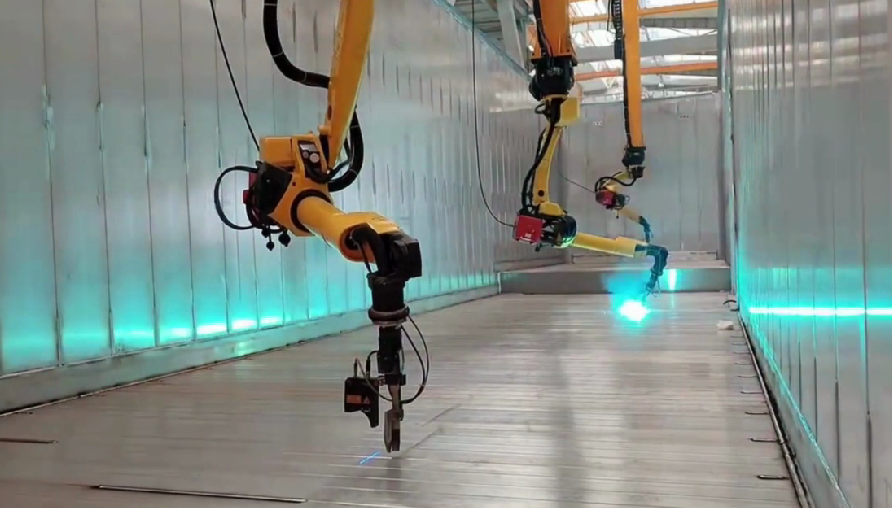
Many buyers ask about robotic welding arm price, assuming the arm defines total system cost.
In practice, the arm defines welding stability, which defines rework rate, spatter cleanup, and cycle time.
A cheaper robotic welding arm for sale that causes frequent arc interruptions or inconsistent bead shape will cost more over time than a higher-quality robotic arm for welding integrated correctly.
The real question is not “robotic welding arm price,” but:
How many stable weld hours per day can this arm actually deliver?
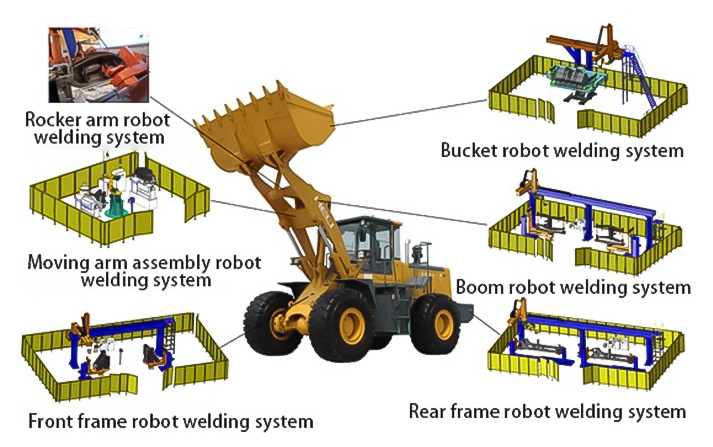
A robotic arm for welding never works alone. Torch angle control, wire feed response, seam deviation, and fixture tolerance all interact with robot motion.
This is why buying a welding robot arm for sale without considering:
torch mass distribution
external axis coordination
fixture repeatability
often leads to disappointing results.
A good robotic arm welding machine only shows its real value when integrated into a complete welding cell designed around the arm’s motion characteristics.
We are not a robot brand—we are a welding automation integrator.
Since 1994, we have designed and delivered robotic welding workstations and production lines for manufacturers worldwide.
What makes us different:
We select the robotic arm for welding based on weld behavior, not catalogs
Every robotic welding arm for sale we integrate is tested under real welding load
Our engineers can travel on-site for installation, commissioning, and weld tuning
We focus on stable production, not demo-room performance
If you are evaluating a robotic arm for welding, we help you choose not just a robot—but a welding system that actually works on your shop floor.
 TAG:
TAG: