Stock Code: 831045
Industrial Automation & Intelligence Solutions
SUMMERY: If we compare a car manufacturing plant to a system operating at high speed for an extended period, then robots used in car manufacturing are the most stable and reliable execution units. They are independent of experience and emotions, ...
If we compare a car manufacturing plant to a system operating at high speed for an extended period, then robots used in car manufacturing are the most stable and reliable execution units. They are independent of experience and emotions, unaffected by fatigue, yet can consistently output consistent manufacturing results under high-intensity cycles—precisely the capability most needed in the modern automotive industry.
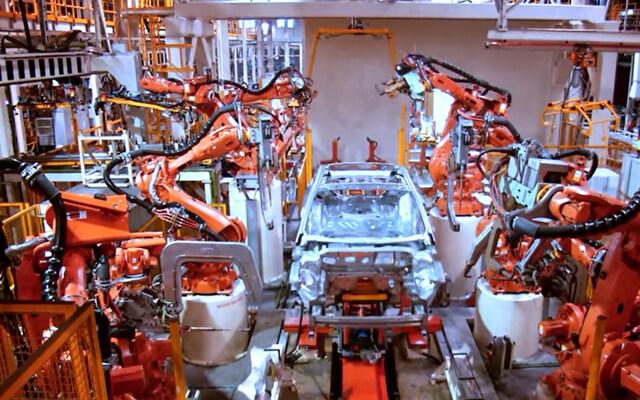
In the past, car welding heavily relied on skilled welders; today, more and more factories are using robots used in car manufacturing to restructure their production methods. The reason is simple—faster model updates, more complex structures, and stricter quality standards make it difficult for manual welding to consistently meet requirements.
In this process, welding robots in car manufacturing have become the first type of automated equipment to be adopted on a large scale. Welding is one of the most fundamental and critical processes in car manufacturing; any fluctuation in welding quality will amplify the impact on all subsequent processes.
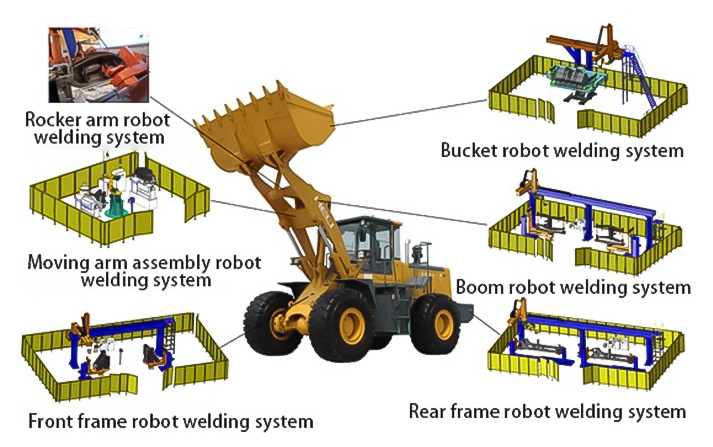
Many people understand robots as simply “automatically welding a few seams,” but in real factories, welding robots in car manufacturing often handle structural welding tasks, such as:
These areas have extremely high requirements for welding strength and dimensional consistency, which is precisely where robots used in car manufacturing can truly demonstrate their value.
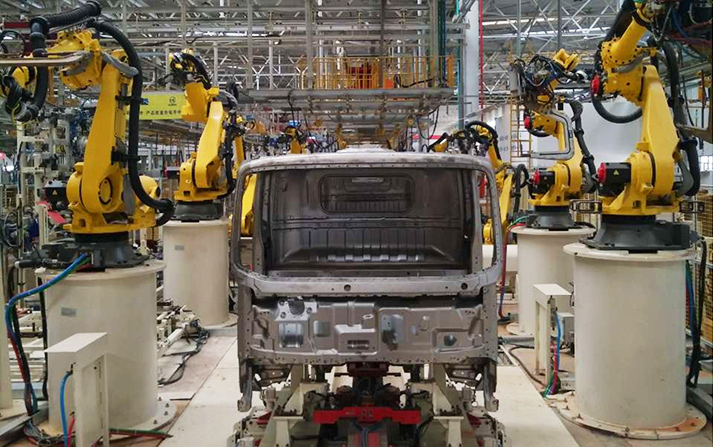
In project practice, we often encounter clients who mistakenly believe that automation is just about purchasing a robot. However, truly mature robotic arm car manufacturing is never a single piece of equipment, but a complete systems engineering project.
A complete automotive welding robot system typically includes:
Without system integration capabilities, even with high-end equipment, it’s difficult to achieve truly stable welding robots in car manufacturing applications.
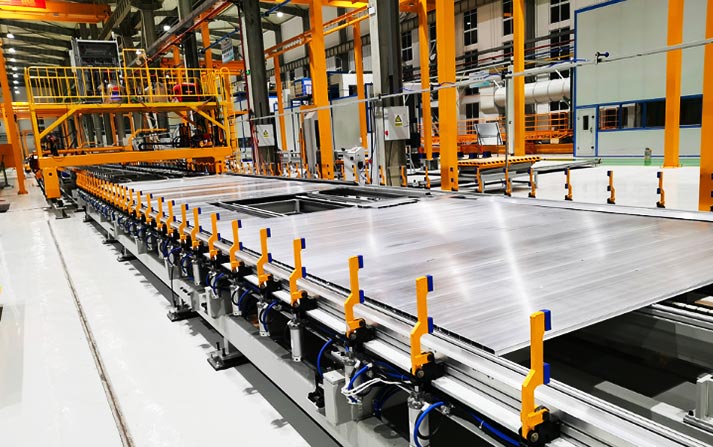
In the early stages, robots used in car manufacturing were primarily used to replace manual labor. However, with increasing automation, robots are beginning to drive the optimization of welding processes.
For example:
This is why current welding robots in car manufacturing projects often require simultaneous design of welding processes and automation.
In the automotive manufacturing industry, robot brand is not the sole factor determining success or failure. The true determinant of project success lies in the understanding of welding processes, cycle time balancing, and the on-site environment.
As an automated welding system integrator founded in 1994, we have long provided robots used in car manufacturing solutions to the automotive and related manufacturing industries, including single-station welding robot workstations and fully automated welding production lines.
Our engineering experience covers:
Many automation projects fail not because of design problems, but because of inadequate on-site implementation. A truly mature welding robots in car manufacturing project must go through a complete process:
Our engineers can go to the customer’s site to guide installation and commissioning, ensuring that the robotic arm car manufacturing system truly adapts to actual production, rather than remaining only on paper or in simulations.
With the increasing prevalence of new energy vehicles and parallel production of multiple models, robots used in car manufacturing are evolving towards greater flexibility and intelligence. Welding robots are no longer merely performing actions but have become an integral part of the manufacturing system, deeply integrated with data, quality, and cycle time management.
For automotive manufacturers, choosing a partner who truly understands welding and automation is more important than simply purchasing equipment.
 TAG:
TAG: