Stock Code: 831045
Industrial Automation & Intelligence Solutions
SUMMERY: Walk onto a factory floor today, and you might not hear the deafening roar of manual labor you'd expect. Instead, there's a hum—precision motors, arc sensors, and the quiet intelligence of machines that don't just repeat movements, but t...
Walk onto a factory floor today, and you might not hear the deafening roar of manual labor you’d expect. Instead, there’s a hum—precision motors, arc sensors, and the quiet intelligence of machines that don’t just repeat movements, but think about them.
The conversation around robots used in factories has shifted dramatically. We’re past the era of “will robots take our jobs?” and deep into “how do we make these things smart enough to handle the chaos of real manufacturing?” Nowhere is this shift more visible than in welding—the dirty, hot, high-stakes craft that builds our ships, bridges, and heavy equipment.
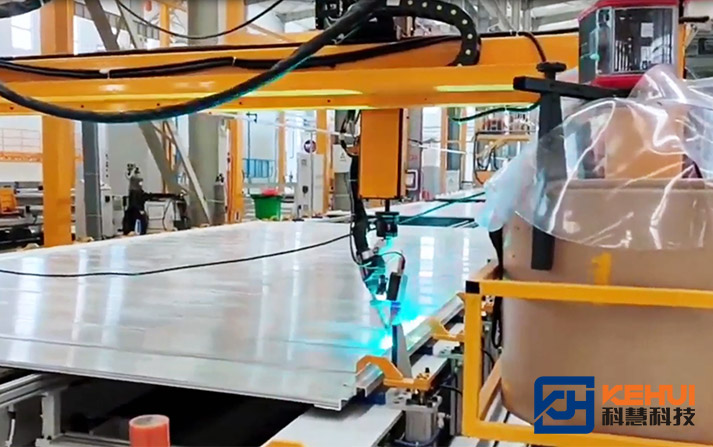
For decades, deploying an automatic welding robot meant one thing: perfect parts. If your metal came in slightly warped, if the fit-up was off by a few millimeters, the robot would happily lay a beautiful weld two inches to the left of the joint. It was “automatic” in the dumbest sense of the word.
That’s dead now.
Today’s robotic welding systems are sensor-rich platforms that blur the line between machine and craftsman. Let’s look under the hood at what’s actually changing on factory floors.
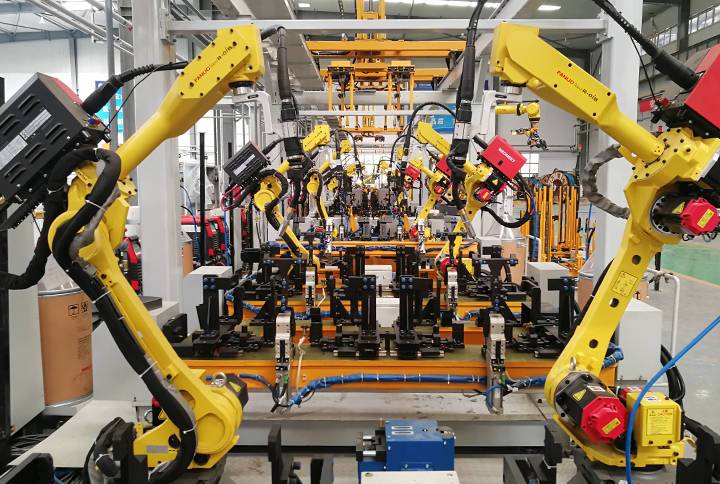
One of the biggest headaches for companies that use industrial robots has always been fixturing—those expensive, custom-built clamps that hold parts in exactly the right position. A typical automatic welding robot cell might spend 30% of its capital cost on jigs and tooling. And if the part design changes? Scrap the jig, build a new one.
Research initiatives are now tackling this head-on with “jigless” approaches . Imagine two robots holding a workpiece between them, presenting it to a third robot wielding the torch. The robots working in factories become the fixture themselves. They can flip, rotate, and position the metal exactly where the weld needs to happen, compensating for warpage and variation in real-time. For a fabricator welding complex assemblies, this isn’t just an efficiency gain—it’s a revolution in flexibility.
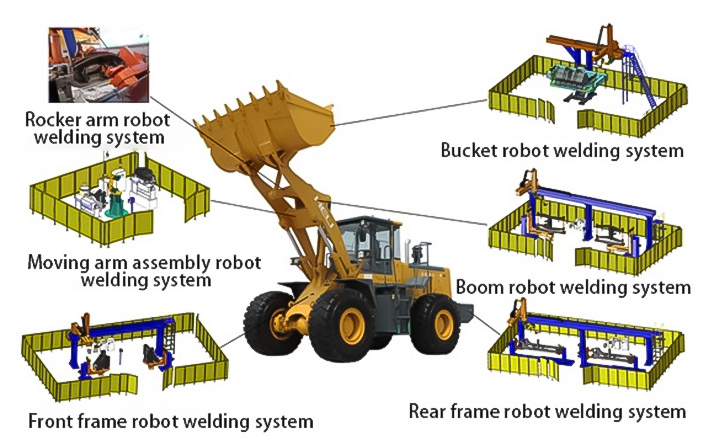
The real magic, however, is happening inside the weld pool itself.
Take what’s happening in high-stakes environments like shipbuilding. When HII—America’s largest shipyard—teamed up with Path Robotics, they weren’t looking for a standard automation solution . They needed robotic welding systems that could handle the brutal reality of ship sections: warped plates, mixed materials, and joints that look different every time.
The solution is “Physical AI.” These systems use advanced vision stacks that don’t just find the joint—they watch the weld pool behavior in real-time. If the puddle looks too fluid, the robot adjusts the voltage mid-pass. If it detects contamination, it changes the weave pattern. This isn’t pre-programmed motion; it’s adaptive intelligence .
Similarly, Fincantieri in Italy is pushing toward humanoid welding platforms specifically designed for complex naval manufacturing . Their focus? Developing robots working in factories with perception capabilities dedicated to “monitoring the welding seam” and operating in complex environments alongside human workers. The goal isn’t replacement—it’s augmentation of a skilled workforce facing a massive labor shortage.
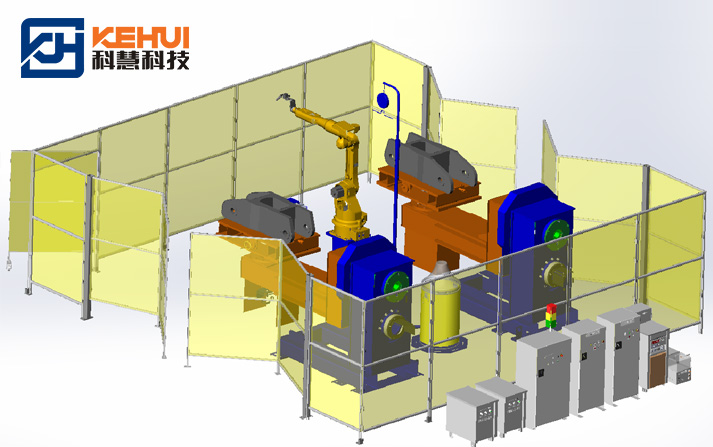
What enables this new generation of automatic welding robot? Three technical pillars:
First, multi-sensor fusion. Modern systems combine laser stripe sensors with coaxial cameras that look straight down the torch. They’re not just tracking the seam; they’re analyzing the melt pool’s geometry, measuring penetration depth through thermal imaging.
Second, adaptive path planning. When the robot detects a gap wider than expected, it doesn’t stop—it calculates a new weave pattern to fill that gap without excess penetration. This requires millisecond-level response times and control loops that adjust wire feed speed, travel angle, and heat input simultaneously.
Third, digital twin integration. Before a robot ever strikes an arc, the entire cell is simulated. But today’s simulations don’t just check for collisions—they predict thermal distortion. The system knows that after the third pass, the part will warp by X millimeters, and it pre-emptively adjusts the fourth pass’s trajectory.
The early adopters are predictable: automotive giants like BMW and Toyota continue pushing boundaries with humanoid and fixed automation . But the most interesting action is in heavy fabrication.
Shipyards, once considered too chaotic for serious automation, are now proving grounds. Companies that use industrial robots in this space aren’t looking for lights-out factories—they’re looking to stretch their existing workforce. A skilled welder might supervise four to six robotic welding systems, handling the tricky root passes while the robots lay down the fill and cap passes that destroy human shoulders and knees over a 30-year career.
In Asia, manufacturers are deploying robots working in factories for tasks like assembling EV battery trays—thin materials, zero tolerance for leaks, geometries that change with every design iteration . The robots succeed because they combine precision with adaptability. They don’t need perfectly consistent parts; they handle variation as part of the process.
Here’s the counterintuitive truth: as robots used in factories become smarter, the human role becomes more skilled, not less. The welder who used to spend 10 hours a day in a smoky bay now spends that time planning sequences, analyzing robot-collected data, and troubleshooting edge cases. The robot handles the “80% case”—the straight runs, the predictable joints. The human handles the last 20%—the tight corners, the contaminated base metal, the one-off repair jobs.
This is the “intern” model, and it’s working. Xiaomi’s recent factory trials showed humanoid robots achieving 90.2% success rates on complex nut-running tasks—good enough to keep pace with production, but still requiring human oversight for the edge cases . The robot works alongside the line, learning, improving, and handling the physically exhausting repetition while the human manages quality and flow.
Here’s the part the glossy brochures don’t tell you: buying a robot is easy. Making it weld profitably is hard.
The difference between a robotic welding systems that collects dust and one that pays for itself in 18 months comes down to integration. It’s about understanding metallurgy—how that specific base metal reacts to heat input, what preheat temperature prevents cracking, what shielding gas mixture gives the right penetration profile. It’s about understanding production flow—how parts arrive, how they’re staged, how the robot communicates with the upstream saw and the downstream grinder.
This is where experience separates the integrators from the equipment resellers.
We’ve been at this since 1994. Before “Industry 4.0” was a buzzword, we were figuring out how to make automatic welding robot cells actually work in real factories with real budgets and real production schedules.
Over three decades, we’ve learned what the textbooks don’t teach:
How to tune a vision system when the shop floor lighting changes seasonally
Which torch angles work for that specific high-strength steel your competitor just started using
How to train your team so they’re not dependent on our engineers for every tweak
We’ve shipped robotic welding systems to manufacturers across the globe. Our equipment is welding in desert heat and arctic cold, in automotive plants and shipyards, on pipelines and pressure vessels. When you buy from us, you’re not getting a catalog item—you’re getting a solution engineered for your specific metallurgy, your specific volumes, your specific workforce.
Companies that use industrial robots come to us because we speak two languages fluently: the language of robotics and the language of welding. We know that a failed weld isn’t a “robot problem”—it’s a physics problem. And we’ve been solving physics problems since before most of today’s robot startups existed.
When we deploy robots working in factories, we don’t disappear after the sign-off. Our engineers are there for startup, for troubleshooting, for the inevitable “what if we tried…” conversations. We’ve built a global network not by selling boxes, but by solving problems.
The factory of the future isn’t a distant concept—it’s being built today, one weld at a time. And if you’re planning to build yours with robotic welding systems that actually perform, that adapt, that pay for themselves—we should talk.
Thirty years of experience. Thousands of successful installations. Engineers who show up. That’s not marketing copy. That’s just the way we’ve always worked.
 TAG:
TAG: