Stock Code: 831045
Industrial Automation & Intelligence Solutions
SUMMERY: When people search how to tig weld stainless steel pipe, they’re usually not looking for theory.They want welds that pass inspection, don’t discolor, and don’t crack after installation. As a manufacturer of automatic pipe welding equipm...
When people search how to tig weld stainless steel pipe, they’re usually not looking for theory.
They want welds that pass inspection, don’t discolor, and don’t crack after installation.
As a manufacturer of automatic pipe welding equipment, we work with customers who started with manual TIG welding and later realized how difficult it is to achieve consistent results—especially when pipe size, wall thickness, and production volume increase.
This article doesn’t repeat basic TIG tutorials. Instead, we explain how to TIG weld stainless steel pipe from a production-oriented perspective, including where manual skills hit their limits and how automation solves real-world problems.
In principle, TIG welding stainless steel pipe sounds simple: clean material, controlled heat, proper shielding.
In reality, stainless steel reacts fast to heat and oxygen. A small mistake leads to oxidation, lack of penetration, or distorted pipe ends.
From our shop-floor tests, successful stainless steel pipe TIG welding depends on three things:
Stable arc length
Controlled heat input
Reliable gas protection (inside and outside the pipe)
This is why many stainless steel pipe welding companies struggle to maintain consistent quality when relying only on manual welding, especially during long production runs.
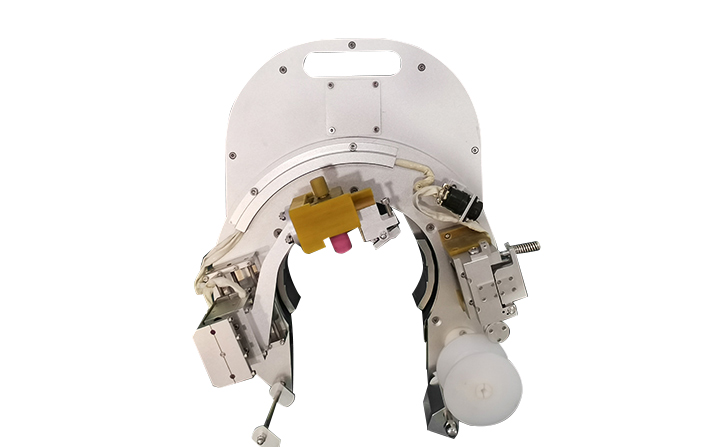
Customers often ask us if the same process works for all pipe sizes. The short answer is no.
When Tig welding 1 inch stainless pipe, heat builds up quickly. Too much current causes burn-through; too little leads to lack of fusion.
With Tig welding 2 inch stainless pipe, heat distribution becomes uneven, and torch angle consistency becomes critical.
In both cases, understanding how to tig weld stainless steel pipe means adapting parameters constantly—something that’s hard to do manually for hours at a time.
This is where automatic pipe welding equipment starts to outperform even skilled welders.
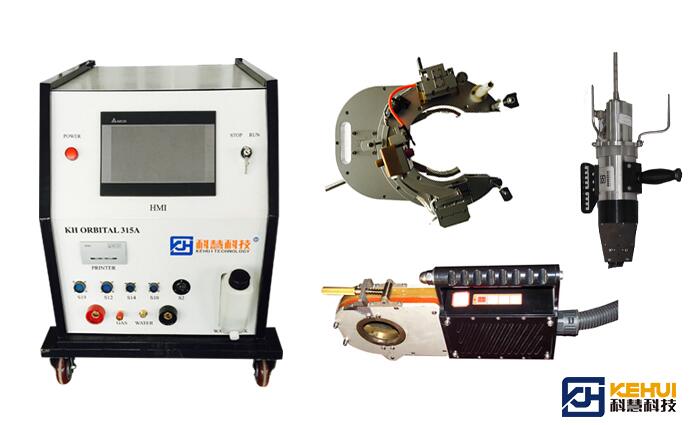
Thin-wall applications raise the difficulty even further.
Tig welding stainless tubing and tig welding stainless steel tubing demand extremely precise heat control and smooth torch travel.
From our factory tests, even experienced welders show variation after long shifts. That variation directly affects weld appearance and penetration.
That’s why many stainless steel pipe welding companies now use orbital systems for tubing applications, especially in food, pharmaceutical, and high-purity pipelines.
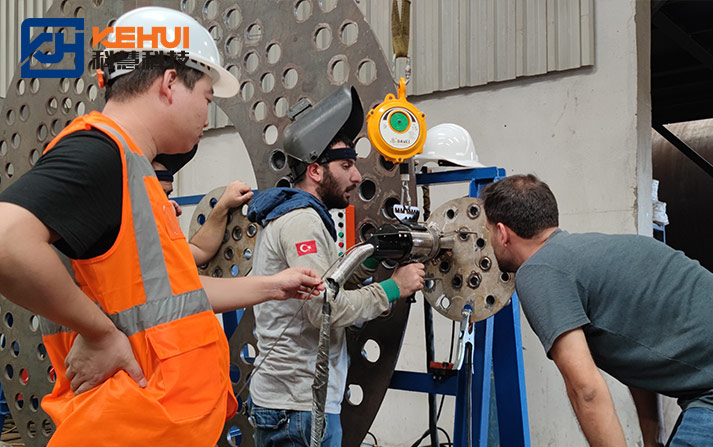
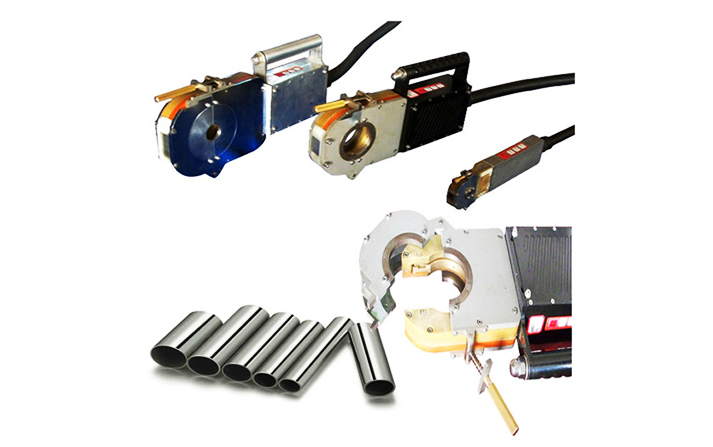
Orbital welding stainless steel pipe is still TIG welding—but executed by a machine instead of a human hand.
In orbital TIG systems:
The pipe is fixed
The torch rotates with constant speed
Welding parameters are pre-programmed
Heat input remains stable from start to finish
For customers who ask us how to tig weld stainless steel pipe more consistently, this is usually the turning point.
Automation removes human fatigue, angle drift, and timing errors.
This is why automatic pipe welding equipment is no longer limited to large factories—it’s now common even in medium-sized workshops.
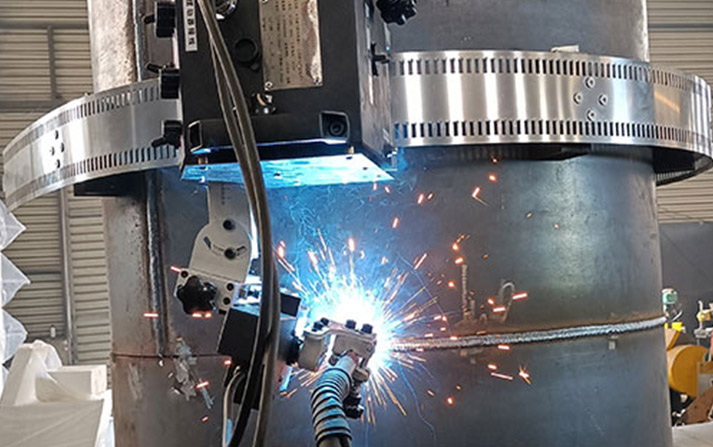
Manual tig welding stainless steel pipe works well for small batches or repair jobs.
But once production scales up, repeatability becomes the real challenge.
In our experience, most stainless steel pipe welding companies switch to automation when they face:
High rejection rates
Inconsistent weld appearance
Difficulty training skilled welders
Tight delivery schedules
At that stage, understanding how to tig weld stainless steel pipe is no longer just a welding question—it becomes a production strategy question.
As a factory producing automatic pipe welding equipment, we don’t try to replace TIG welding—we stabilize it.
Whether it’s tig welding 1 inch stainless pipe, tig welding 2 inch stainless pipe, or high-purity stainless steel pipe TIG welding, automation ensures that the welding process stays within the optimal window every single time.
That’s the difference between knowing how to tig weld stainless steel pipe in theory and making it work reliably in real production.
 TAG:
TAG: