Stock Code: 831045
Industrial Automation & Intelligence Solutions
SUMMERY: You can buy an orbital TIG welding system. You can read the manual. You can watch the training videos. And you can still fail at the orbital welding process. We know because we’ve watched it happen. For thirty-one years, we’ve been bu...
You can buy an orbital TIG welding system. You can read the manual. You can watch the training videos. And you can still fail at the orbital welding process.
We know because we’ve watched it happen. For thirty-one years, we’ve been building equipment for the orbital welding process. We’ve sent engineers to over fifty countries to teach the orbital TIG welding process. And we’ve seen the same mistakes repeated by people who assumed the machine would do everything.
Here’s what people don’t tell you about the orbital welding process. Not because it’s a secret. Because most people selling orbital TIG welding systems don’t want you to know what actually happens after the machine shows up at your shop.
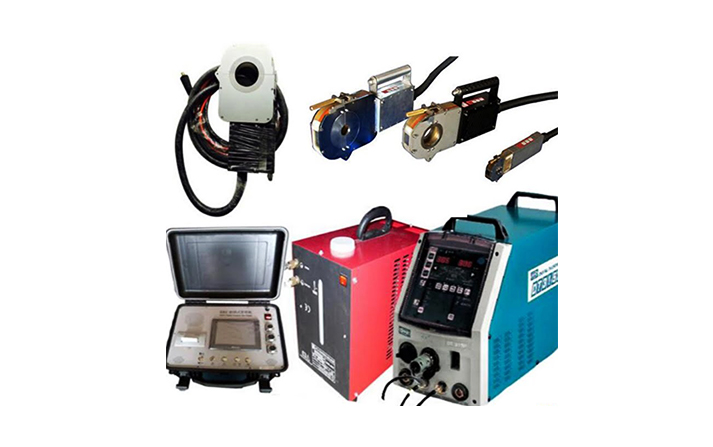
The most dangerous moment in the orbital welding process happens before the arc even strikes.
It’s when someone looks at the machine and thinks: “This is going to be easy.”
We had a customer call us a few years ago. He’d bought an orbital TIG welding system from a competitor. He’d watched the setup video three times. He’d run a few test welds that looked beautiful. Then he put the machine into production.
The orbital welding process failed on the first real joint. Then the second. Then the third. He couldn’t figure out why. The machine was doing exactly what the video showed. The welds looked fine on the outside. But internal inspection showed oxidation in the root that wasn’t there during the test runs.
What he didn’t know was that his test welds were on material from one batch. Production was on material from a different batch with different sulfur content. The orbital TIG welding process needs different parameters for different material chemistry. His test program wasn’t wrong. It was just wrong for the pipe he was actually welding.
That’s the orbital welding process. It’s not a recipe you follow once. It’s a process you adjust every time the variables change.
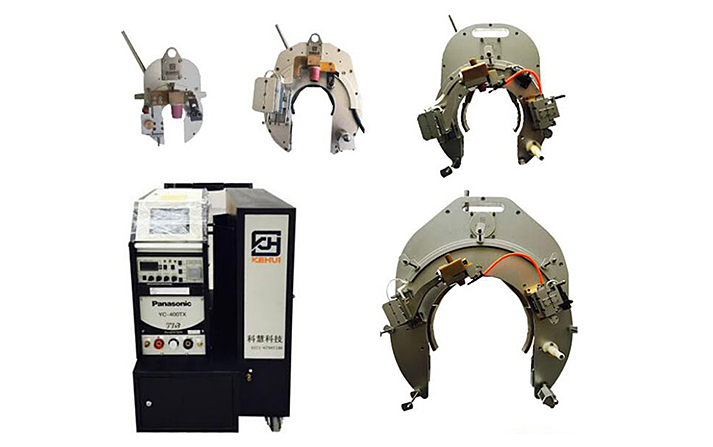
Here’s something that surprises people about the orbital TIG welding process.
The arc does the melting. But the gas does the protecting. And if the gas isn’t doing its job, the orbital welding process will produce welds that look fine today and fail next year.
We’ve seen it happen on jobs ranging from pharmaceutical lines to offshore platforms. The operator runs the orbital TIG welding process. The bead looks silver. The X-ray passes. Six months later, corrosion starts at the root where oxidation compromised the material.
The problem wasn’t the orbital welding process. The problem was the purge.
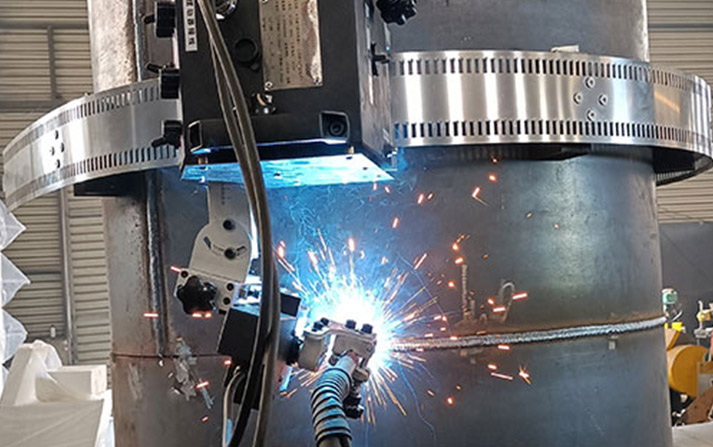
On large diameters, the orbital TIG welding process requires careful purge management. The gas needs to displace all the air. It needs to stay in place while the heat travels around the circumference. If the purge dams leak, if the flow rate is wrong, if the vent placement creates dead zones, the orbital welding process will weld through contaminated atmosphere and you won’t know it until the weld fails.
We’ve built our orbital welding process training around this problem. Every engineer we send teaches the same thing: the purge is not optional. The purge is not an afterthought. The purge is the foundation of the orbital TIG welding process. Get it wrong, and nothing else matters.
Ask most people selling orbital TIG welding systems about tungsten, and they’ll change the subject.
Tungsten is consumable. It wears. It contaminates. It drifts. And the orbital welding process amplifies every flaw in the tungsten because it repeats the same arc conditions on every joint.
We had a customer running the orbital welding process on a high-volume job. First shift ran fine. Second shift started seeing porosity. Third shift had to stop entirely.
The problem was tungsten wear. The orbital TIG welding process had been running the same tungsten for eight hours. By the time second shift started, the tungsten was contaminated with material from the previous joints. The arc was unstable. The orbital welding process kept running the same program, but the program assumed a clean tungsten.
Now we train our customers to change tungsten on a schedule—not when it looks bad. The orbital TIG welding process is too precise to leave tungsten condition to visual inspection. Change it every X welds. Track it. Document it. That’s how the orbital welding process becomes reliable.
Most people skip this step. Then they wonder why their orbital welding process results drift over time.
Here’s a question we get all the time: “Do I really need orbital welding certification for this job?”
The answer depends on what you’re welding.
If you’re welding handrails in a parking garage, maybe not. If you’re welding pharmaceutical lines, semiconductor gas lines, or pressure vessels, absolutely. And not just any orbital welding certification—certification that matches your exact conditions.
Orbital welding certification exists because the orbital welding process is repeatable. That repeatability means you can prove the weld quality. But it also means you have to prove it for every combination of variables you actually use.
We’ve watched projects get rejected because someone assumed the orbital welding certification from a previous job covered the new one. It didn’t. The orbital TIG welding process for 2-inch schedule 10s is different from 4-inch schedule 40s. Different heat input. Different cooling rates. Different certification.
Orbital welding certification isn’t a box to check. It’s the documentation that proves your orbital welding process works for what you’re building. Without it, you’re gambling. And in industries where failure isn’t an option, gambling isn’t acceptable.
Here’s something we learned after thirty-one years of the orbital welding process.
Selling a machine is easy. Teaching the orbital TIG welding process is hard. And most automatic orbital welding machine manufacturers skip the hard part.
We don’t. When you buy from us, we send an engineer to your facility. Anywhere in the world. We cover the travel. We cover the time. We stay until your people can run the orbital welding process on your pipe without us standing behind them.
We started doing this after losing a customer in the late 1990s. They bought our orbital TIG welding system. We shipped it. We sent a manual. They never got it running properly. The machine sat for months. By the time they figured it out, they’d already decided never to buy from us again—not because the equipment failed, but because we left them alone with it.
Now we don’t ship an orbital welding process system anywhere without making sure someone from our side shows someone on your side exactly how to make it weld. That’s what thirty-one years of doing this teaches you: the sale is the beginning, not the end.
Orbital welding certification is part of that. We help our customers build their certification programs. Not because we have to. Because we’ve seen what happens when they try to do it alone. It takes longer. It costs more. And it usually ends with a phone call asking us to fix something that shouldn’t have been broken.
When someone calls us and says they want to learn the orbital welding process, we ask them a few questions.
What are you welding? What’s the material? What’s the wall thickness? What’s your volume? Who’s going to run the machine? What’s your experience with TIG welding?
Sometimes the answer is: you’re ready for the orbital TIG welding process. Sometimes it’s: you need to spend more time on manual TIG first, because the orbital welding process won’t fix a lack of welding fundamentals.
We’ve been doing this since 1994. We’ve trained operators in over fifty countries. And the ones who succeed with the orbital welding process aren’t the ones with the most expensive equipment. They’re the ones who understand what’s happening inside the arc. They can hear when the purge isn’t right. They can see when the tungsten is degrading. They know when to stop and adjust rather than letting the orbital TIG welding process run through a joint that’s going to fail.
Orbital welding certification helps. But it’s not a substitute for experience. It’s the formal recognition of experience. And experience takes time to build.
The orbital welding process is powerful. It can produce welds that no human hand can match. It can run for hours with perfect consistency. It can document every parameter so you have traceability for years.
But the orbital TIG welding process is still welding. It still needs someone who understands purge, fit-up, tungsten, and material chemistry. It still needs proper qualification through orbital welding certification. It still needs attention to the details that don’t show up in the brochure.
We’ve been running the orbital welding process since 1994. We’ve sent engineers to over fifty countries to teach it. We’ve seen what works and what doesn’t. And the thing that separates success from failure isn’t the machine. It’s the person running the orbital TIG welding process.
If you’re building that capability, we’d like to help. Not just with equipment—with the training, the procedures, the orbital welding certification that makes the whole thing work. We’ve been doing this long enough to know that selling a machine without teaching the process is like selling a car without teaching someone to drive.
That conversation doesn’t cost anything. And if we’re not the right fit for what you’re trying to do with the orbital welding process, we’ll tell you that too. We’ve been doing this long enough to know when someone else’s approach makes more sense for your situation.
 TAG:
TAG: