Stock Code: 831045
Industrial Automation & Intelligence Solutions
SUMMERY: Most people talk about orbital welding stainless steel pipe like it's one thing. Thick wall. Thin wall. Schedule 40. Schedule 10. All the same. They're not. We learned this difference the hard way about fifteen years ago, when a cl...
Most people talk about orbital welding stainless steel pipe like it’s one thing. Thick wall. Thin wall. Schedule 40. Schedule 10. All the same.
They’re not.
We learned this difference the hard way about fifteen years ago, when a client in the pharmaceutical industry returned three of our orbital pipe welding machine setups. The machines worked fine on their 4-inch schedule 40s material. But on 2-inch schedule 10s, they couldn’t get a clean root without burn-through. The TIG welding stainless steel pipe process that worked on heavy wall was destroying thin wall.
That sent us back to the drawing board. And what we learned about orbital welding stainless steel pipe on thin-wall applications changed how we build equipment and train operators.
Here’s what we figured out—not from textbooks, but from watching stainless steel pipe welding companies struggle with the same problem over and over.
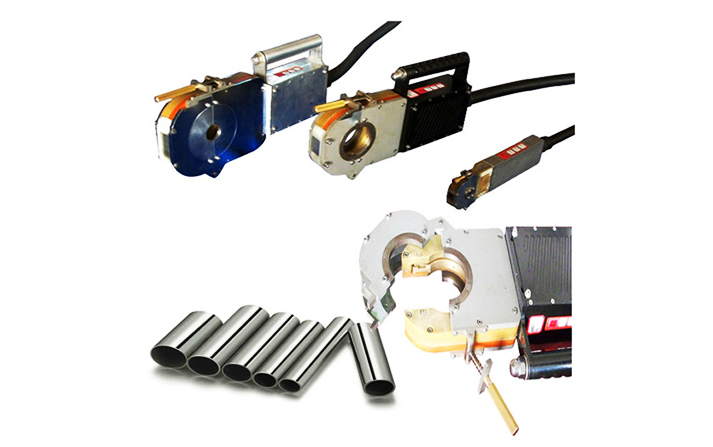
Here’s the first thing to understand about orbital welding stainless steel pipe on thin wall.
When you’re welding schedule 40 or heavier, you have thermal mass. The pipe absorbs heat. You can run a root pass, then a hot pass, then fills, then a cap. The orbital pipe welding machine has time to manage the heat.
On schedule 10 or thinner, you have almost no thermal mass. The heat you put into the root doesn’t dissipate. It builds up. By the time you’re halfway around the pipe, the material is already hot. The TIG welding stainless steel pipe process that worked at the start of the weld is now too aggressive. The orbital pipe welding machine doesn’t know this. It just keeps running the program.
We watched a contractor in the Pacific Northwest scrap fifteen joints of 3-inch schedule 10s 316L before they figured out what was happening. Their orbital welding stainless steel pipe program was developed on schedule 40 material. It worked perfectly on the test coupons. But on thin wall, the heat built up as the weld progressed. By the 6 o’clock position, the arc was burning through the root.
The solution wasn’t lowering the amperage across the board. It was programming the orbital pipe welding machine to reduce heat input progressively as the weld traveled around the circumference. Less current at the end than at the beginning. Variable speed. Adaptive pulse.
That’s the difference between orbital welding stainless steel pipe on thin wall and heavy wall. The program has to change during the weld. The machine has to think, not just execute.
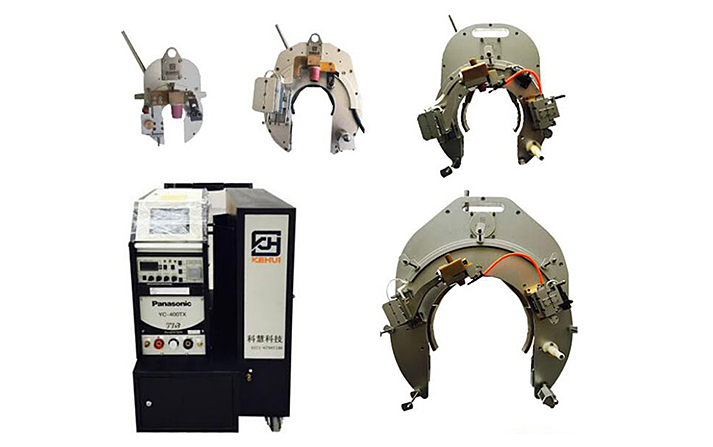
Here’s something that surprises people about TIG welding stainless steel pipe on thin material.
You need more purge gas, not less. But you need it differently.
On heavy wall, you can flood the pipe with argon and let it sit. The thermal mass keeps things stable. On thin wall, the heat travels through the material faster. The root is more sensitive to oxygen exposure. But too much purge flow creates turbulence that pulls oxygen into the weld zone.
We had a client doing orbital welding stainless steel pipe on 1.5mm wall tubing for a semiconductor facility. They were running high purge flow rates—what the industry standard suggested. Every weld showed root oxidation. They lowered the flow. The oxidation got worse. They raised it. Still bad.
The problem was turbulence. The orbital pipe welding machine was welding thin material that heated up quickly. The high flow rate created eddies in the purge zone that actually drew oxygen toward the weld. The TIG welding stainless steel pipe process was running in a gas environment that wasn’t as clean as the flowmeter suggested.
We solved it by changing the purge strategy. Instead of one high-flow port, we used two lower-flow ports positioned to create laminar flow. We also added a delay between purge start and arc start to let the gas stabilize. The orbital welding stainless steel pipe process that had been running at 15% rejection dropped to under 1%.
The lesson: on thin-wall stainless, purge quality matters more than purge quantity. And the orbital pipe welding machine needs to wait for stable conditions before striking the arc.
Another thing that changes with thin-wall orbital welding stainless steel pipe is the arc start.
On heavy wall, a slightly aggressive arc start is fine. The material absorbs the initial heat. The puddle forms, the machine settles into the program, and everything proceeds.
On thin wall, an aggressive arc start blows through before the weld even begins.
We had a customer who was losing the first 15 degrees of every weld on thin-wall 304L. The orbital pipe welding machine would strike the arc, start rotating, and by the time it had moved a few degrees, the root was already open. The rest of the weld looked fine. But the start zone was always bad.
The problem was the arc start parameters. Their orbital welding stainless steel pipe program used the same start settings for thin wall that they used for heavy wall. The initial current was too high. The travel speed was too slow. The TIG welding stainless steel pipe process was basically punching a hole before the machine even got moving.
We redesigned their start sequence. Lower initial current. Faster ramp to full power. Faster initial travel speed. The orbital pipe welding machine now does a “soft start” that eases into the weld instead of attacking it. The first 15 degrees went from the most problematic part of the weld to the most consistent.
This is the kind of detail that doesn’t show up in the glossy brochures about orbital welding stainless steel pipe. It’s the kind of detail you learn by watching hundreds of thin-wall welds fail and figuring out why.
Here’s another hidden challenge of TIG welding stainless steel pipe on thin wall.
The pipe moves.
On heavy wall, the material is rigid. You tack it, you clamp it, you weld it. The dimensions don’t change.
On thin wall, the heat from orbital welding stainless steel pipe causes the pipe to expand and contract. The tack welds can break. The fit-up can change mid-weld. The orbital pipe welding machine is trying to weld a joint that’s moving.
We saw this on a job welding 4-inch schedule 10s 316L for a brewery. The fabricator was using standard tacking procedures—four tacks, evenly spaced. By the time the orbital pipe welding machine got halfway around, two of the tacks had broken from thermal stress. The gap opened up. The root lost fusion.
The solution wasn’t a machine setting. It was a process change. More tacks. Smaller tacks. Tacks placed strategically to handle the thermal expansion. And on critical joints, we started using external clamps that held the pipe rigid throughout the orbital welding stainless steel pipe process.
The orbital pipe welding machine can’t compensate for a joint that’s falling apart. The TIG welding stainless steel pipe process has to start with a joint that stays stable. That means thinking about fixturing and tacking differently for thin-wall stainless than you would for heavy wall or carbon steel.
A few years ago, we ran an internal study on orbital welding stainless steel pipe. Five hundred welds on thin-wall 304L and 316L. We tracked every variable: purge flow, arc start parameters, travel speed, interpass cooling, tungsten condition, fit-up consistency.
The results told us something important.
The single biggest predictor of a successful thin-wall weld wasn’t the orbital pipe welding machine settings. It was the operator’s understanding of how heat builds up over the course of the weld. The welders who could anticipate where the heat was going—who knew when to let the machine run and when to pause—had success rates above 95%. The operators who just loaded the program and pressed start were in the 80s.
That’s the reality of TIG welding stainless steel pipe on thin wall. The machine does the arc control. It does the travel. It does the consistency that no human hand can match. But it still needs someone who understands what’s happening inside the weld zone.
Stainless steel pipe welding companies that succeed with thin-wall work don’t just buy an orbital pipe welding machine and turn their operators loose. They invest in training. They build procedures that account for material variation. They develop processes that manage heat, purge, and fixturing as carefully as they manage the arc.
We’ve been helping customers do this since 1994. Over fifty countries now. And the ones who treat orbital welding stainless steel pipe as a process—not just a machine—are the ones who get the results.
If you’re looking at orbital welding stainless steel pipe for thin-wall applications, here are the questions that matter:
How does your orbital pipe welding machine handle heat buildup over the course of the weld? Does it have adaptive programming that reduces heat input as the weld progresses? Or does it run the same parameters from start to finish?
What’s your approach to purge management on thin-wall? Do you have strategies for laminar flow and oxygen monitoring? Or are you guessing based on flowmeter readings?
How do you handle arc starts on thin material? Does your TIG welding stainless steel pipe program have adjustable start parameters, or is it one setting for everything?
Can you show me thin-wall welds from actual production—not just demo coupons? We can. Talk to our customers who are running orbital welding stainless steel pipe on schedule 10 and thinner. Ask them what problems they had and how we solved them.
How long have you been doing this? 1994. That’s 31 years of watching what works and what doesn’t on orbital welding stainless steel pipe—especially the thin-wall applications that trip up less experienced manufacturers.
Orbital welding stainless steel pipe on thin wall is not the same as on heavy wall. The heat management is different. The purge requirements are different. The arc start needs to be softer. The fixturing needs to be more rigid.
We learned these lessons by failing—by watching customers scrap pipe, miss deadlines, and get frustrated with equipment that should have worked. Each failure taught us something we built into the next machine, the next training program, the next procedure.
If you’re doing thin-wall stainless work and your current orbital pipe welding machine is giving you trouble, call us. Tell us what wall thickness, what diameter, what material. We’ve probably seen your problem before. And we’ve probably figured out how to fix it.
Because after 31 years of TIG welding stainless steel pipe, we’ve learned that the best stainless steel pipe welding companies aren’t the ones with the most expensive equipment. They’re the ones who understand the details that don’t show up in the manual.
 TAG:
TAG: