Stock Code: 831045
Industrial Automation & Intelligence Solutions
SUMMERY: In actual pipe manufacturing and field installation, pipe-to-pipe joint is not a "standardized, idealized" working condition. Pipe roundness errors, assembly gaps, bevel consistency, and limited site space all directly affect welding qua...
In actual pipe manufacturing and field installation, pipe-to-pipe joint is not a “standardized, idealized” working condition. Pipe roundness errors, assembly gaps, bevel consistency, and limited site space all directly affect welding quality.
Based on these real-world issues, when designing our orbital welding system, we didn’t start by “making a machine,” but rather by ensuring that pipe-to-pipe welding remains reproducible and reliably delivered even under complex conditions.
As a factory that has long focused on automated pipe welding equipment, every orbital welding system we use has been repeatedly validated in real-world projects.
In traditional manual welding, the quality of tube-to-tube welding is highly dependent on the welder’s experience, especially in all-position welding, where the stability differences between different welders are very significant.
The core value of orbital welding systems lies in three points:
In pipe-to-pipe joint scenarios, the welding carriage rotates around the pipe, rather than the welder moving around the weld seam. This ensures a high degree of consistency in the welding process of each tube-to-tube joint.
Many people think that orbital welding systems are simply “welding head + power supply,” but in practical applications, the usability of the system depends on the details.
When designing automated orbital welding systems, we focus on the following aspects:
(1) Tolerance for pipe assembly errors
In reality, pipes are not perfectly concentric. Our automated orbital welding system allows for a certain range of eccentricity and assembly errors in its mechanical structure and control logic, ensuring arc stability.
(2) Segmented parameter control for all-position welding
In tube-to-tube welding, the behavior of the molten pool is completely different at different positions.
We use segmented programming to allow the orbital welding machine for pipe to automatically adjust the current, oscillation, and wire feeding strategy at different angles.
(3) Low operational threshold
Automation is not about “more complex,” but about “simpler.”A mature orbital welding system should allow on-site personnel to simply select the program, rather than repeatedly debugging.
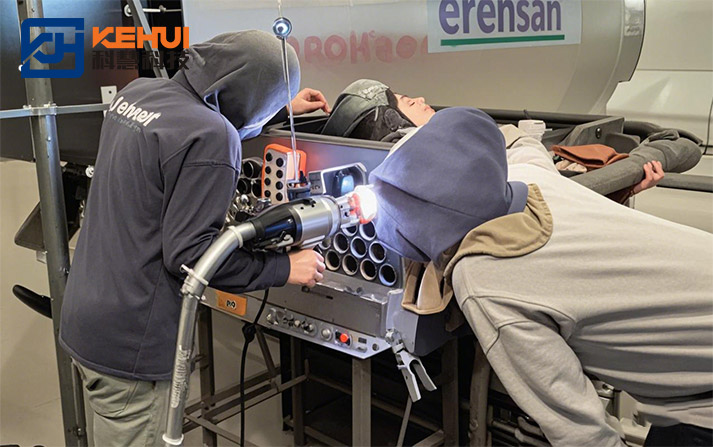
A truly stable orbital welding machine for pipe is not about piling up parameters, but about balancing structure and control.
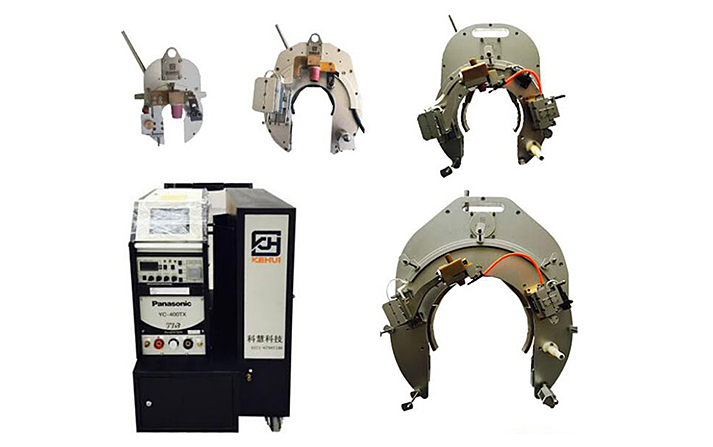
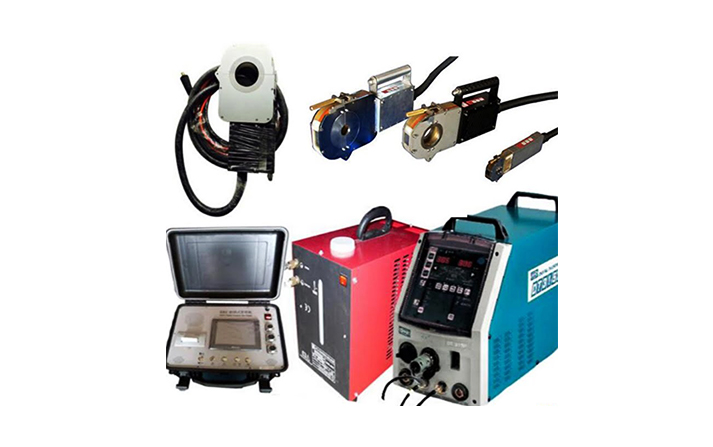
From our factory’s design perspective, the system typically consists of the following components:
These modules together constitute a complete automated orbital welding system, specifically designed for pipe-to-pipe joints and complex tube-to-tube joints scenarios.
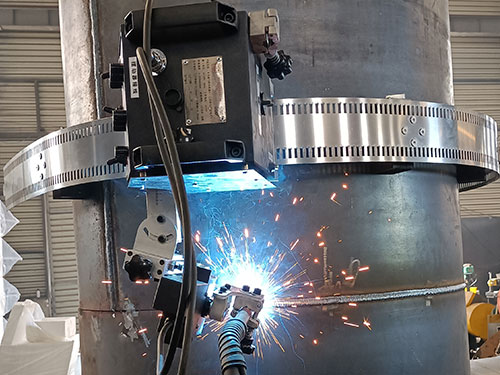
Many overseas customers, after using the China orbital pipe welding machine, have found that its biggest advantage is not its “low price,” but rather its closer resemblance to real-world working conditions.
The reasons are actually quite simple:
This allows us to naturally consider various non-ideal conditions when developing automated orbital welding systems, rather than just focusing on laboratory environments.
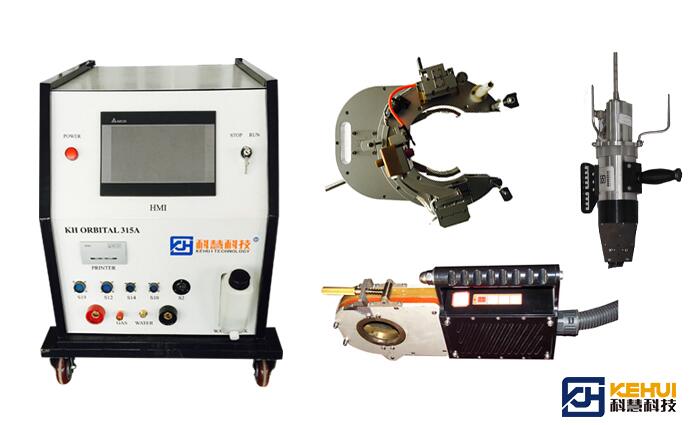
In tube-to-tube welding, the real challenge isn’t simply “getting the weld,” but rather:
These designs enable orbital welding systems to maintain high consistency across batches of tube-to-tube joints, independent of operator experience.
When welding transitions from “single-piece processing” to “batch delivery,” automation becomes almost the only option.
The automated orbital welding system brings not only increased efficiency, but more importantly:
This is the fundamental reason why more and more customers are choosing orbital welding machines for pipes to replace manual welding.
 TAG:
TAG: