Stock Code: 831045
Industrial Automation & Intelligence Solutions
SUMMERY: In many factories, the debate between orbital welding technology and manual TIG welding is not philosophical—it’s operational.As a manufacturer of automated pipe welding systems, we see this decision play out on production floors every w...
In many factories, the debate between orbital welding technology and manual TIG welding is not philosophical—it’s operational.
As a manufacturer of automated pipe welding systems, we see this decision play out on production floors every week. The difference is not just speed; it’s how welding variables are controlled, repeated, and scaled.
This article breaks down the comparison from a real engineering standpoint.
Manual TIG welding depends heavily on the welder’s experience. Torch angle, arc length, travel speed, and filler timing all change subtly from joint to joint.
Orbital welding technology, by contrast, converts skill into data.
Once parameters are set, the system controls:
Torch position
Rotation speed
Heat input
Arc length
From our factory tests, orbital welding technology reduces human variability more than any training program ever could. That’s why advanced orbital welders manufacturers design systems to “lock in” best practices rather than rely on memory or habit.
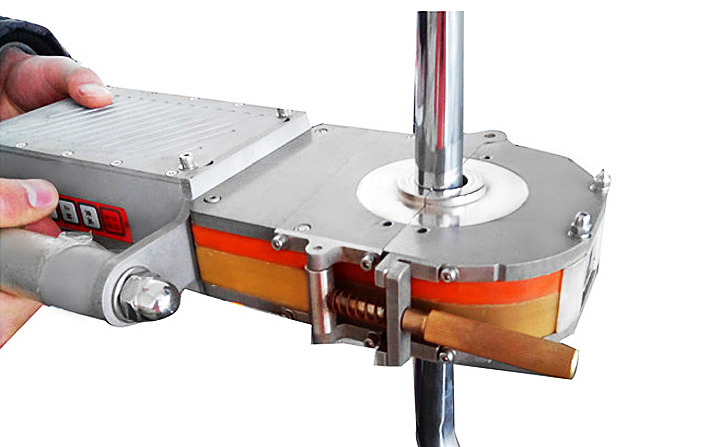
In manual TIG, the welder compensates for gravity, joint fit-up, and fatigue in real time.
With orbital welding tools, those compensations are mechanical and repeatable.
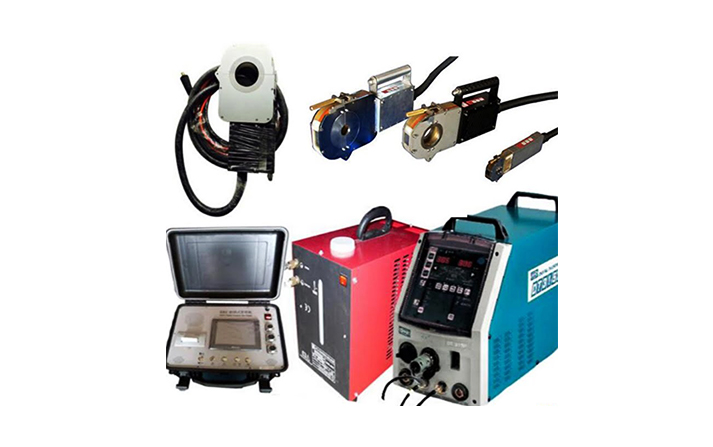
High-quality orbital welding tools ensure:
Constant torch-to-work distance
Smooth, vibration-free rotation
Uniform clamping pressure
From a design perspective, poor tooling undermines even the best power supply. This is why experienced orbital welders manufacturers invest more in mechanical precision than flashy interfaces.
Manual TIG relies on hands. Orbital welding tools rely on physics.
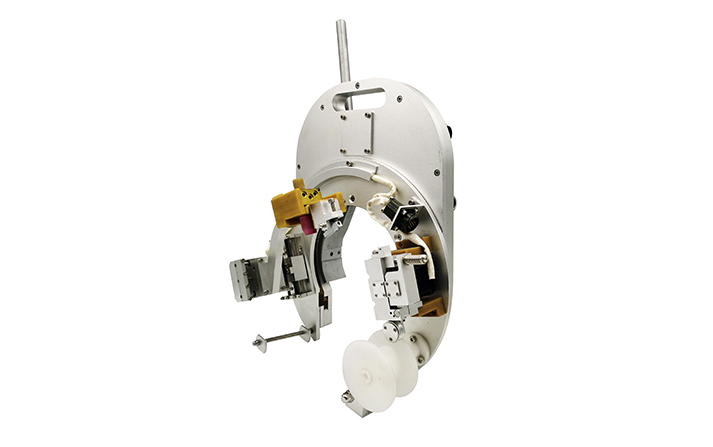
Heat control is where orbital welding technology quietly outperforms manual TIG.
In manual welding, heat fluctuates due to:
Speed inconsistency
Arc length variation
Welder fatigue
Orbital systems regulate heat by position, not by feel.
As a factory, we program orbital cycles so heat input changes slightly at:
The 12 o’clock position
The overlap zone
Thin-wall transitions
This level of control is nearly impossible manually, even for elite welders. It’s one reason orbital welding technology is now preferred in high-purity and thin-wall applications.
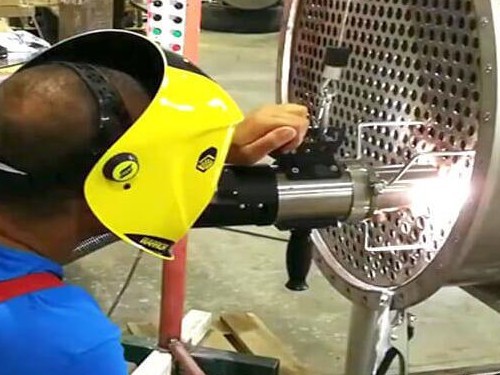
Many buyers assume orbital welding technology is faster only because it’s automated. That’s not the full story.
The real gain comes from:
Zero rework
Minimal inspection failures
Faster operator training
Manual TIG may complete a weld quickly, but downstream delays—repairs, inspections, requalification—add hidden costs.
Factories working with orbital welding equipment ltd suppliers often report that stable output matters more than peak speed. Consistency beats hero welding.
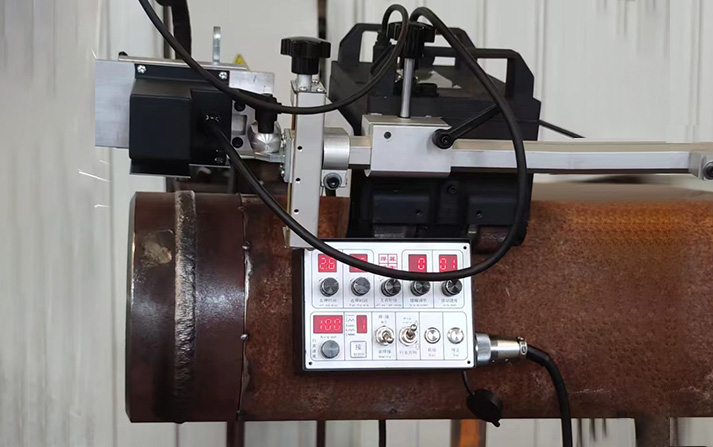
Manual TIG tools are simple but unpredictable—performance depends on the operator.
Orbital systems shift complexity into hardware and software. That’s why the best orbital welding machine is designed for:
Long-duty cycles
Replaceable wear components
Stable motion systems
From a manufacturer’s standpoint, the best orbital welding machine is not the one with the most features, but the one that produces the same weld after thousands of cycles.
That philosophy separates serious orbital welders manufacturers from marketing-driven brands.
To be clear, manual TIG is not obsolete.
For:
One-off repairs
Extremely tight access
Highly variable joint geometry
Manual TIG remains practical.
But when production volume increases, orbital welding technology becomes the only scalable option. This is why many customers start with manual TIG and gradually migrate to orbital systems once quality pressure increases.
As a manufacturer, we don’t see orbital welding technology as a replacement for welders—we see it as a way to protect them from inconsistency.
Good systems turn experience into repeatable results. Bad systems simply automate problems.
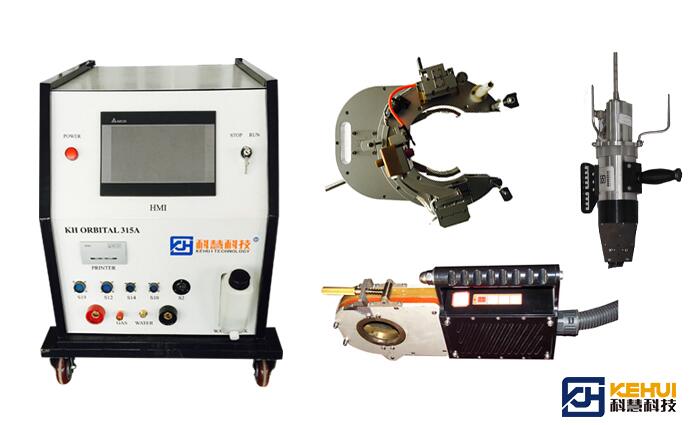
That’s why we design orbital welding tools, controls, and welding heads as a single system—not isolated components. Whether customers work with an orbital welding equipment ltd brand or directly with orbital welders manufacturers like us, the goal is the same: predictable weld quality under real conditions.
And that’s ultimately what defines the best orbital welding machine.
 TAG:
TAG: