Stock Code: 831045
Industrial Automation & Intelligence Solutions
SUMMERY: Walk onto any assembly floor running a robot spot welding process, and you'll see the same scene: engineers staring at screens displaying beautiful numbers—current, force, time. Everything looks perfect. Everything is green. Then the des...
Walk onto any assembly floor running a robot spot welding process, and you’ll see the same scene: engineers staring at screens displaying beautiful numbers—current, force, time. Everything looks perfect. Everything is green. Then the destructive test fails, and nobody understands why.
Here’s what nobody tells you about spot welding automation: the numbers on your screen are fiction. They’re averages. They’re approximations. And they’re hiding the chaotic physics happening inside the metal.
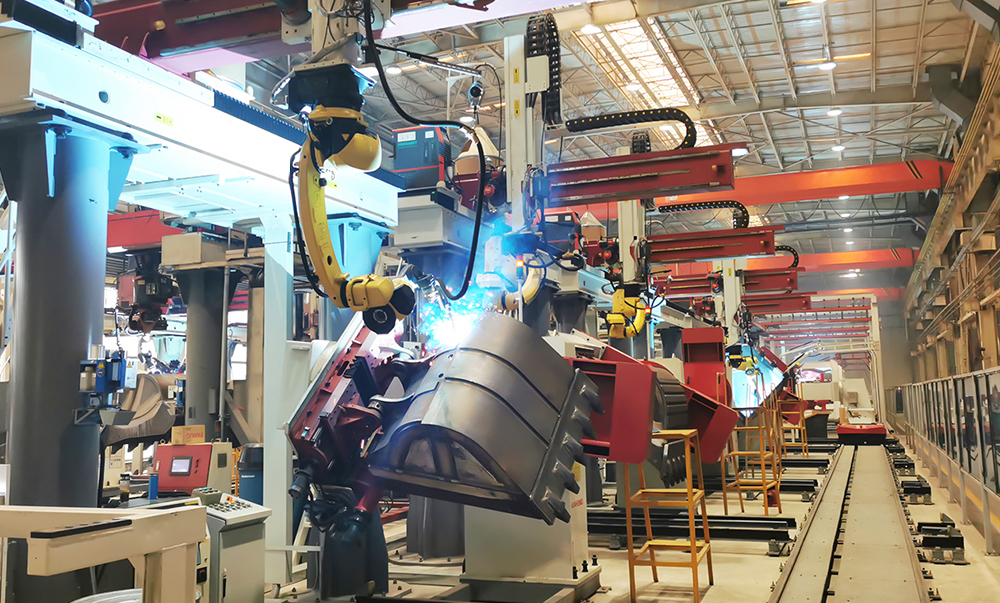
Your robotic spot welding machine commands 10,000 amps. But what actually reaches the weld interface? Maybe 8,500. Maybe 9,200. It depends on factors your controller never sees—the oxide layer thickness on this specific batch of steel, the temperature of your cooling water, the exact alignment of electrodes that drifted 0.2mm since the last maintenance.
The robot spot welding process is fundamentally analog in a digital world. We pretend we’re commanding precise values. In reality, we’re negotiating with physics.
Research shows that dynamic resistance during welding changes constantly—within a single cycle, within a single weld . The resistance drops as metal heats, then rises as melting begins, then stabilizes as the nugget forms. Your robotic spot welding machine that commands fixed current is like driving a car with the accelerator taped down. It moves, but it’s not really in control.
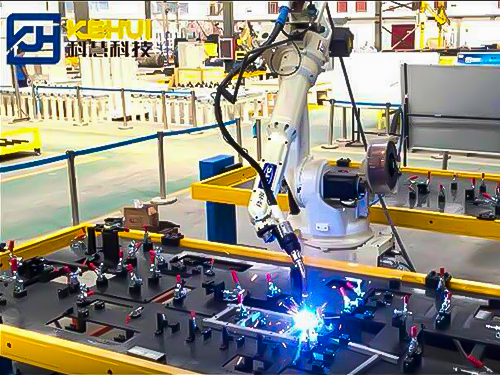
Here’s where modern automation in spot welding gets interesting. Instead of commanding parameters blindly, advanced systems now listen to what the weld is telling them.
Consider electrode displacement. As the metal heats and expands, the electrodes physically push apart. When melting starts, the expansion rate changes. When the nugget forms, the displacement curve shifts again . This isn’t subtle—it’s microns of movement that directly correlate with weld quality.
A properly tuned robot spot welding process doesn’t just deliver current and hope. It watches the displacement curve in real-time. It knows that if expansion doesn’t hit a certain rate by a certain millisecond, something’s wrong. Maybe the electrode is worn. Maybe the part fit-up is poor. Maybe the material is different than specified.
The system that only logs parameters is blind. The system that interprets them is intelligent.
Here’s a scenario that haunts every spot welding automation engineer: you weld two spots 50mm apart. The first spot heats the metal. The second spot starts with base metal at 200°C instead of 25°C. Your robotic spot welding machine applies the same current, the same force, the same time. The second weld? Completely different.
Thermal buildup is the silent killer of consistent automation in spot welding. The heat from previous welds changes everything—electrical resistance, thermal conductivity, material strength. Weld too close to a previous spot, and you’re effectively welding pre-heated metal. The nugget grows faster, potentially too large. The heat-affected zone changes.
Smart systems compensate by monitoring inter-weld temperature, either through contact measurement or by analyzing the dynamic resistance of the first few cycles. If the base temperature is elevated, they reduce current or time to maintain consistent nugget volume .
A major automotive supplier faced a nightmare: intermittent weld failures on a critical chassis component. Traditional troubleshooting found nothing. Parameters were within spec. Electrodes were fresh. Cooling was optimal.
The problem? Micro-variations in the incoming steel . Different coils from the same mill had slight differences in surface condition, coating thickness, and alloy distribution. These variations were invisible to visual inspection but deadly to weld consistency.
The fix wasn’t better steel—it was smarter spot welding automation. By implementing adaptive control algorithms that adjusted parameters based on the first 20 milliseconds of each weld, the system compensated for material variation in real-time. If resistance rose faster than expected, indicating a different coating thickness, the controller reduced current to prevent expulsion. If resistance rose slower, it added energy to ensure full nugget formation .
The result? Weld consistency improved by 40%. Scrap dropped by 60%. The robotic spot welding machine didn’t work harder—it worked smarter.
The traditional approach to automation in spot welding assumes consistency. Consistent material. Consistent electrodes. Consistent fit-up. In reality, every variable drifts. Electrodes wear. Cooling water temperature fluctuates. Material properties vary between mill runs.
A fixed schedule is a bet that all these variables will cancel out. Sometimes they do. Sometimes they don’t. When they don’t, you get failures that seem random but aren’t—they’re deterministic responses to uncontrolled variables.
Adaptive control doesn’t eliminate variation. It measures it and responds. The robot spot welding process becomes a closed-loop system: measure displacement or dynamic resistance, compare to target, adjust parameters for the next weld. It’s not AI magic—it’s basic control theory applied to a process that should have been closed-loop decades ago .
Here’s the uncomfortable truth: buying a robotic spot welding machine is easy. Making it weld consistently, shift after shift, with real-world material variation and real-world maintenance schedules? That’s hard.
The difference between a system that frustrates and one that delivers often comes down to integration depth. Does your spot welding automation include adaptive controls, or just fixed schedules? Does it log meaningful data, or just cycle counts? Does your integrator understand metallurgy, or just robotics?
This is where thirty years changes everything.
We’ve been integrating spot welding automation since 1994. Before “Industry 4.0” was a term, we were helping manufacturers figure out why their welds failed on Tuesday but passed on Wednesday. We learned that the answer wasn’t always in the robot—it was in the material, the water, the tips, the thousand small variables that add up to success or failure.
When you work with us, you’re not just buying a robotic spot welding machine. You’re buying three decades of debugging, of tuning, of figuring out what actually works when the production line is running and the parts keep coming.
We’ve shipped systems globally—to automotive plants, heavy equipment fabricators, tier suppliers who can’t afford downtime. Every installation comes with engineers on-site, not just for startup but for the ongoing conversation about what your data means and how to make it better.
The robot spot welding process isn’t mysterious. It’s physics. But physics is complicated, and the difference between theory and practice is larger in welding than almost anywhere else.
We’ve spent thirty years closing that gap. Let us show you what it looks like when automation in spot welding actually delivers on its promise—consistent, predictable, high-quality welds, shift after shift, year after year.
 TAG:
TAG: