Stock Code: 831045
Industrial Automation & Intelligence Solutions
SUMMERY: In many factories, automation projects begin with robot selection. In successful factories, they begin with process mapping. A robotic arm assembly line is not built by stacking robots along a conveyor—it is engineered by aligning motion...
In many factories, automation projects begin with robot selection. In successful factories, they begin with process mapping. A robotic arm assembly line is not built by stacking robots along a conveyor—it is engineered by aligning motion, fixtures, and timing into a controllable production system.
This distinction is exactly why some assembly lines scale smoothly, while others struggle after the first product change.
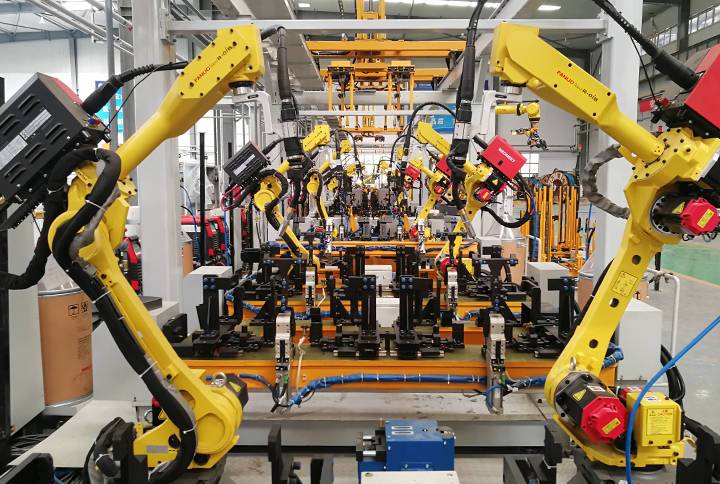
A standalone assembly line robot arm can repeat movements with high accuracy, but repetition alone does not equal productivity. In an assembly environment, every second the robot waits for parts, signals, or clearance reduces real output.
A functional robotic arm assembly line must solve:
Part positioning repeatability before robot motion
Cycle time synchronization between stations
Mechanical tolerance stacking across multiple steps
Human–robot interaction points that do not break flow
Without this system logic, even the most advanced assembly robot arm becomes a localized solution inside a global problem.
One overlooked truth: most robotic inefficiencies are caused by layout, not programming.
In poorly planned lines, we often see:
Excessive robot reach caused by oversized station spacing
Tool center point drift due to flexible fixtures
Unnecessary axis rotations that inflate cycle time
A 4 DOF robotic arm assembly used where orientation freedom is marginally insufficient
A well-designed assembly line robot arm layout reduces motion complexity before code is written.
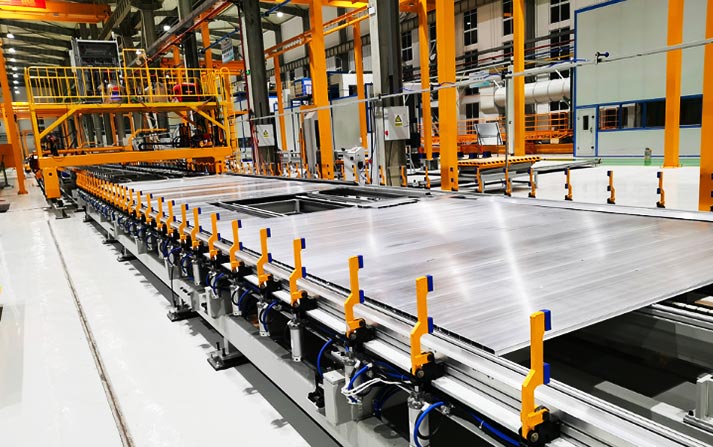
A 4 DOF robotic arm assembly is not a compromise—it is a specialization.
For applications such as:
Linear part loading
Fixed-orientation welding and fastening
High-speed planar assembly
A 4 DOF solution can outperform higher-DOF systems in speed, stability, and maintenance cost. The key is recognizing its limitations early and designing the robotic arm assembly line around them, rather than forcing flexibility into software.
This is where experienced industrial robotic system integrators prevent expensive mid-project changes.
Robots execute commands. Industrial robotic system integrators decide whether those commands make sense inside production.
Their role goes far beyond installation:
Defining takt time logic across multiple assembly robot arms
Designing fixtures that absorb part variation instead of amplifying it
Creating fault-handling strategies that keep the line running
Planning for product evolution without re-engineering the entire robotic arm assembly line
This is why choosing industrial robotic system integrators early often matters more than the robot brand itself.
Optimizing one assembly robot arm in isolation often harms the entire line.
In real assembly environments:
A faster robot can starve downstream stations
A slower robot may stabilize overall takt
Overlapping work envelopes can create safety constraints
Maintenance access can determine real uptime
An efficient robotic arm assembly line treats each assembly robot arm as part of a coordinated system, not a standalone performance unit.
Many factories fear automation because scaling feels risky. In practice, poor scalability is a design issue, not a robot issue.
A scalable robotic arm assembly line is built with:
Reserved space for future stations
Modular fixture interfaces
Expandable control architecture
Clear separation between motion logic and product data
This approach allows additional assembly line robot arms to be added without stopping production for months.
We are not a robot manufacturer—we are automation builders.
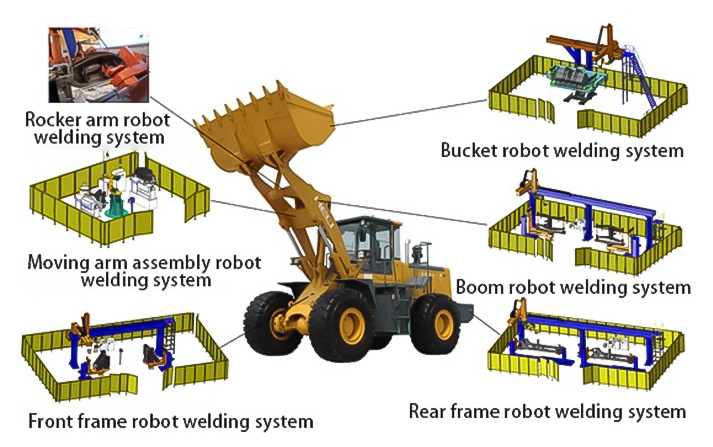
Founded in 1994, we specialize in designing and delivering robotic arm assembly lines, automated welding robot workstations, and integrated assembly–welding production lines for manufacturers worldwide.
What makes our projects different:
Every robotic arm assembly line starts with on-site process analysis
Fixtures and robot motion are engineered together, not separately
Our engineers travel globally for installation and commissioning
Lines are designed for expansion, not just initial acceptance
We focus on what happens after the robots are powered on: stable takt, predictable quality, and systems that production teams can actually run.
For manufacturers planning their next robotic arm assembly line, the real investment is not in robots—but in system thinking that works on the factory floor.
 TAG:
TAG: