Stock Code: 831045
Industrial Automation & Intelligence Solutions
SUMMERY: If you’ve ever toured a factory where robots are “installed” but production still relies on manual rework, you already know the truth: welding automation isn’t about buying robots. It’s about choosing the right robotics integration compa...
If you’ve ever toured a factory where robots are “installed” but production still relies on manual rework, you already know the truth: welding automation isn’t about buying robots. It’s about choosing the right robotics integration companies that can turn equipment into stable output.
A robot arm can move. A factory needs weld quality, takt time, and repeatability. That gap is bridged by a capable welding robot integrator—not by a catalog.
This guide explains what makes experienced robotics integration companies different, what to look for in a welding robot integrator, and how to evaluate suppliers based on real manufacturing outcomes.
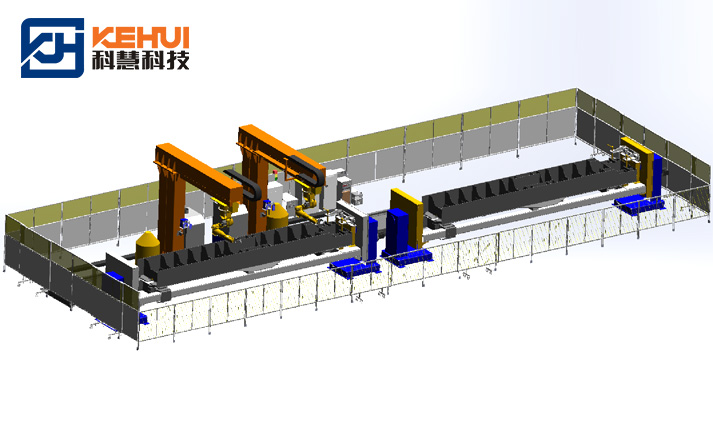
Welding is one of the most demanding automation applications because it mixes physics, process stability, and mechanical repeatability. Even small variations in parts can cause defects, spatter, lack of fusion, or distortion.
That’s why choosing robotics integration companies with real welding depth matters. A professional welding robot integrator understands:
Arc behavior, wire feeding stability, and shielding gas influence
Torch angle control and weld sequence planning
Distortion management and fixture rigidity
How to maintain quality across shifts, operators, and batches
Many suppliers can “sell robots.” Only experienced robotics integration companies can deliver production-ready welding systems.
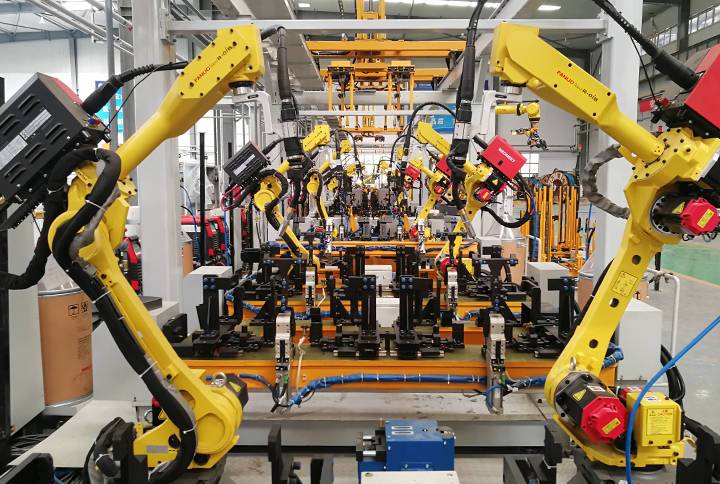
A true welding robot integrator doesn’t deliver a robot—they deliver a functioning welding process. The best robotic welding integrators typically provide:
Welding process validation before system build
Custom fixture and positioner engineering
Robot programming based on weld geometry, not generic paths
Sensor integration (seam tracking, arc sensing, vision)
Safety design and production control logic
The result is not just automation, but stable welding automation solutions that reduce defects and improve repeatability.
If a supplier only talks about robot models or payload, they’re not acting as a real welding robot integrator.
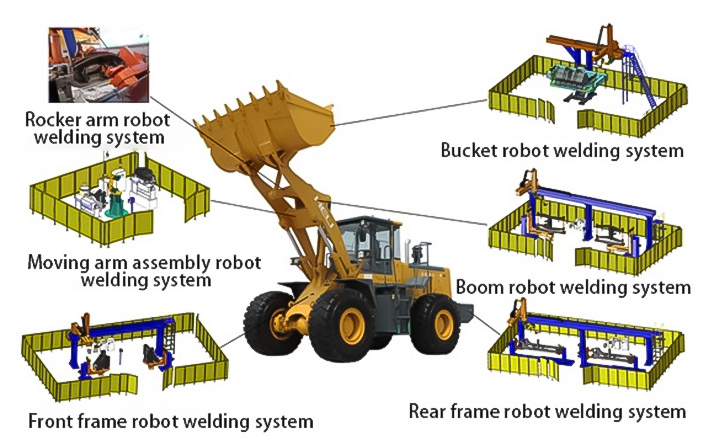
Most welding automation projects fail for predictable reasons:
Parts are not consistent
Even high-quality suppliers deliver parts with tolerances. The system must absorb variation.
Fixtures are weak or poorly designed
Welding automation depends on repeatable positioning. Without fixture stability, programs don’t matter.
No adaptive control strategy
A robot running fixed parameters is fragile. Real welding automation solutions require adjustment logic.
That’s why experienced robotics integration companies focus on engineering details early—before installation.
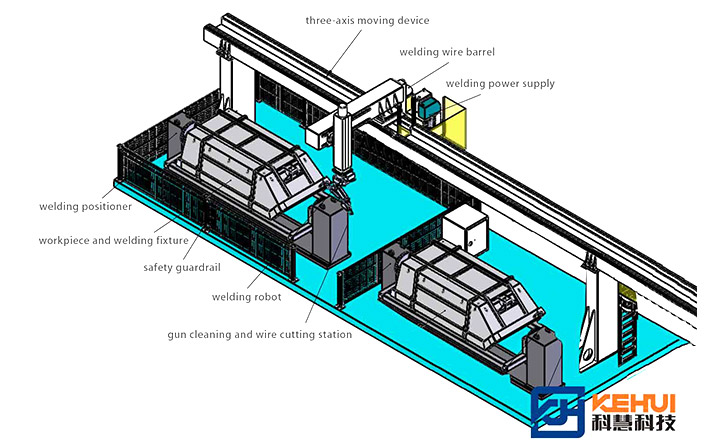
A general industrial robotic integrator may be excellent at handling, palletizing, or loading. Welding is different.
A welding-focused industrial robotic integrator must understand:
Weld joint behavior under heat
Spatter control and arc stability
Penetration and bead shape requirements
Cycle time vs weld quality balancing
In short, not every industrial robotic integrator is qualified as a welding robot integrator.
When selecting robotics integration companies, always verify welding experience through actual applications—not just brochures.
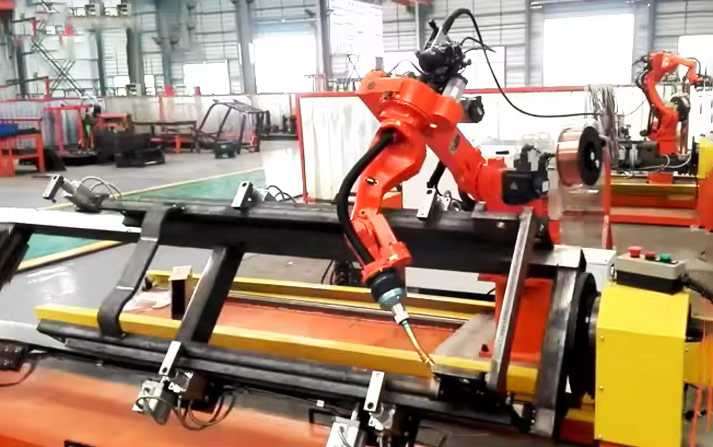
Modern manufacturing increasingly combines welding with assembly automation. That’s why many buyers now look for a partner who can act as both a welding robot integrator and an automated assembly integrator.
For example:
Welding + automatic loading/unloading
Welding + part transfer conveyors
Welding + inspection and traceability
Welding + downstream assembly stations
The strongest robotics integration companies build systems that fit into production flow, not isolated welding islands.
Here are practical evaluation points that reveal real capability:
Serious robotic welding integrators can explain how they solved distortion, gaps, and seam variation.
A true welding robot integrator should show how fixtures prevent movement and ensure repeatable weld geometry.
A good industrial robotic integrator doesn’t just install—they tune on real parts until the line reaches stable takt time.
Welding automation always needs real shop-floor tuning. Without support, long-term stability suffers.
We are a welding-focused automation provider founded in 1994, delivering robotic welding workstations and production lines to manufacturers worldwide. As one of the experienced robotics integration companies, we approach projects as process engineering—not equipment sales.
As a welding robot integrator, we provide complete welding automation solutions including:
Welding process evaluation and cell layout design
Custom tooling, fixtures, and positioners
Integration of arc welding and laser welding systems
On-site installation, commissioning, and operator training
Our engineers travel to customer factories globally to ensure the system runs reliably in real production conditions. That is how robotics integration companies with true welding experience create long-term value.
If you want reliable welding automation, don’t ask “Which robot should I buy?”
Ask “Which welding robot integrator can deliver stable output in my factory?”
The difference between working automation and constant troubleshooting is the integration partner. Choose robotics integration companies that understand welding reality—because welding automation is never just about robots.
 TAG:
TAG: