Stock Code: 831045
Industrial Automation & Intelligence Solutions
SUMMERY: Every heating equipment manufacturer has that one heat exchanger that came back too soon. Maybe it leaked at the tubesheet after two years. Maybe a tube pulled loose during a pressure spike. Maybe the welds just looked inconsistent from ...
Every heating equipment manufacturer has that one heat exchanger that came back too soon. Maybe it leaked at the tubesheet after two years. Maybe a tube pulled loose during a pressure spike. Maybe the welds just looked inconsistent from one end of the bundle to the other. We have seen all of it, and in every case, the root cause traced back to one thing: variability in how those orbital welding tube to tubesheet joints were made.
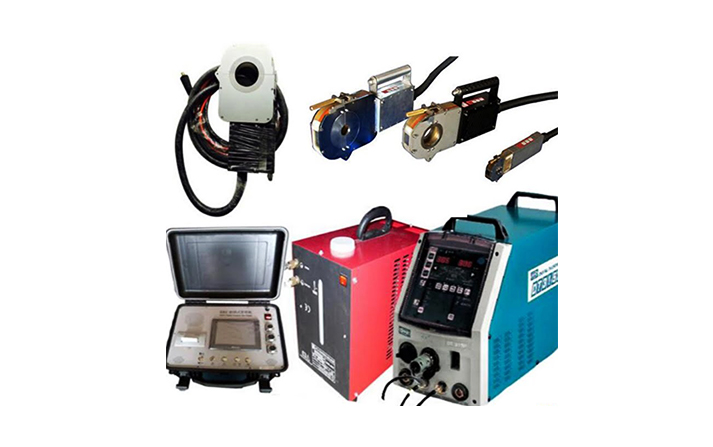
We build orbital welding machine for tube to tubesheet welding systems specifically for heating equipment. Not general-purpose welders—machines designed to lock onto a tube, orbit around it, and deliver the same precise joint on tube number 500 as on tube number one. Here is what we have learned about why that consistency matters more than any other factor in heating equipment fabrication.
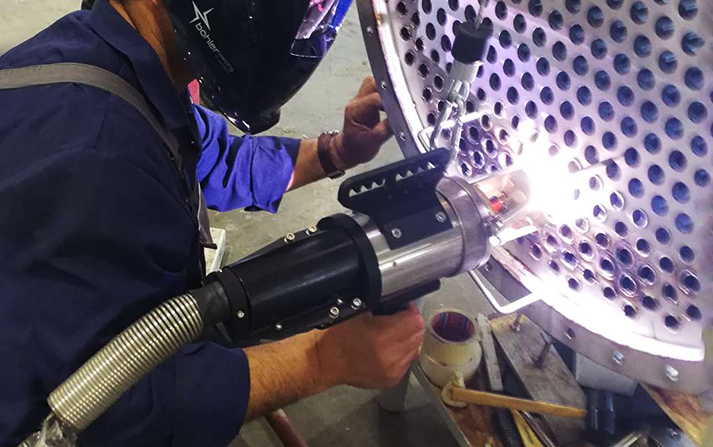
Walk through almost any boiler or heater shop, and you will see the same scene: a welder bent over a tubesheet, torch in hand, trying to walk the cup around a tube. If they are skilled, the weld looks good. But watch them for an hour, and you will see the variation. The arc length changes slightly as they reposition. The travel speed slows when their arm gets tired. The puddle behaves differently at the bottom of the tube than at the top.
That variation is not just cosmetic. In heating equipment, the orbital welding tube to tube-sheet weld head must create a joint that withstands thermal cycling—expansion and contraction every time the burner fires and shuts down. If penetration varies around the circumference, stress concentrations develop. Eventually, a crack initiates at the thinnest point and propagates.
Manual welding also struggles with access. In dense tube bundles, the welder cannot see half the joints clearly. They are working by feel, hoping the arc is doing what they think it is doing. An orbital welding tube-to-tube-sheet weld head, on the other hand, fits into tight spaces, centers itself automatically, and delivers shielding gas exactly where needed regardless of how cluttered the tubesheet is.
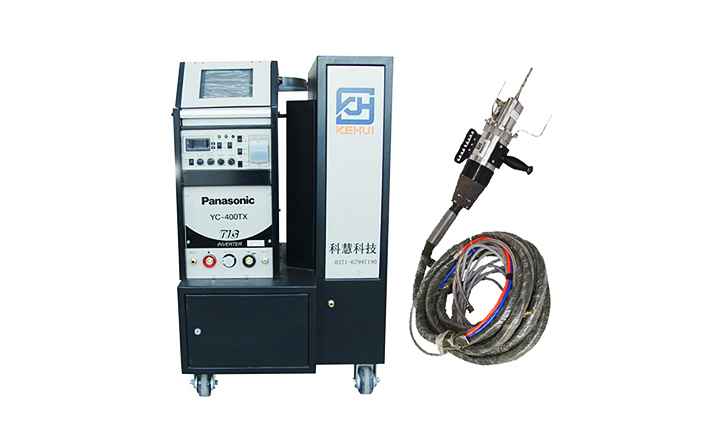
When we demonstrate our orbital welding machine for tube to tubesheet welding, we run a test that surprises most visitors. We weld ten tubes in a row, then section them and put the cross-sections under a comparator. The penetration depth varies by less than 0.2 mm across all ten. The fusion line follows the same contour. The weld reinforcement is identical.
That consistency comes from how the orbital welding tube to tube-sheet weld head controls the process. The arc length is maintained electronically, not by hand steadiness. The travel speed is governed by a precision gear train, not by how fast the welder can rotate their wrist. The current pulses according to a schedule developed for that specific material and wall thickness, compensating for the changing gravitational effect as the torch orbits.
For heating equipment, this means every joint has the same load-carrying capacity. The weak links are eliminated. When the boiler cycles from cold start to full load, all tubes expand together, and the welds accommodate the movement without concentrating stress.
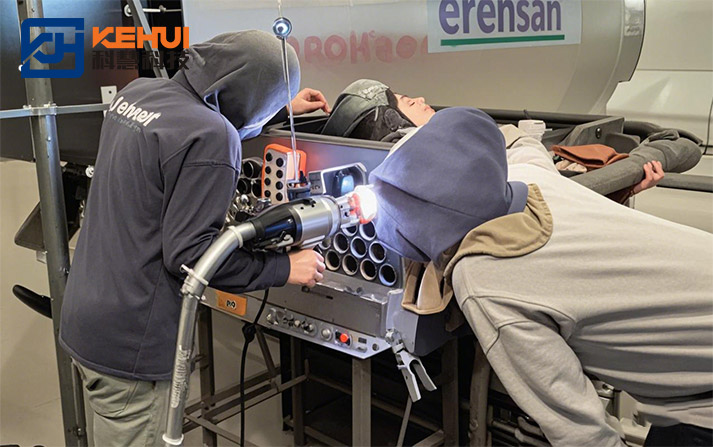
Not all tube-to-tube-sheet orbital welding heads are created equal. We learned this the hard way years ago when a customer called with a problem: their welds looked perfect on the outside but failed hydrotest. The issue was that their head had poor gas coverage on the inside diameter, allowing oxidation that weakened the joint.
Our heads use a closed-chamber design that floods the weld zone with argon. For materials like stainless steel or Inconel that are sensitive to atmospheric contamination, this is non-negotiable. The tube sheet to tube orbital welding head also includes integral water cooling, which lets us run high duty cycles without overheating the drive motor or the torch body. In production environments where bundles have hundreds of tubes, stopping to let a head cool down kills productivity.
Another detail that matters: how the head centers itself. We use expanding mandrels that grip the tube ID without marking the surface. The orbital tube to tube sheet weld head then references off that centerline, ensuring the tungsten is concentric regardless of tube ovality or slight misalignment. If the head is off-center, the arc length varies, and so does penetration.
One of our customers builds waste heat recovery boilers for the petrochemical industry. Their tubesheets are massive—over two meters in diameter—with thousands of tubes. They used to weld manually, but the reject rate was eating their margins. After switching to our orbital welding machine for tube to tubesheet welding, their rework dropped to less than 2%. The operator now monitors three heads simultaneously while they run, inspecting completed welds as the next ones are being made.
Another case involved a manufacturer of electric heaters for commercial buildings. Their tubes are thin-walled stainless, prone to burn-through if heat input varies. Manual welding required constant adjustment and still produced scrap. Our orbital welding tube to tubesheet system allowed them to program a pulse profile that delivers just enough energy to fuse the joint without blowing through the backside. Their production rate doubled.
These are not special cases. They are what happens when you remove human variability from a process that demands precision.
One feature of modern orbital welding machine for tube to tubesheet welding systems that heating equipment manufacturers are starting to appreciate is data logging. Every weld is recorded: current, voltage, travel speed, wire feed, gas flow. If a joint fails inspection years later, you can pull up the exact parameters used to make it. You can prove to a customer or an inspector that your process was under control.
For shops building to ASME Section VIII or Section I, this traceability is gold. It replaces handwritten logs and operator memory with objective records. And because the orbital welding tube to tube-sheet weld head executes the same program every time, the data is meaningful—not just a record of random variation.
When you invest in an orbital welding tube to tube-sheet weld head, you are not just buying hardware. You are buying the ability to run production without constantly fighting rejects. But the equipment has to be maintainable. Our heads are designed so that operators can change collets, replace gas lenses, and adjust tungsten stickout in minutes, not hours. Sealed bearings and hardened drive gears mean they run for years without service if kept clean.
We also include training as part of every sale. Not just a quick walk-through—three days on your floor, running your material, answering the questions that only come up when you are staring at a weld that does not look quite right. That investment in knowledge pays back faster than any equipment discount.
Heating equipment is unique because it lives at the intersection of pressure, temperature, and time. A boiler might cycle thousands of times over its life. Each cycle imposes strain on every tube-to-tubesheet joint. If those joints are not identical, some will take more strain than others, and they will fail first.
Orbital welding tube to tubesheet eliminates that lottery. It makes every joint as strong as the one next to it. It lets you build equipment that meets its design life instead of failing early. And it does so while reducing your labor cost and increasing your throughput.
If you are still welding heating equipment tubes by hand, come see what our machines can do. Bring a sample tubesheet, and we will run it on our floor. You will see the difference in consistency, in appearance, and in the data we collect. No pressure, no sales pitch—just decades of building tools that help people build better heaters.
 TAG:
TAG: