Stock Code: 831045
Industrial Automation & Intelligence Solutions
SUMMERY: Every fabrication shop faces the same pressure today: more work, fewer skilled welders, and customers who refuse to wait. The obvious answer is automation. But the path from manual welding to a fully automated robotic welding line is rar...
Every fabrication shop faces the same pressure today: more work, fewer skilled welders, and customers who refuse to wait. The obvious answer is automation. But the path from manual welding to a fully automated robotic welding line is rarely a straight line. Most facilities can’t shut down for months to rip and replace. They need automated welding solutions that work within the rhythm of existing production—solutions designed by experienced robotic automation companies that understand real‑world constraints.
Before any robot moves in, you need to understand what your current line actually does. Not just cycle times—the real data. Which joints consume the most labor? Where do quality issues cluster? Which welds are physically destroying your workforce?
This is where a qualified welding robot integrator earns their keep. They don’t sell robots first—they study your process. They measure actual arc‑on time versus handling time. They identify the 20% of welds that cause 80% of the fatigue. This forensic audit determines whether you need a single cell or a complete automated robotic welding line, and guides robotic automation companies in delivering tailored automated welding solutions that target your biggest pain points.
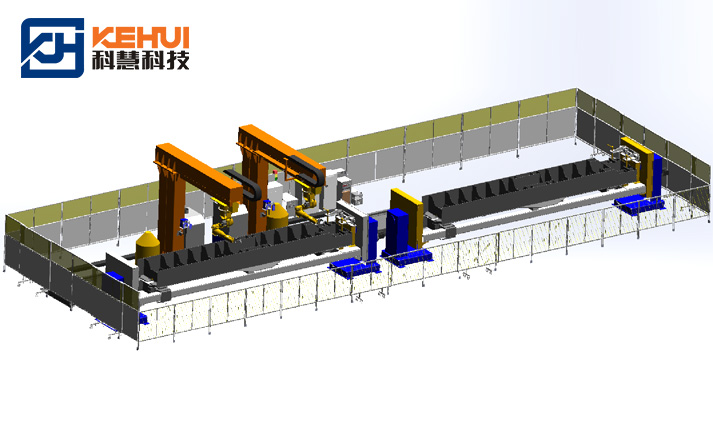
The biggest mistake in automation is trying to do everything at once. Smart integration, as executed by top robotic automation companies, happens in layers.
Start with a standalone robotic cell for your highest‑volume, most repetitive joints. This is the entry point for many automated welding solutions. The cell operates alongside manual stations, handling the work that exhausts welders—long straight seams, circular welds, heavy components. Your team keeps doing what they do best: complex joints, fit‑up adjustments, final inspection.
Once that first cell proves itself, you expand. Add a second cell. Integrate a positioner. Connect them with a shuttle system. Gradually, you’re building toward a fully automated robotic welding line without ever stopping production. This approach demonstrates how effective automated welding solutions can evolve with your production needs.
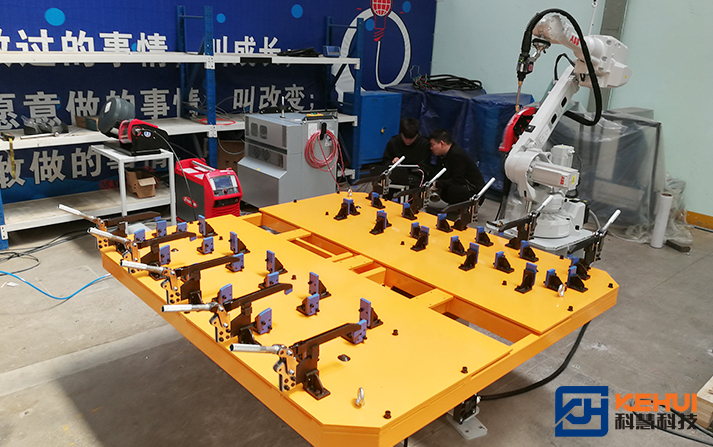
Hardware gets the attention, but software makes integration work. Modern robotic automation companies offer offline programming tools that let you develop and test robot paths for your automated robotic welding line without taking the line down. You simulate the cell on a computer, optimize the motion, then download the program during a scheduled break.
This capability transforms integration from a disruption into a background activity. Your engineers program new parts while production runs. When changeover happens, the robot is ready.
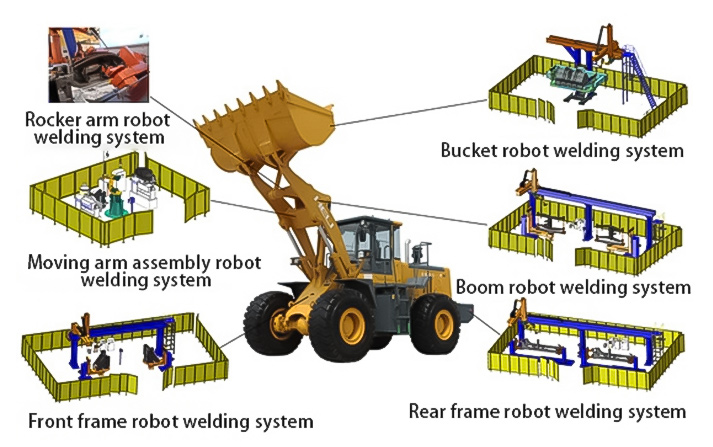
Traditional automation demanded precision fixturing—expensive custom clamps that held parts in exactly the right position. That requirement often killed the business case for smaller shops.
Today’s automated welding solutions—often integrated by specialized robotic automation companies—use vision and seam tracking to handle real‑world variation, enabling truly flexible automated robotic welding lines. The robot sees the joint, measures the gap, and adapts its path and parameters on the fly. This means you can automate using your existing tooling, or even no tooling at all. The robot adapts to your parts, not the other way around.
Here’s what the brochures don’t tell you: automation changes jobs, but it doesn’t eliminate them. The welder who spent 10 hours a day in a smoky bay becomes the supervisor of two robots. They handle setup, troubleshoot edge cases, and interpret the data the system generates.
Forward‑thinking robotic automation companies include comprehensive training in their robotic welding solutions, ensuring that your team can maximize the potential of your automated welding solutions. Your best welders learn to program, to maintain, to optimize. They transfer decades of craft knowledge into the robots, making the whole line smarter.
The difference between a successful integration and an expensive disappointment often comes down to the integrator—specifically, the expertise of the robotic automation companies you choose to partner with. A welding robot integrator who understands metallurgy as well as robotics catches problems before they happen. They know that a weld that looks perfect might hide cold fusion. They understand how heat input affects distortion across a multi‑pass sequence.
We’ve been delivering automated welding solutions since 1994. Over three decades, we’ve integrated systems for manufacturers across the globe—automotive suppliers, heavy equipment fabricators, shipyards, and job shops. Every installation includes on‑site engineering support because we know that integration isn’t a transaction. It’s a partnership. As a trusted welding robot integrator, we’ve helped countless manufacturers transition to fully automated robotic welding lines using proven robotic welding solutions trusted globally.
When you work with us, you’re not just buying equipment. You’re buying a library of process knowledge accumulated across thousands of applications. You’re buying field service engineers who understand that downtime costs thousands per minute. You’re buying a partner who helps you plan the next step before you need it.
The line you have today can become the line you need tomorrow. It doesn’t require starting over. Whether you need a single cell or a complete automated robotic welding line, our team delivers automated welding solutions tailored to your needs. It requires the right plan, the right technology, and the right integrator.
Let’s talk about what that looks like on your floor.
 TAG:
TAG: