Stock Code: 831045
Industrial Automation & Intelligence Solutions
SUMMERY: We spent three months chasing a defect that didn't exist. A client in the brewery equipment sector kept rejecting welds from their stainless steel pipe welding machine setup. The beads looked fine to the naked eye. X-ray passed. Press...
We spent three months chasing a defect that didn’t exist.
A client in the brewery equipment sector kept rejecting welds from their stainless steel pipe welding machine setup. The beads looked fine to the naked eye. X-ray passed. Pressure tests held. But every time they did an internal boroscope inspection on certain joints, the root showed a weird oscillation pattern—almost like the arc had been dancing sideways mid-weld.
They blamed the equipment. We sent a technician. He checked alignment, gas flow, tungsten preparation, grounding. Everything looked perfect. The ss pipe welding machine ran through its test sequence like a Swiss watch.
Then he asked to see the material certs for the pipe batch that kept failing.
That’s when we stopped looking at the machine and started looking at the chemistry.
This isn’t a story about parameter optimization or torch design. It’s about the thing most automatic steel pipe welding machine suppliers never mention in their sales pitches: the material itself can sabotage your welds, and your steel pipe welding machine will take the blame every time.
Here’s what happens inside a stainless steel weld pool that nobody talks about.
The molten metal doesn’t just sit there quietly while the arc passes over it. It flows. And the direction it flows depends entirely on something called surface tension gradients—which are controlled by trace elements you probably never spec’d on your purchase order .
We ran into this on a job with 304L pipe that kept producing wide, shallow penetration on an otherwise flawless automatic steel pipe welding machine setup. The operator kept cranking up the current, trying to get deeper fusion. The weld just got wider. Penetration didn’t improve.
Turns out, that batch of pipe had sulfur content below 0.005%. Sounds like a good thing, right? Cleaner material? Wrong.
At normal sulfur levels (around 0.015% to 0.030%), the surface tension in the weld pool pulls molten metal toward the center, creating deep, narrow penetration. At ultra-low sulfur, the flow reverses—metal moves from the center to the edges, spreading the heat sideways instead of downward .
Your stainless steel pipe welding machine sees this happening. It registers stable voltage and current. It thinks everything is fine. Meanwhile, you’re getting cold lap at the root and nobody understands why.
We learned this lesson the hard way during a validation run for a pharmaceutical client. They had purchased one of our ss pipe welding machine units specifically for sanitary tubing installation. First batch of pipe—German mill, high-end material—ran perfectly. Second batch—same spec, different supplier—failed every internal inspection.
The welds looked like the torch had been drunk. The seam wandered off the joint centerline in the same two spots on every pipe .
We tested everything. Torch alignment. Arc voltage control. Gas coverage. Nothing changed.
Finally, we ran a material analysis. The “bad” pipe had sulfur content at the high end of the spec—around 0.030%. The “good” pipe was in the middle. That 0.015% difference was enough to change how the molten metal flowed, and our steel pipe welding machine had no way of knowing.
The fix wasn’t a machine adjustment. It was a material conversation.
We now keep a small handheld XRF analyzer in our shop. Before we run any major validation for a client using our automatic steel pipe welding machine, we check sulfur content. If it’s below 0.010%, we run a different procedure—slightly shorter arc length, different pulse characteristics—to compensate .
It’s not in the manual. It’s not a feature anyone asks for. It’s a workaround for the fact that stainless steel isn’t as consistent as the mill certs suggest.
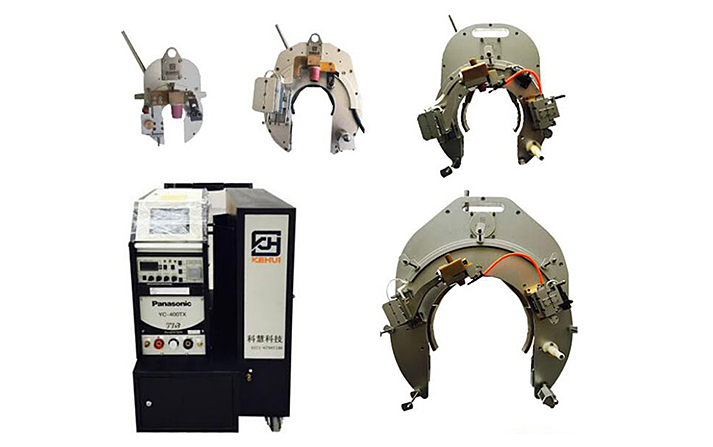
Here’s another one that took us too long to figure out.
We had a client running production on 6-inch schedule 10s 316L. Their stainless steel pipe welding machine was our top-of-the-line orbital system. Every weld looked perfect on the outside. But when they cut cross-sections, the root was consistently off-center—not by much, maybe 0.5mm, but enough to fail their internal quality standards.
We spent two days on site with oscilloscopes and high-speed cameras.
The culprit? A longitudinal seam in the pipe itself.
On seamless pipe, this isn’t an issue. But on welded pipe—which is common in larger diameters—the longitudinal seam creates a slight difference in electrical resistance as the arc passes over it. The current takes the path of least resistance, which pulls the arc slightly toward the seam side .
Your ss pipe welding machine doesn’t know the pipe has a seam. It just knows the arc voltage changed slightly. It tries to compensate, but by the time it does, the damage is done.
We solved this by programming a custom oscillation pattern that widens slightly as the torch approaches the longitudinal seam area, then narrows back after passing it. It’s a band-aid, not a cure. But it works.
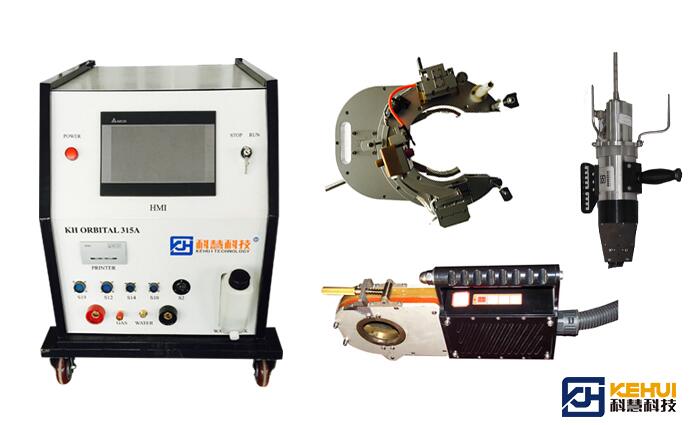
Last year, we ran an internal study on our shop floor. Three hundred stainless steel pipe welds using various configurations of our automatic steel pipe welding machine equipment. We tracked every variable we could measure: material chemistry, fit-up tolerance, tungsten geometry, gas flow consistency, grounding location.
The results confirmed something we’d suspected for years but never had data to prove.
The single biggest predictor of root quality wasn’t any machine setting. It was material batch consistency.
When we ran multiple welds from the same heat of material, first-pass acceptance stayed above 98%. When we switched between batches—even from the same mill, same spec—acceptance dropped to around 87%.
The steel pipe welding machine wasn’t changing. The material was.
This matters because most fabricators treat stainless steel as a commodity. They buy on price. They switch suppliers based on lead time. They assume that if the mill cert says 304L, it’s all the same.
It’s not. And your stainless steel pipe welding machine will show you the difference whether you want to see it or not.
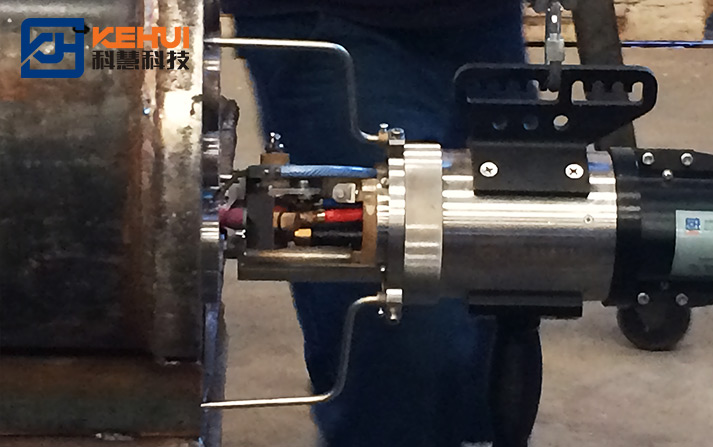
We almost lost a major client over argon purity. Not because their gas was bad—it tested fine—but because they were storing cylinders outside in a coastal environment.
Here’s what happened.
Their ss pipe welding machine setup ran beautifully in the morning. By afternoon, they started getting porosity in the root. Not consistent—maybe one weld in four. They blamed the machine. We swapped torches, cables, even the entire power source. The problem moved around but never disappeared.
Finally, one of our techs noticed the timing. Bad welds always happened in the afternoon, after the sun had been beating down on the cylinder storage area for hours.
Turns out, when argon cylinders get hot, the pressure rises. Their regulator was compensating, so flow rate stayed constant. But moisture that had condensed inside the cylinder during the cool night was vaporizing in the afternoon heat and getting carried into the weld zone.
Their automatic steel pipe welding machine wasn’t the problem. Their cylinder storage was.
We now include gas handling recommendations with every stainless steel pipe welding machine we ship. Keep cylinders indoors. Let them stabilize at shop temperature for 24 hours before use. Install dew point monitors on the gas line if you’re doing critical work.
It’s not something you’ll find in most automatic steel pipe welding machine suppliers documentation. It’s something we learned by failing in front of a paying customer.
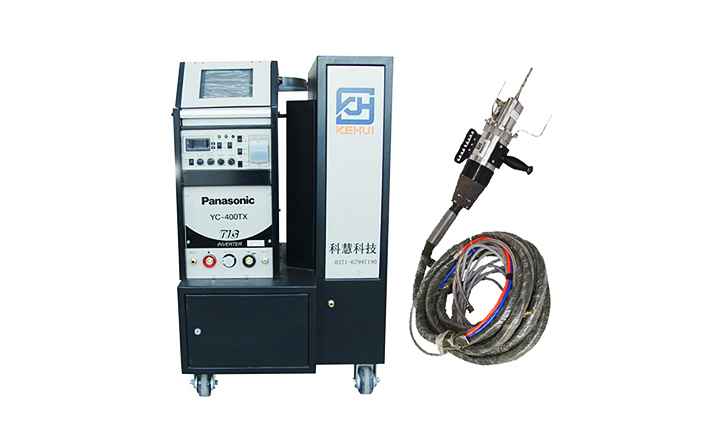
If you’re evaluating automatic steel pipe welding machine suppliers for stainless work, you’re going to see a lot of demos on perfect pipe. They’ll use material from a single batch, with known chemistry, stored in ideal conditions. The welds will look like jewelry.
Here’s what you should actually ask:
“Can your machine store multiple procedures for the same diameter based on material analysis?” Because if you’re switching between batches with different sulfur content, you need different parameters.
“Does your system log arc voltage in a way that lets me detect arc wander before it becomes a defect?” Because the first sign of a Marangoni problem is often subtle voltage fluctuations that happen too fast for an operator to catch .
“Have you ever welded pipe with known chemistry variations in your own shop?” Because the suppliers who’ve only run controlled lab tests won’t understand why your production floor keeps having problems.
We built our reputation by failing on enough real jobs to learn what actually matters. Not what matters in a demo bay. What matters at 10:00 PM on a Tuesday when the second shift is trying to finish a spool before morning inspection.
If you’re fighting stainless welding problems that your current steel pipe welding machine won’t solve, call us. Bring your worst pipe—the batch that’s been sitting outside, the one with the questionable mill cert, the one that runs fine on Monday and fails on Tuesday. We’ll run it together.
And if our machine can’t handle it, we’ll tell you why. Then we’ll figure out how to make it handle the next one.
 TAG:
TAG: