Stock Code: 831045
Industrial Automation & Intelligence Solutions
SUMMERY: 1. From Intuition to Measurement: The Quenchometer Advantage In the realm of heat treatment, quenching is often the stage where metallurgical success or failure is decided. While much attention is given to heating cycles and soak times,...
In the realm of heat treatment, quenching is often the stage where metallurgical success or failure is decided. While much attention is given to heating cycles and soak times, the quenching process remains a source of variability that directly impacts distortion, residual stress, and core hardness. Optimizing these parameters requires more than intuition—it demands precise, repeatable measurement of quenchant behavior. This is where the quenchometer establishes itself as an essential tool for the modern metallurgist.
A quenchometer is fundamentally a cooling curve analyzer, but its true value lies in its ability to translate thermal dynamics into actionable process parameters. When paired with the IVF smartquench system, the quenchometer moves beyond simple data collection to offer a comprehensive diagnostic platform. The IVF smartquench software provides advanced algorithms that quantify cooling stages—vapor phase duration, boiling phase stability, and convective heat transfer coefficients—allowing engineers to isolate the exact variables that influence part quality. Without this level of granularity, quenching remains a process driven by guesswork rather than science.
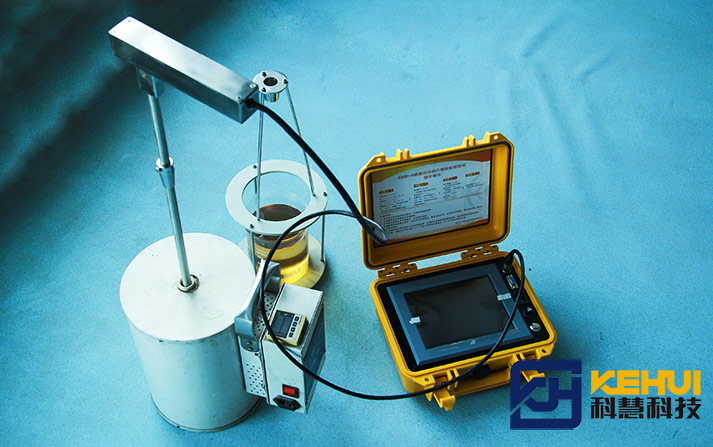
One of the most critical applications of the quenchometer is in quenchant life cycle management. Industrial quenchants degrade over time due to oxidation, thermal cracking, and contamination from foreign oils or water ingress. A routine quenchtest performed with the quenchometer serves as a preventive diagnostic. Each quenchtest generates a cooling curve that can be compared against a reference baseline established when the quenchant was fresh. If the quenchtest reveals a shift in the maximum cooling rate or a change in the temperature at which the boiling phase terminates, operators can intervene before non-conforming parts are produced. This proactive approach reduces scrap rates and extends quenchant service life significantly.
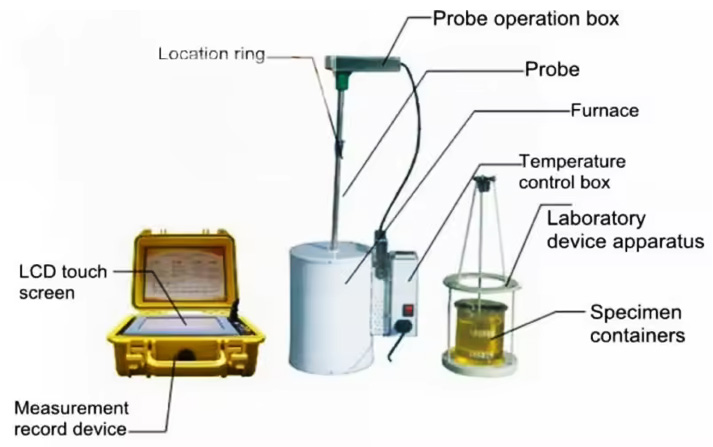
The instrument’s capability as a quenching tester is particularly valuable for manufacturers working with complex geometries or high-value alloys. A quenching tester must replicate the thermal severity of actual production conditions while maintaining laboratory-grade precision. Our quenchometer fulfills this role by using a standardized Inconel probe and controlled flow conditions that simulate real-world agitation. As a quenching tester, it allows users to evaluate not only new quenchants but also the impact of bath temperature variations, flow rates, and part loading configurations. Similarly, as a cooling characteristics tester, it quantifies heat extraction efficiency across different sections of the cooling curve—data that is indispensable for simulation software used in distortion prediction.
In the Chinese market, our quenchometer has achieved an 80% market share, a testament to its reliability and the trust placed in it by industries ranging from automotive transmission manufacturing to aerospace structural components. This market leadership is built on thirty years of experience in quenching technology. Over those three decades, we have refined not only the hardware of the quenchometer but also the methodologies for correlating test data with production outcomes. This accumulated expertise enables us to support customers in optimizing parameters for specific materials, whether they are carburizing steels requiring high hardenability or tool steels demanding minimal distortion.
For multinational operations, the IVF smartquench compatibility of our quenchometer ensures that testing protocols remain consistent across global facilities. When a quenchtest is performed in a plant in Shanghai, the results are directly comparable to a quenchtest conducted at a sister facility in Germany or Brazil. This standardization is critical for organizations that source components globally and require uniform heat treatment quality across supply chains. Furthermore, our quenchometer is designed for export, with documented validation against international standards including ISO 9950, ASTM D6482, and DIN 30905.
Beyond routine quality control, the quenching tester function plays a pivotal role in root cause analysis. When distortion issues arise, a quenching tester allows engineers to isolate whether the problem stems from quenchant degradation, improper agitation, or batch-to-batch variation in the quenchant itself. By performing a cooling characteristics tester evaluation, the exact cooling curve profile is captured, revealing anomalies such as extended vapor phase leading to soft spots or excessively rapid cooling causing cracking. The combination of a quenchometer with the analytical depth of the IVF smartquench system transforms troubleshooting from a time-consuming trial-and-error exercise into a structured, data-driven investigation.
Process optimization also extends to quenchant selection for new alloys. When introducing a new steel grade or part geometry, metallurgists can use the quenchometer as a cooling characteristics tester to pre-qualify candidate quenchants. This prevents costly production trials and accelerates the time to market. The IVF smartquench interface further enhances this capability by providing statistical process control (SPC) charts that track cooling curve parameters over time, enabling predictive adjustments rather than reactive corrections.
With three decades of experience and a commanding presence in China’s heat treatment sector, our quenchometer continues to set the global benchmark for quenching process optimization. Its export success across five continents demonstrates its adaptability to diverse manufacturing environments and regulatory frameworks. Whether deployed as a quenching tester for incoming inspection, a cooling characteristics tester for process development, or integrated with the IVF smartquench for continuous bath monitoring, the quenchometer delivers the precision needed to turn quenching from a source of variability into a controlled, optimized operation.
 TAG:
TAG: