Stock Code: 831045
Industrial Automation & Intelligence Solutions
SUMMERY: So you have decided to bring a robotic welding cell onto your shop floor. Smart move. The labor shortage is real, weld quality demands are rising, and your competitors are already automating. But here is the question that keeps factor...
So you have decided to bring a robotic welding cell onto your shop floor. Smart move. The labor shortage is real, weld quality demands are rising, and your competitors are already automating.
But here is the question that keeps factory managers up at night: how do you go from “we need a robot” to “we are running production” without blowing your budget or missing your deadline?
The answer lies in choosing the right robotic welding cell integration solutions and the right welding robot integrator to execute them. Let us walk through what actually works—based on three decades of doing this for manufacturers across the globe.
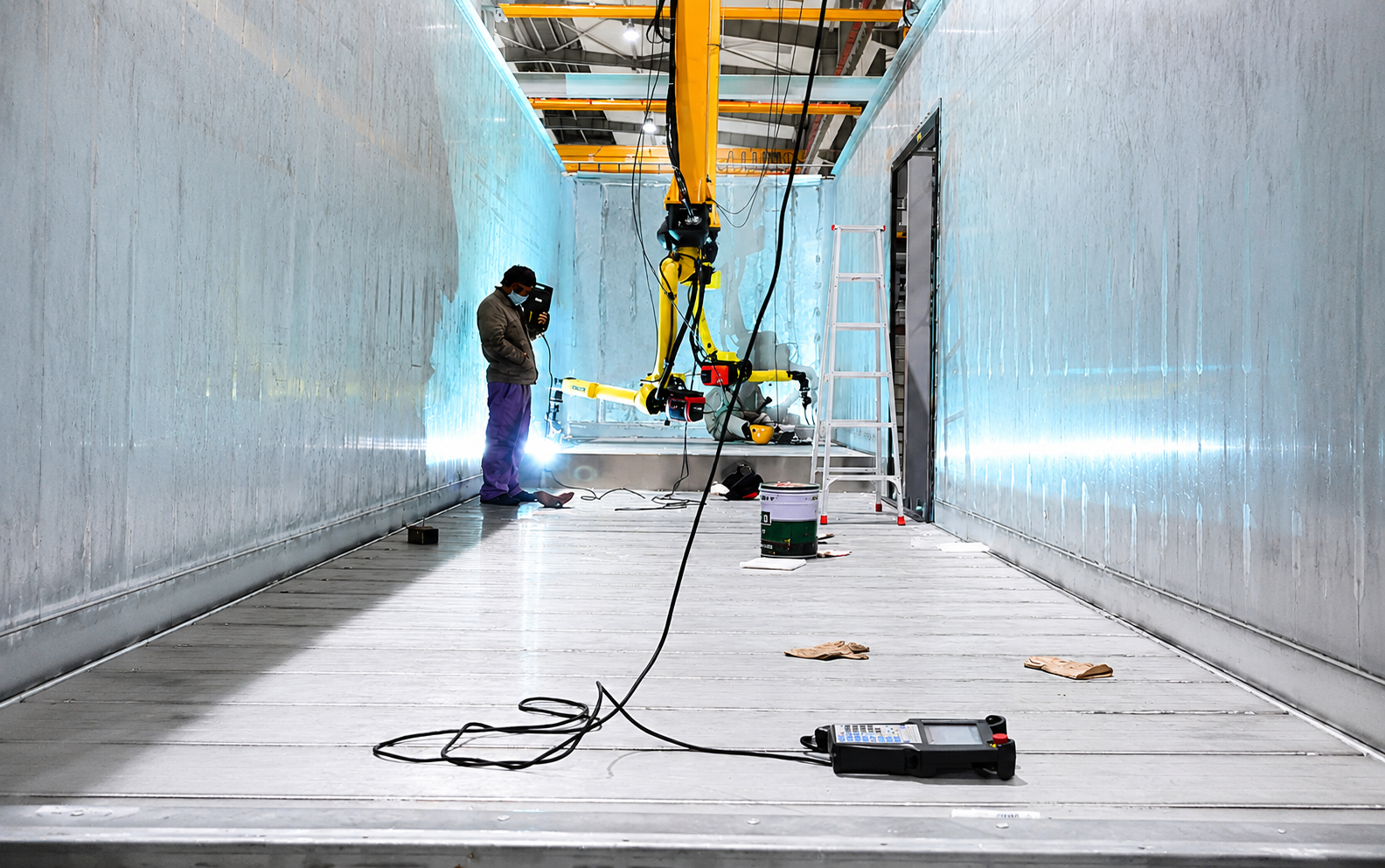
Before we talk about integration, let us talk about the alternative. Every month you delay automation, your best welders spend hours on repetitive joints that a robotic welding cell could handle in seconds. Your quality control team catches defects that a robot would never produce. Your competitors invest while you debate.
A properly designed robotic welding cell integration solution typically pays for itself within 12 to 18 months. That is not marketing hype. That is math. Labor savings, reduced rework, higher throughput—the numbers work when the integration is done right.
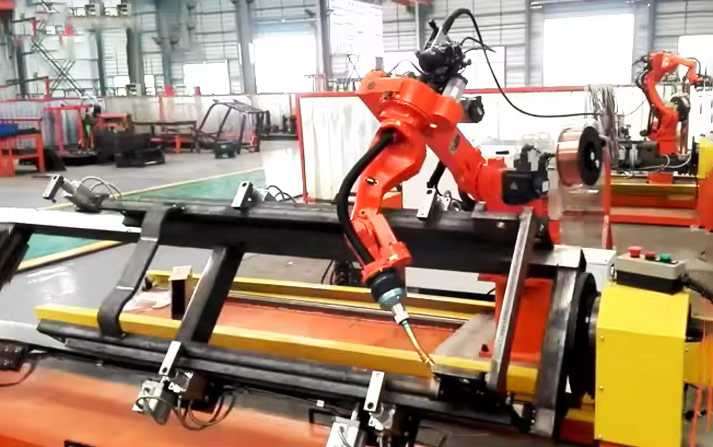
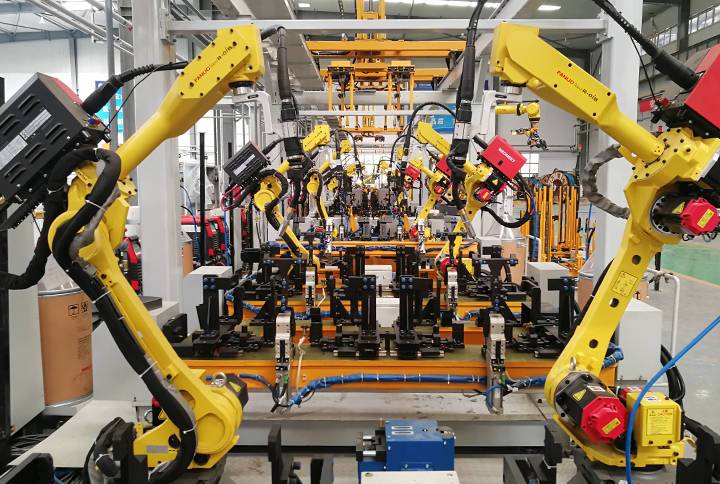
Any distributor can sell you a robot arm. A true welding robot integrator sells you a solution. The difference shows up in the details.
– Process knowledge: Does the integrator understand heat input, distortion, and metallurgy? Or do they just know how to program a path?
– Part variation handling: Can their robotic welding cell adapt when your stamped parts are not identical? Or will it crash on the first deviation?
– Tooling expertise: Do they design fixtures and positioners that work with your existing workflow? Or do they blame your parts when the automation fails?
The best robotic welding cell integration solutions come from integrators who have welded thousands of parts across dozens of industries. They have seen every failure mode. They know what works.
When evaluating robotic welding cell integration solutions, ask these questions:
A typical robotic welding cell integration solution follows this schedule:
– Week 1-2: Process audit and simulation. Your parts are analyzed. The robotic welding cell is designed digitally. Cycle times are confirmed.
– Week 3-4: Equipment staging and testing. The cell is assembled in our facility. Your parts are welded. Parameters are tuned.
– Week 5: Shipment and on-site installation. Our engineers travel to your location. The robotic welding cell is connected, calibrated, and safety-checked.
– Week 6: Commissioning and training. Your team learns to operate the cell. First-pass yield targets are achieved.
– Week 7 onward: Production. The robotic welding cell runs your shifts. We remain available for support.
This timeline assumes standard applications. Complex multi-station cells may take longer. But the principle holds: a professional welding robot integrator delivers on schedule.
We have been engineering robotic welding cell integration solutions since 1994. That is thirty years of continuous improvement, thousands of installations, and a library of process parameters for every material you can name.
Our robotic welding cell designs have shipped to manufacturers in over fifty countries. We hold CE certification and all required export credentials. Our engineers travel wherever you need them—for installation, training, or emergency troubleshooting.
Our pricing is competitive because we are efficient. Our lead times are short because we plan ahead. We do not hide fees or pad timelines. You get what we promise.
And we train your people. A robotic welding cell is only as good as the team running it. We make sure your welders become robot supervisors, programmers, and maintenance technicians. They do not lose jobs. They get promoted.
Finding the right robotic welding cell integration solutions means finding a welding robot integrator who has done this before—many times, across many industries, with many materials.
We have. Let us prove it.
Send us your part drawing. Tell us your production volume. We will respond with a proposal, a timeline, and a price that makes sense. No pressure. No jargon. Just straight talk from a team that has been automating welding since before most of today’s integrators existed.
Your robotic welding cell is waiting. Let us build it together.
 TAG:
TAG: We value your message!
Please fill the below, We will customized the solution to your needs.