I remember watching a radiator shop in Ohio struggle with a batch of 500 industrial cooling cores. The tubes were thin-walled copper, the header plates were brass, and every single tube-to-header joint had to be leak-tight. They were brazing them by hand—one at a time, with torches and solder. By the end of the week, their reject rate was pushing 15% and they were losing money on the job.
That shop doesn’t braze radiators by hand anymore. They found a better industrial radiator tube to tubesheet welding solution.
Why Industrial Radiator Manufacturing Is Different
Radiator manufacturing is a volume game. A single industrial radiator core can have hundreds of tubes running between two header plates or tubesheets. Each tube end has to be joined to the header—sealed tight enough to hold coolant under pressure and vibration, year after year.
The tube to tubesheet connection in a radiator is critical. In automotive and industrial radiators, the ends of spaced tubes are welded to oppositely spaced header plates. A leak at any single joint means the whole core fails. And when you’re producing thousands of cores per month, you can’t afford to have 10% of them coming back.
Traditional methods for joining tubes to headers include brazing, soldering, and manual TIG welding. But each has its limits. Brazing and soldering produce joints that are relatively weak—they can handle low pressure but often fail under thermal cycling or vibration. Manual TIG welding produces stronger joints, but it’s slow, inconsistent, and dependent on welder skill.
This is where an industrial radiator tube to tubesheet welding solution based on orbital TIG technology changes everything.
The Manual Welding Problem in Radiator Production
Walk into a radiator shop that still does things the old way. You’ll see welders hunched over header plates, torches in hand, trying to TIG weld each tube end individually. It’s tedious. It’s physically demanding. And it’s inconsistent.
Manual TIG welding radiator tubes suffers from the same problems that plague manual welding in any application. Arc length drifts as the welder moves around the tube. Travel speed varies with fatigue. The weld pool behaves differently at different positions on the tube circumference.
The Ultra•Fused fusion welding process, which uses TIG welding to melt the tube material into the header plate material, produces a joint proven to be 20 times stronger than traditional soft solder. But even TIG welding, when done manually, produces variable results. One operator might nail every joint. Another might struggle. The same operator might be perfect at 9 AM and struggling by 3 PM.
Common defects in manual radiator tube welding include porosity, incomplete fusion, and lack of penetration at the tube-to-header interface. These aren’t just quality issues—they’re reliability issues. A tube to tubesheet connection with incomplete fusion will leak eventually. And in an industrial radiator, a leak means downtime, lost production, and a customer who won’t come back.
How Automation Solves Radiator Tube Welding Challenges
The shift to automated welding in radiator manufacturing is driven by one thing: consistency.
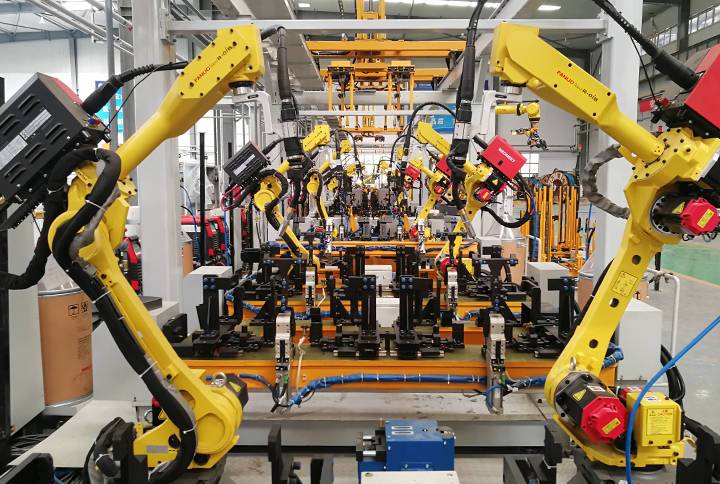
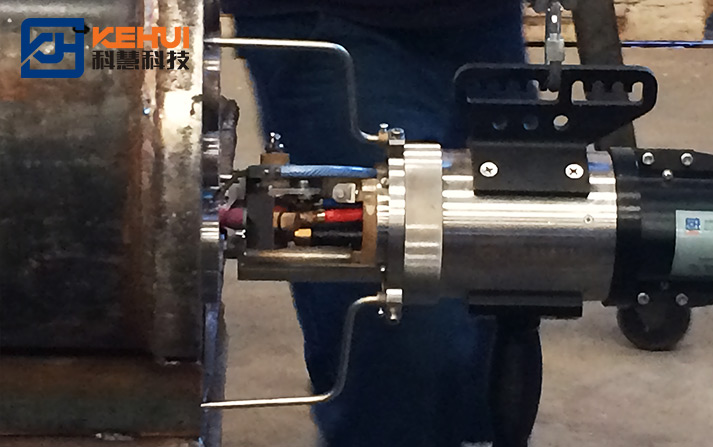
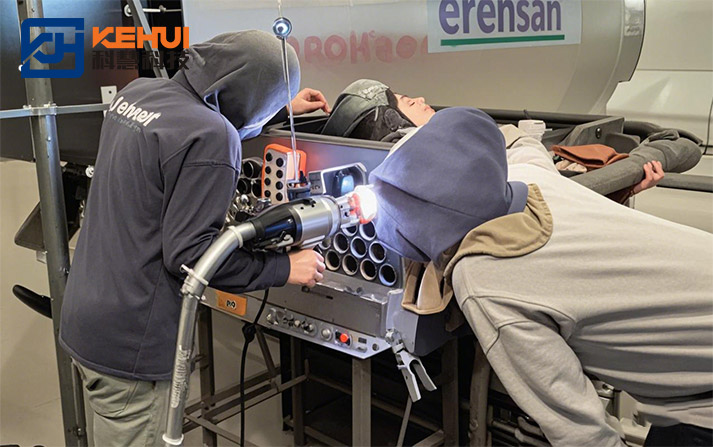
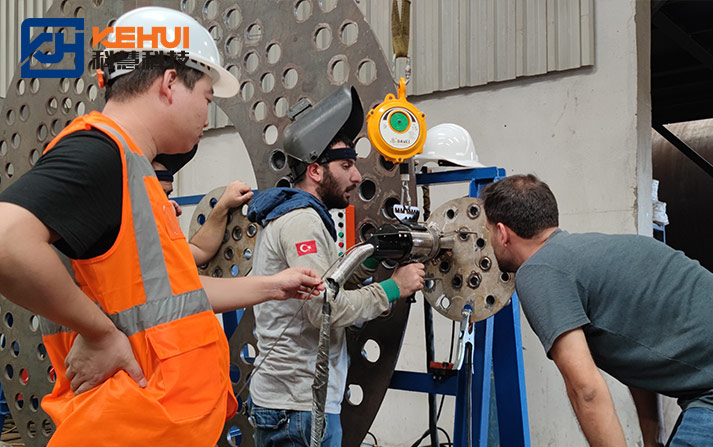
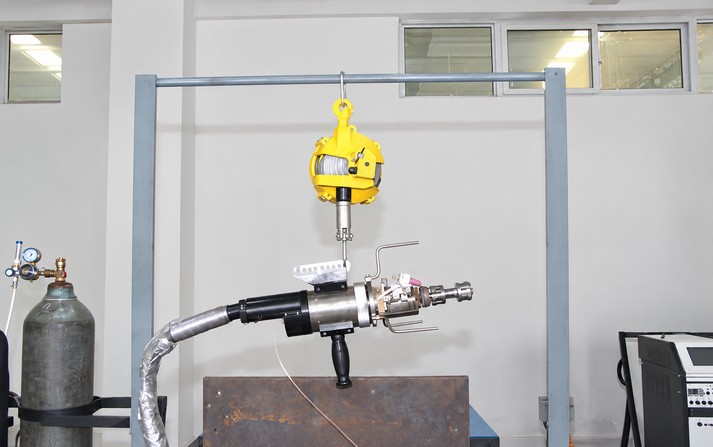
An automated tubesheet welding automatic welding machine uses a programmable welding head that rotates around the tube end, depositing a controlled TIG weld with precise heat input, travel speed, and wire feed. The mechanized process delivers consistent penetration, complete fusion, and defect-free joints—on every tube, every time.
Using a fully automatic welding system specially developed for tubular radiator production, it is possible to produce head end tube connections of high quality while achieving exceptionally high productivity. Some systems can achieve cycle times as low as 4 seconds per tube end.
The tubesheet welding automatic welding machine doesn’t get tired. It doesn’t have off days. It executes the same weld program on tube 500 as on tube one. The result is a reliable industrial radiator tube to tubesheet welding solution that cuts reject rates from double digits to under 1%.
We’ve seen radiator manufacturers reduce rework by over 80% after switching to an automated tubesheet welding automatic welding machine. One operator can manage multiple welding heads, inspecting completed joints while the machines work. Production jumps, labor costs drop, and quality becomes predictable.
The TIG Advantage for Radiator Tube Welding
TIG welding radiator tubes offers specific advantages that other processes can’t match.
TIG welding provides precise control over heat input, which is critical when welding thin-walled radiator tubes. Too much heat and you burn through. Too little and you get incomplete fusion. TIG allows you to dial in exactly the right parameters for the material and wall thickness.
TIG welding also allows independent control of filler metal addition. You can add wire when you need reinforcement, or run autogenous (fusion-only) when you don’t. This flexibility is valuable in radiator manufacturing, where tube materials and thicknesses can vary widely.
Orbital TIG welding, in particular, is characterized by very high quality weld beads and good repeatability. The mechanized process eliminates the human variability that plagues manual welding. Once a successful weld cycle is memorized, it can be repeated as often as necessary—the result always remains the same: the production of a faultless joint with zero weld defects.
An industrial radiator tube to tubesheet welding solution based on orbital TIG technology delivers the quality, consistency, and reliability that radiator manufacturers need to stay competitive.
Real-World Applications in Radiator Manufacturing
Radiator manufacturing encompasses a wide range of applications, each with its own requirements.
Automotive radiators. High-volume production with thin-walled aluminum or copper tubes. Automated welding systems can handle hundreds of tubes per hour, with cycle times measured in seconds.
Industrial cooling radiators. Larger cores, thicker tubes, higher pressure requirements. The tube to tubesheet connection needs to be stronger to handle industrial operating conditions.
Heavy equipment radiators. Used in construction, mining, and agricultural equipment. These radiators see extreme vibration and thermal cycling. The tubesheet welding automatic welding machine must produce joints that can withstand these conditions.
Transformer and hydraulic oil coolers. Often use copper tubes with steel header plates. Dissimilar metal welding requires precise heat control to avoid dilution and embrittlement.
Each application demands a specific industrial radiator tube to tubesheet welding solution. The right equipment, programmed with the right parameters, delivers consistent results across all of them.
The Equipment That Makes It Work
A proper tubesheet welding automatic welding machine for radiator applications includes several key features.
Tube diameter range. Radiator tubes can be round or flat-oval. The welding head must accommodate the specific tube geometry. Most systems handle round tubes from 12 mm to 80 mm, with custom options for flat tubes.
Joint configuration. Some radiators use flush tube ends, others use protruding tubes. The machine must support the specific tube to tubesheet connection required by the design.
Cooling. Water-cooled heads prevent overheating during extended production runs. This is critical in radiator manufacturing, where you might be welding hundreds of tubes per shift.
Programmability. The machine should store multiple weld schedules for different tube sizes, materials, and joint configurations. Operators select the appropriate program, and the system sets all parameters automatically.
Data logging. Traceability is increasingly important for quality control and customer documentation. The machine should record parameters for every weld.
The automatic orbital tube-to-tubesheet welding head is widely used in boilers, heat exchangers, condensers, cooling devices, evaporators, and radiators. The same technology that works in power plants and chemical plants works just as well on the radiator shop floor.
What We See in Our Shop
We build tubesheet welding automatic welding machine systems. Every week, we get calls from radiator manufacturers frustrated with manual welding. They’re dealing with high reject rates, slow production, and customers who demand better quality.
We invite them to our facility, run samples on their material, and show them the difference. They see perfect fusion, consistent penetration, no porosity. Then we design an industrial radiator tube to tubesheet welding solution for their specific tube sizes and production requirements.
Within weeks, their reject rates drop, their throughput increases, and their customers stop complaining about leaks. That’s the power of automation.
The Bottom Line on Industrial Radiator Tube to Tubesheet Welding
Radiator manufacturing is too competitive to accept high reject rates and inconsistent quality. Manual welding can’t deliver the consistency that modern production demands. An automated industrial radiator tube to tubesheet welding solution can.
If you’re still welding radiator tubes by hand—or worse, brazing or soldering them—ask yourself: how much rework are you accepting? How many field failures are you risking? How much productivity are you losing?
The answers will point you toward a better tubesheet welding automatic welding machine.
FAQ
Question 1: What makes an industrial radiator tube to tubesheet welding solution different from welding heat exchangers?
Answer: Industrial radiators typically have thinner tubes and higher tube counts than heat exchangers. The industrial radiator tube to tubesheet welding solution must handle high-volume production with fast cycle times while maintaining consistent weld quality. Radiator tubes are often flat-oval or thin-walled copper, requiring precise heat control to avoid burn-through.
Question 2: How does a tubesheet welding automatic welding machine improve radiator production?
Answer: A tubesheet welding automatic welding machine eliminates the human variability that causes defects in manual welding. The machine maintains consistent arc length, travel speed, and heat input on every tube-to-header joint. Reject rates typically drop from double digits to under 1%, and production speeds increase dramatically.
Question 3: Can automated welding handle different tube materials used in radiators?
Answer: Yes. TIG welding radiator tubes works with copper, brass, aluminum, and steel. The welding parameters are programmed for each material and wall thickness. For dissimilar joints, the system controls dilution with precise pulse parameters and filler wire.
Question 4: What’s the strongest type of tube to tubesheet connection for radiators?
Answer: TIG fusion welding, such as the Ultra•Fused process, produces joints that are proven to be 20 times stronger than traditional soft solder. An automated tubesheet welding automatic welding machine ensures every tube to tubesheet connection achieves that strength consistently.
Question 5: How long does it take to train operators on a tubesheet welding automatic welding machine?
Answer: Typically one week. The skill shifts from torch manipulation to programming, setup, and monitoring. Most certified welders adapt quickly—they already understand weld metallurgy and procedure. A good equipment supplier provides on-site training to get your team productive fast.
Question 6: What ASME or industry standards apply to radiator tube welding?
Answer: While radiators are often governed by customer specifications rather than ASME codes, many industrial radiator manufacturers follow TEMA or ASME Section VIII guidelines for pressure-containing joints. An automated industrial radiator tube to tubesheet welding solution helps you consistently meet or exceed these requirements.