Stock Code: 831045
Industrial Automation & Intelligence Solutions
SUMMERY: Separate the Machine Problem from the Process Problem First A fabrication shop running a circumferential welding machine on 30-inch pipe called the manufacturer after three consecutive joints failed ultrasonic inspection. The carriage t...
A fabrication shop running a circumferential welding machine on 30-inch pipe called the manufacturer after three consecutive joints failed ultrasonic inspection. The carriage traveled smoothly, the arc was stable, the bead looked uniform. The service engineer arrived, watched one pass, and asked a single question: “When did you last check the root gap?” The gap had been closing progressively because the fit-up crew was using a different spacer than the procedure specified. The circumferential welding machine was welding exactly what it was told to weld. The joint was the problem.
This scenario repeats across every shop running automatic circumferential welding. When a defect appears, the instinct is to blame the carriage, the controller, or the torch. More often, the fault sits in the joint preparation, the material, or the procedure — and the circumferential welding tractor has simply made the existing problem more consistent and therefore more visible.
The practical rule: before adjusting any machine parameter, verify the joint. Before touching the torch, verify the track or magnetic adhesion. The troubleshooting sequence matters as much as the diagnosis.
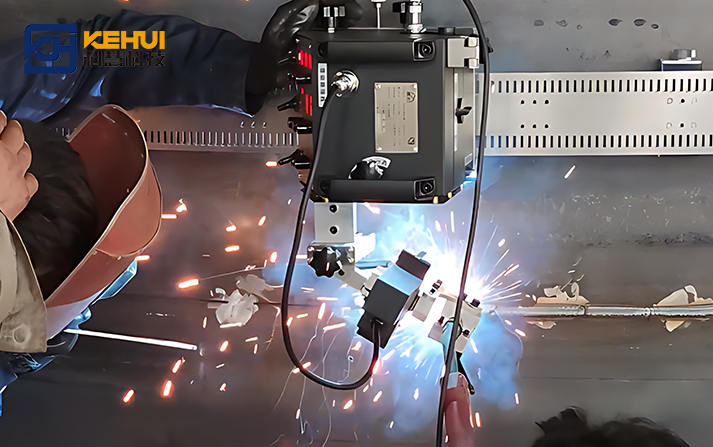
A circumferential welding tractor that drifts off the seam line mid-pass produces a weld that misses the joint entirely at one clock position and overlaps it at another. On an oval pipe, the drift is predictable — it happens where the pipe radius changes most. On a round pipe, tracking loss usually points to track misalignment or magnetic adhesion variation.
The first check is the track or adhesion reference. On a track-mounted circumferential welding machine, the rail must be concentric with the pipe OD. A 1 mm radial runout at the track surface translates to visible torch deviation over a 2.9-meter circumference. On a magnetic circumferential welding tractor, the reference is the friction drive against the steel surface. Mill scale, previous weld beads, and plate joints cause the drive to bounce, and the welding carriage troubleshooting process starts with cleaning the travel path.
If the track and surface are both clean and the carriage still drifts, check the seam tracking system. Tactile sensors that follow the groove can lose contact if the gap opens beyond their travel range. Laser sensors fail on reflective or heavily contaminated surfaces. Both are documented causes of tracking loss in automatic circumferential welding problems.
A jerking carriage produces a weld with visible ripple spacing variation and, in severe cases, lack-of-fusion at the hesitation points. The welding carriage troubleshooting checklist for travel instability starts with the drive system.
On rack-and-pinion systems, debris in the gear teeth is the most common cause. The carriage jerks once per tooth engagement — a frequency you can feel by hand before you see it in the weld. Clean the rack and gear before every shift. On friction-drive circumferential welding tractors, the cause is usually wheel contamination or uneven magnetic holding force. A wheel with compacted spatter loses traction intermittently, and the carriage surges.
Cable management is the third cause. A hosepack that snags on the pipe or droops into the travel path pulls the carriage off speed and then releases it, producing a surge. Route cables overhead or through an arm before adjusting any drive parameter. Steelmax’s troubleshooting guide lists motor overload as a common error caused by cables blocking the carriage — the machine is fine, the cable routing is not.
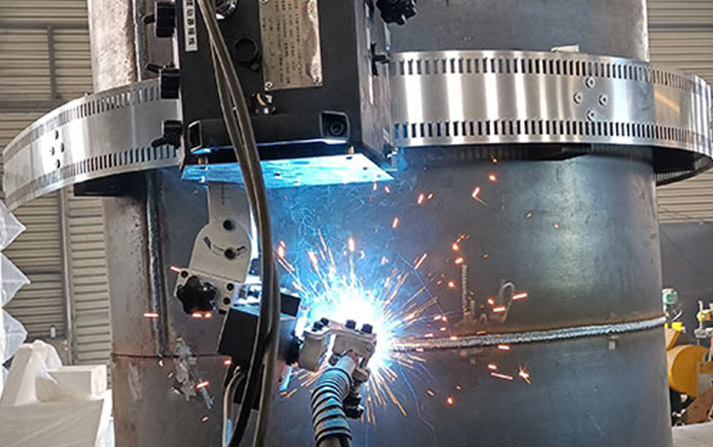
A bead that runs narrow at 12 o’clock and wide at 6 o’clock is not a wire feed problem. It is a torch position problem or a heat input problem, and the two look similar on the surface.
If the torch-to-work distance increases at one clock position, the arc length changes, the welding current changes, and the bead width changes. On a circumferential welding machine with arc voltage control, the controller compensates automatically — unless the compensation range is exceeded. On a machine without voltage control, the operator sees the bead variation and adjusts the parameter mid-pass, which introduces a second variable on top of the first.
The mechanical cause is track eccentricity or pipe ovality. Measure the torch stick-out at four clock positions during a dry run. If it varies by more than 1 mm, the track is not concentric. Fix the track before adjusting the welding procedure — this is the first step in any automatic circumferential welding troubleshooting sequence.
Porosity in a circumferential weld has three common causes, and only one of them is the machine’s fault.
Gas coverage loss is the first. On a magnetic circumferential welding tractor running outdoors, wind disrupts the shielding gas envelope. The porosity appears on the windward side of the pipe and disappears when the wind drops. On a closed-head circumferential welding machine, gas coverage loss usually points to a worn seal or a kinked supply line — the head is not the problem, the gas path is.
Surface contamination is the second. Moisture, oil, paint, or galvanizing on the pipe surface produces porosity that appears randomly around the circumference, not concentrated at one position. This is a joint preparation problem, not a welding carriage troubleshooting problem.
Wire or consumable issues are the third. A wire spool that has absorbed moisture produces porosity that worsens through the spool, regardless of where the carriage is on the pipe. Check the consumable before blaming the circumferential welding tractor.
These are the two circumferential weld defects most often attributed to the machine and most often caused by the procedure. Undercut at 6 o’clock typically means travel speed is too high for the position, or the oscillation dwell time at the sidewall is too short. Lack of fusion at the same position usually means heat input is insufficient to reach the sidewall — often because the reinforcement from the previous pass is too high and consumes the arc energy before it reaches the groove face.
Neither defect is a mechanical failure. Both require procedure adjustment, not carriage repair. The circumferential welding tractor is traveling at the speed it was programmed to travel. If that speed produces undercut at 6 o’clock, the speed — or the oscillation parameters — need to change for that position. This is why programmable multi-pass sequences with position-specific parameters matter on circumferential welding machines running heavy-wall joints.
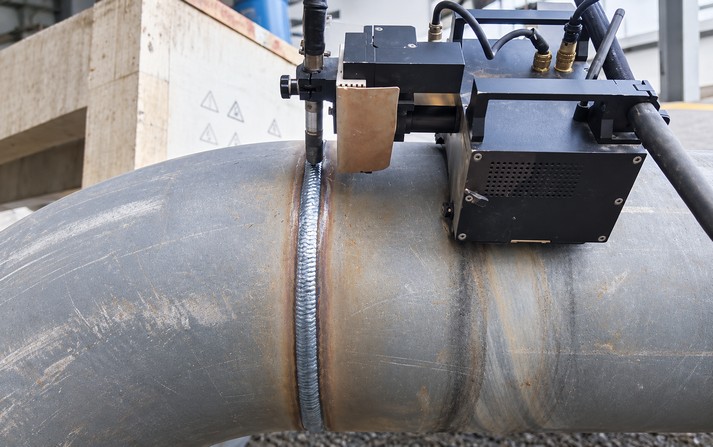
A torch that is perfectly aligned on the root pass and 2 mm off on the fill pass produces sidewall fusion problems that look like a circumferential weld defect but are actually a setup problem. The circumferential welding tractor did not move. The torch mount did.
The cause is usually thermal. The torch bracket expands as the weld heats the surrounding structure, and the torch drifts away from the joint. On long multi-pass welds, this drift accumulates. The fix is to check torch position between every pass, not just at the start of the joint. This is a welding carriage troubleshooting step that costs 30 seconds and prevents a defect that costs a repair.
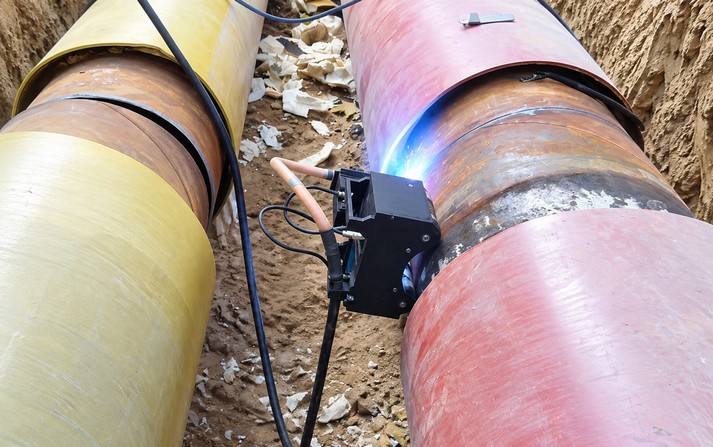
A magnetic circumferential welding tractor that loses adhesion mid-pass does not just stop — it can drop, drag, or produce a weld with a sudden change in torch angle. The causes are surface and geometry, not electronics.
Heavy mill scale, thick coating, or a previous weld bead under the magnetic wheel reduces holding force. On small-diameter pipe, the curvature increases the air gap at the leading and trailing wheels, and adhesion drops even on clean steel. The practical check before every joint: place the tractor on the pipe at the start position and try to lift it by hand. If it moves with light force, the surface or curvature is outside the machine’s operating envelope. No amount of parameter adjustment will fix weak adhesion — this is one of the automatic circumferential welding problems that requires a different machine or a different mounting method, not a repair.
| Symptom | First Check | Second Check | Third Check |
|---|---|---|---|
| Carriage drifts off seam | Track concentricity / surface cleanliness | Seam tracking sensor function | Joint gap variation |
| Jerking travel | Gear rack debris / wheel contamination | Cable routing | Drive motor overload |
| Uneven bead width | Torch stick-out at 4 clock positions | Arc voltage control function | Pipe ovality |
| Porosity | Gas coverage / wind | Surface contamination | Wire spool condition |
| Undercut at 6 o’clock | Travel speed at that position | Oscillation dwell time | Previous pass reinforcement |
| Torch drift between passes | Thermal expansion of bracket | Torch mount tightness | — |
| Adhesion loss | Surface condition under magnets | Pipe curvature vs. wheelbase | — |
The sequence matters because it moves from the simplest external cause to the most complex internal one. Checking the joint before checking the machine prevents the most common misdiagnosis in automatic circumferential welding — blaming the circumferential welding machine for a problem that started at the fit-up table.
For shops setting up a new circumferential welding tractor, the installation and alignment procedure covered in our guide to setting up a welding track carriage prevents most of the tracking and alignment issues that later appear as welding carriage troubleshooting calls. And for shops still deciding between machine types, understanding where magnetic adhesion reaches its limits — covered in our analysis of magnetic welding tractor applications — determines whether a tracking problem is a setup error or a fundamental mismatch between machine and pipe.
On oval pipe, the track or magnetic travel path follows the pipe’s out-of-round profile. If the ovality exceeds the seam tracking system’s correction range, the torch drifts. Check track concentricity first, then verify the seam tracking sensor maintains contact through the full circumference. On severe ovality, re-rounding the pipe or adjusting the procedure for the actual gap condition may be necessary.
Uneven bead width usually indicates torch stick-out variation around the circumference, caused by track eccentricity or pipe ovality. Measure stick-out at 12, 3, 6, and 9 o’clock during a dry run. If variation exceeds 1 mm, correct the track mounting before adjusting welding parameters. Arc voltage control can compensate for minor variation but should not be used to mask a mechanical alignment problem.
Rarely. Porosity in a circumferential weld most often comes from gas coverage loss, surface contamination, or moisture in the consumable. On outdoor work, wind is the leading cause. Check gas flow, surface condition, and wire storage before starting welding carriage troubleshooting. A circumferential welding tractor with stable travel does not cause porosity unless the gas system or consumable is compromised.
Clean the gear rack and drive wheels first — debris in the drive path is the most common cause of travel instability. Then check cable routing for snags or drooping hosepacks. If the jerking persists, check the drive motor for overload or worn brushes. On friction-drive circumferential welding tractors, uneven magnetic holding force from surface contamination produces the same symptom.
A machine problem affects travel, tracking, or adhesion consistently regardless of the joint. A process problem varies with joint preparation, material, or position. If the defect appears at the same clock position on every joint, suspect the procedure. If it appears randomly, suspect the machine or the surface. This distinction is the foundation of effective welding carriage troubleshooting in automatic circumferential welding problems.
 TAG:
We value your message!
Please fill the below, We will customized the solution to your needs.