Why TIG Became the Default for Tube Sheet Welding
The short answer: TIG tube sheet welding produces welds that other processes simply can’t match for tube-to-tubesheet applications. But the real reason—the one that matters to fabricators who actually have to get bundles out the door—is control, repeatability, and adaptability.
TIG welding tube to tubesheet gives you precise heat input control. You can dial in exactly the right amperage for a thin-walled stainless tube without burning through. You can adjust pulse parameters to manage the puddle on an overhead joint. You can add filler metal independent of current intensity, so you’re not compromising penetration just to get enough reinforcement.
Orbital TIG welding, in particular, delivers very high quality weld beads with excellent repeatability. The mechanized process eliminates the human variability that plagues manual welding. When you’re welding thousands of identical joints per exchanger, that repeatability isn’t a luxury—it’s a requirement.
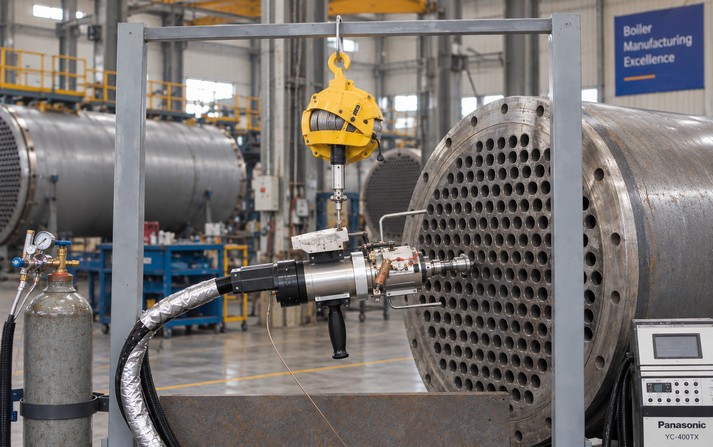
The Manual TIG Problem Nobody Talks About
Here’s what I see on shop floors all the time: a skilled welder producing beautiful welds on the first 50 tubes. Then fatigue sets in. Their arm shakes. Their torch angle drifts. Travel speed fluctuates.
Manual TIG tube sheet welding suffers from operator fatigue, leading to quality variance across production runs. Welds on tube 1 and tube 500 don’t look the same—and they don’t perform the same either.
Common defects include porosity, cracking, undercut, and incomplete penetration. These create stress concentrations that, under thermal cycling, develop into cracks. Tube-to-tubesheet joints are one of the major vulnerable locations prone to cracks in heat exchangers. A single failed joint can erode adjacent tubes, cascade into multiple failures, and shut down a plant for weeks.
That’s the real cost of manual welding—not just rework, but field failures.
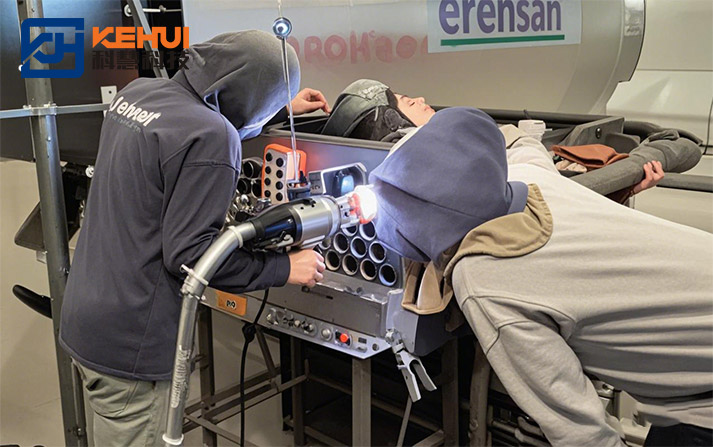
How Automation Transforms Tube Sheet Welding
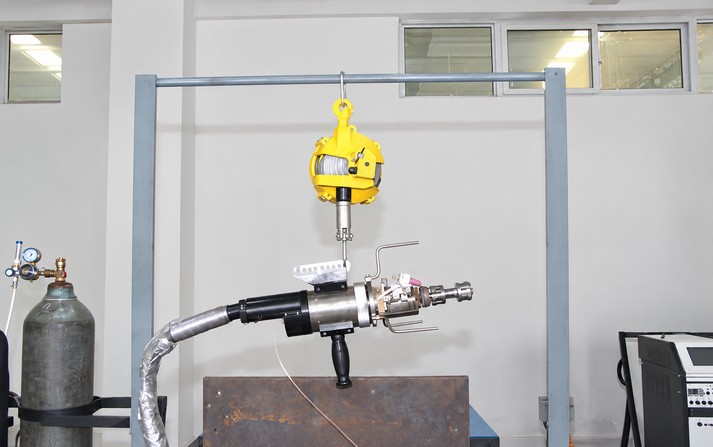
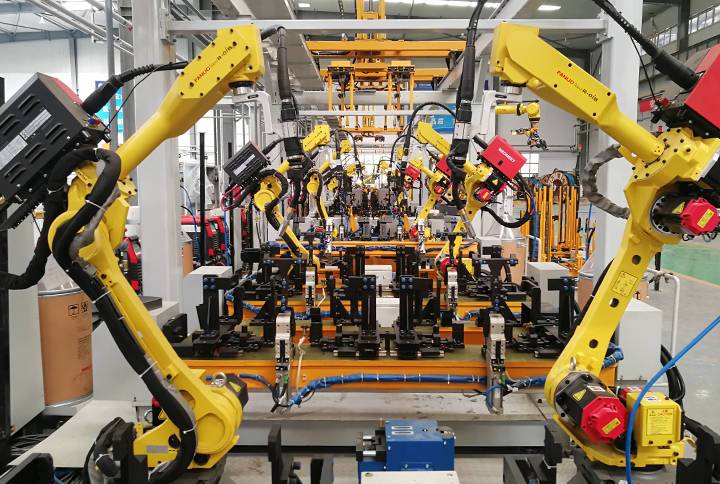
The shift from manual to automatic tube to tube sheet welding is about consistency, not just speed. An orbital welding machine for tube to tubesheet welding uses a programmable head that rotates around the joint, depositing a controlled TIG weld with precise heat input, travel speed, and wire feed.
The result is a high-quality, repeatable, code-compliant weld at every tube-to-tubesheet location. Not just on the first 100 tubes—on all of them.
We’ve seen fabricators reduce reject rates from 8% to under 1% after switching to an automatic tube to tube sheet welding system. One operator can manage multiple heads, inspecting completed joints while machines work. Production jumps 40-60%. The equipment pays for itself in rework savings within months.
The tube to tubesheet seal welding machine is particularly valuable where seal welding is combined with tube expansion. In expanded-welded joints, TIG welding is preferred for sealing roller-expanded joints. The seal weld separates the two fluids and must be absolutely leak-proof. An automated machine ensures every seal weld is consistent—no thin spots, no porosity, no leaks.
The Tube to Tubesheet Seal Welding Machine Advantage
Let’s focus on the tube to tubesheet seal welding machine. In many heat exchangers, tubes are mechanically expanded into the tubesheet, then seal-welded at the face. The weld isn’t structural—it prevents fluid migration between tube and tubesheet.
But a seal weld still has to be perfect. Porosity or incomplete fusion will let fluid through. Over time, that leak path grows into a failure.
A tube to tubesheet seal welding machine eliminates the variability that causes seal weld defects. The mechanized process ensures consistent arc length, travel speed, and heat input on every joint. The result is a reliable seal that holds for the equipment’s life.
These machines are used across heat exchangers, boilers, tube-boxes, air-preheaters, pressure vessels, evaporators, nuclear condensers, and LNG equipment. That’s why finding the right tube sheet welding solution is critical for any fabrication shop.
Finding the Right Tube to Tubesheet Welding Machine Supplier
Not all tube to tubesheet welding machine supplier options are equal. When evaluating a tube sheet welding solution, pay attention to:
-
Tube diameter range. Most systems cover 12 mm to 80 mm; some go smaller or larger.
-
Joint configurations. Can it handle flush, protruding, and recessed tubes? Both autogenous and filler-wire?
-
Cooling. Water-cooled heads prevent overheating during extended runs.
-
Data logging. Traceability for ASME and TEMA compliance.
-
Multi-head capability. Running multiple heads from one power source boosts productivity.
A reliable tube to tubesheet welding machine supplier will understand your specific application—tube sizes, materials, joint types, production volume—and recommend the right configuration.
Real-World Tube Sheet Welding Solutions
Every shop has different needs. The tube sheet welding solution for a small repair shop differs from a high-volume production facility.
For thin-walled heat exchangers, precision is everything. Automated TIG orbital welding reduces manual labor and ensures consistent quality.
For thick-walled boiler tubes, heat input control is critical. The orbital welding machine for tube to tubesheet welding must deliver enough current for full penetration without overheating. Liquid cooling keeps the head stable.
For repair work, portability matters. A lightweight tube to tubesheet seal welding machine that moves quickly between tube positions is essential.
The right tube sheet welding solution matches your specific application—no one-size-fits-all.
The Bottom Line on TIG Tube Sheet Welding
TIG tube sheet welding is widely used because it works—delivering quality, consistency, and reliability that heat exchanger and boiler fabrication demand.
But manual TIG has limits: fatigue, variability, and human error are always factors. That’s why more shops are moving to automatic tube to tube sheet welding. The tube to tubesheet seal welding machine and orbital welding machine for tube to tubesheet welding are becoming standard in modern fabrication facilities.
If you’re still welding tubes by hand, ask yourself: how much rework are you accepting? How many field failures are you risking? How much productivity are you losing?
The answers will point you toward a better tube sheet welding solution.
FAQ
Q: What makes TIG tube sheet welding better than other processes?
TIG tube sheet welding provides superior heat input control, critical for thin-walled tubes and exotic materials. The process is stable and repeatable, with independent filler metal control. Orbital TIG delivers high-quality beads with excellent repeatability, making it the preferred choice for heat exchangers and boilers.
Q: How does an automatic tube to tube sheet welding machine improve quality?
An automatic tube to tube sheet welding system eliminates human variability, maintaining consistent arc length, travel speed, and heat input on every joint. The result is a high-quality, repeatable, code-compliant weld at every tube-to-tubesheet location. Reject rates typically drop from double digits to under 2%.
Q: What is a tube to tubesheet seal welding machine used for?
A tube to tubesheet seal welding machine creates leak-proof seal welds between tubes and tubesheets, typically after mechanical expansion. Used in heat exchangers, boilers, condensers, and pressure vessels, the seal weld prevents fluid migration between tube and tubesheet.
Q: How do I choose the right tube to tubesheet welding machine supplier?
Look for a tube to tubesheet welding machine supplier that understands your application—tube sizes, materials, joint types, and production volume. Ask about diameter range, joint support, cooling, data logging, and multi-head capability. A good supplier will find the right tube sheet welding solution for your shop.
Q: Can orbital welding handle different materials?
Yes. Orbital welding machine for tube to tubesheet welding systems handle carbon steel, stainless, duplex, Hastelloy, Inconel, Incoloy, Monel, Alloy 20, and titanium. Parameters are programmed for each material. For dissimilar joints, the system controls dilution with pulse parameters and filler wire.
Q: What ASME requirements apply to tube sheet welding?
ASME Section VIII covers pressure vessels. Tube-to-tubesheet attachments must meet specific size and quality criteria. Procedures are qualified per ASME Section IX, including macro-etch examination. An automatic tube to tube sheet welding system helps you consistently reproduce the qualified procedure.
Q: How long to train operators on an automatic tube sheet welding machine?
Typically one week. The skill shifts from torch manipulation to programming, setup, and monitoring. Most certified welders adapt quickly—they understand weld metallurgy. A good tube to tubesheet welding machine supplier provides on-site training to get your team productive fast.