Stock Code: 831045
Industrial Automation & Intelligence Solutions
SUMMERY: Industrial condensers can contain hundreds or even thousands of tube-to-tubesheet joints. For manufacturers, the challenge is not simply welding one joint successfully. The real challenge is completing a large number of joints with consi...
Industrial condensers can contain hundreds or even thousands of tube-to-tubesheet joints. For manufacturers, the challenge is not simply welding one joint successfully. The real challenge is completing a large number of joints with consistent positioning, welding conditions, and production speed.
This is where automatic tube to tube sheet welding for condenser manufacturing becomes valuable. An automated system can position the welding head, rotate the torch around the tube, and repeat a defined welding procedure across the condenser tubes.
For condenser manufacturers, the right solution is therefore not just a welding power source. It is a combination of the welding head, positioning method, control system, tooling, and production workflow.
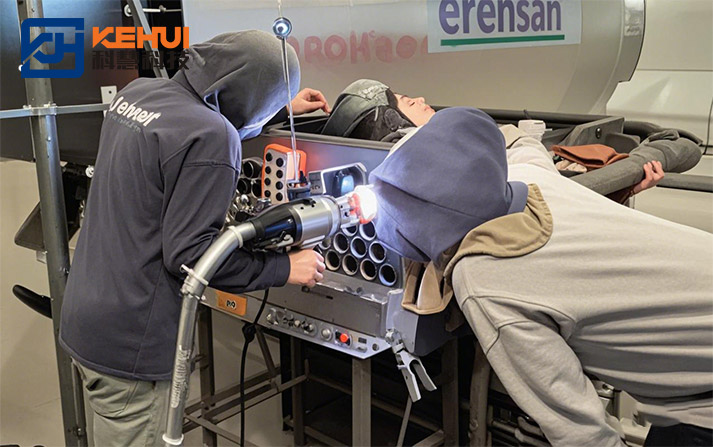
A condenser relies on many tubes to transfer heat between fluids. The tube ends must be connected to the tubesheet, and the resulting condenser tube to tubesheet welding needs to meet the mechanical and sealing requirements of the finished equipment.
In a real factory, however, welding thousands of similar joints creates a different problem: repetition.
The first weld and the 500th weld should follow the same basic process.
This is one reason tube to tubesheet orbital welding is widely used for repetitive tube-sheet joints. The welding torch follows a controlled circular path around the tube rather than relying entirely on manual torch movement.
Condenser production can involve:
A manufacturer may therefore need to think about accessibility and production flow as much as the welding process itself.
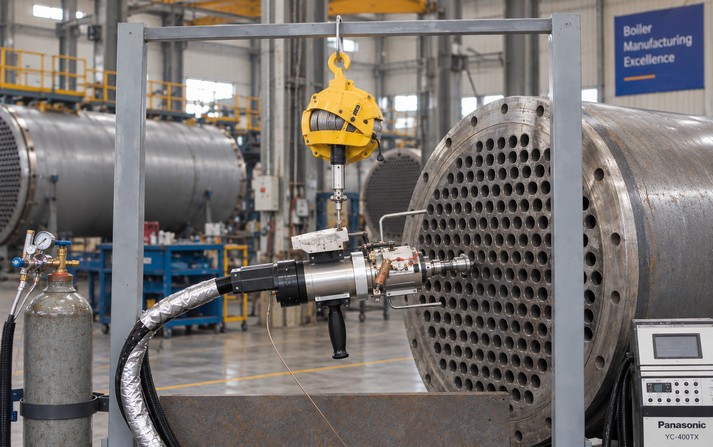
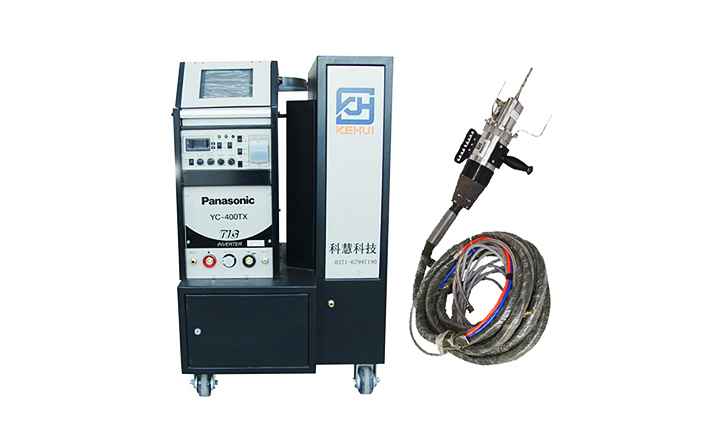
A typical automatic tube to tube sheet welding for condenser manufacturing system consists of a welding power source, control system, welding head, positioning components, and supporting tooling.
The basic cycle is straightforward:
Position → Center → Weld → Stop → Move to the next tube → Repeat
The welding head is positioned at the tube-to-tubesheet joint, and the torch travels around the tube according to the programmed welding procedure.
Depending on the application, the system can also incorporate filler wire, arc voltage control, water cooling, or other functions. Commercial orbital tube-to-tubesheet systems commonly offer different head configurations according to joint geometry and automation requirements.
In industrial condenser tube welding, producing one visually good weld is not the main production target.
The more important question is:
Can the machine produce hundreds or thousands of similar welds without continuously changing the welding setup?
An automatic condenser tube sheet welding machine addresses this issue by storing and repeating defined welding procedures instead of requiring the operator to manually reproduce every torch movement.
Not every condenser requires exactly the same welding configuration.
A practical equipment selection should begin with the workpiece.
Tube dimensions determine the available welding-head range and tooling.
Before selecting an automatic condenser tube sheet welding machine, the manufacturer should know the tube OD, wall thickness, material, and tube projection.
Tube pitch is particularly important for condenser manufacturing.
A welding head may technically support a certain tube diameter but still be unsuitable if adjacent tubes leave insufficient space for the head.
For high-density tubesheets, a compact tube to tubesheet welding head can be more important than simply choosing a machine with a larger nominal welding range.
The tube may be flush with the tubesheet, slightly recessed, or protruding from the tubesheet.
The welding head and torch position need to match the actual joint geometry.
This is why condenser tube to tubesheet welding should be evaluated from the complete workpiece configuration rather than from tube diameter alone.
In a condenser workshop, moving between hundreds of welding locations can consume a surprising amount of production time.
The welding arc itself is only part of the cycle.
A typical production cycle may include:
Locate tube → position head → confirm alignment → weld → remove head → move to next tube
Therefore, a useful automatic condenser tube sheet welding machine should be designed around the entire cycle rather than focusing only on arc time.
If the operator needs to repeatedly adjust the torch, welding parameters, or positioning mechanism, automation loses part of its value.
A properly configured tube to tubesheet orbital welding system can reduce repetitive manual adjustments and make the welding sequence more predictable.
A condenser manufacturer may produce different models with different tube sizes or materials.
Storing different welding programs can make changeovers more manageable.
Instead of treating every condenser as a completely new welding project, the operator can select the appropriate procedure and confirm the workpiece setup.
A factory trial is particularly useful for condenser applications.
Before purchasing an automatic condenser tube sheet welding machine, manufacturers can provide actual tube samples and a representative tubesheet section.
The trial should answer practical questions:
This approach is more informative than selecting equipment only from a catalog specification.
For automatic tube to tube sheet welding for condenser manufacturing, the welding test should ideally include multiple consecutive joints.
One successful weld proves that the process can work.
A series of repeated welds provides more information about:
This is especially important for large condensers where the total number of tube joints can make small cycle-time differences significant.
Automation does not necessarily mean that the entire condenser must become a fully robotic production line.
In many factories, the practical solution is to automate the repetitive welding operation while keeping loading, inspection, and other processes under operator control.
For example:
Tube expansion or preparation → tubesheet assembly → tube positioning → automatic tube-to-tubesheet welding → inspection → finishing
The exact sequence depends on the condenser design and manufacturing procedure.
This approach allows manufacturers to automate the operation that contains the highest number of repetitive welding cycles without redesigning the entire factory.
Automatic tube to tube sheet welding for condenser manufacturing can be considered for various industrial condenser designs, including:
Tube-to-tubesheet orbital welding is used in condenser and other thermal-equipment manufacturing because the welding head can follow the circular joint while the workpiece remains stationary.
From a manufacturing perspective, the best automation project usually starts with the actual workpiece rather than a machine model.
A condenser manufacturer can provide:
The equipment manufacturer can then determine the appropriate welding head, tooling, control method, and automation level.
This is particularly useful when comparing different suppliers of industrial condenser tube welding equipment.
A suitable system should balance four factors:
The equipment needs to produce the required tube-to-tubesheet joint for the selected materials and joint configuration.
The welding head must physically reach the joint without interfering with neighboring tubes.
The machine should repeat the welding procedure consistently across a large number of joints.
The complete cycle—from locating the tube to moving to the next joint—should make sense for the manufacturer’s production volume.
In other words, the best automatic condenser tube sheet welding machine is not necessarily the machine with the largest specification range. It is the machine that fits the actual condenser production process.
It is an automated welding process used to join condenser tubes to a tubesheet. A welding head positions and rotates the torch around each tube, following a programmed welding procedure.
Tube to tubesheet orbital welding is useful when a condenser contains a large number of repetitive tube joints. It can provide controlled torch movement and repeatable welding procedures across many joints.
An automatic condenser tube sheet welding machine is equipment designed to automate the welding of condenser tubes to tubesheets. Depending on the application, it can include a TIG power source, orbital welding head, positioning system, control system, wire feeder, and other supporting components.
Consider tube diameter, wall thickness, materials, tube projection, tube pitch, tubesheet thickness, joint geometry, production volume, and the available space around the tube joint.
It depends on the machine configuration. Different tube sizes may require different tooling or welding-head configurations. A customized system can be designed around the range of tube sizes used by the manufacturer.
For a customized condenser project, a sample test is highly recommended. It allows the manufacturer to verify welding-head accessibility, positioning, welding procedure, and production cycle time using representative workpieces.
The appropriate material combination depends on the condenser design. Common tube and tubesheet materials can include stainless steels, carbon steels, copper alloys, titanium, and other engineering alloys. The welding procedure should be developed and validated for the specific material combination.
Yes. The welding operation can be integrated with workpiece positioning, tube preparation, inspection, and other production steps. The appropriate level of automation depends on production volume, condenser design, and factory workflow.
 TAG:
TAG: We value your message!
Please fill the below, We will customized the solution to your needs.