Stock Code: 831045
Industrial Automation & Intelligence Solutions
SUMMERY: I remember a shop foreman in Ohio holding up two tubesheet samples. One had a tube that dropped into the hole with almost no resistance. The other required a rubber mallet. “Same drill bit,” he said. “Same operator. Two different fits. W...
I remember a shop foreman in Ohio holding up two tubesheet samples. One had a tube that dropped into the hole with almost no resistance. The other required a rubber mallet. “Same drill bit,” he said. “Same operator. Two different fits. Which one am I supposed to weld?”
That’s the question tube-to-tubesheet fit-up forces every heat exchanger fabricator to confront. The hole is either too tight, too loose, or somewhere in between. And the answer changes depending on the joint design, the welding process, and the service conditions.
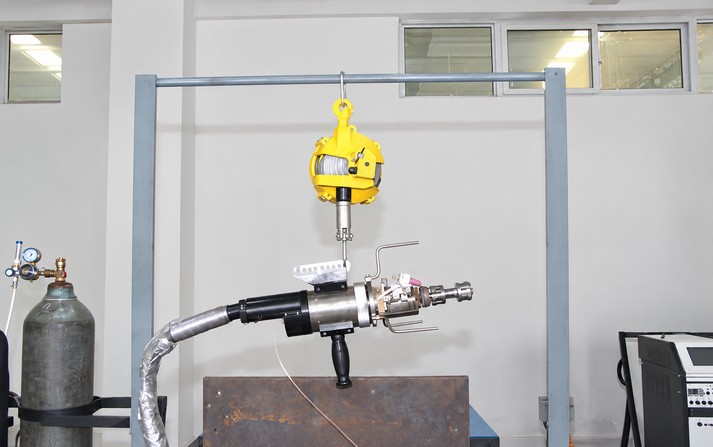
The gap between the tube OD and the tubesheet hole ID is not a minor detail. It directly affects heat transfer, residual stress, and weld quality.
A certain amount of clearance is necessary for assembly. You need to slide the tube into the hole without galling or deformation. But if clearances become too great, problems of falling through, penetration, and repeatability may occur. Too tight, and you risk explosive degassing during welding, which causes porosity. Too loose, and you get incomplete root penetration and inconsistent fusion.
For tube sheet heat exchanger applications, the clearance affects more than just weldability. It changes how the joint behaves under load. Research on rolled tube-to-tubesheet connections found that the actual clearance typically exceeds the nominal value specified in design standards, and an increase in this clearance directly correlates with a rise in residual stresses within the joint. The highest stress levels were observed at clearances of 0.40 mm and greater, which may lead to localized plastic deformation and reduce fatigue strength over time.
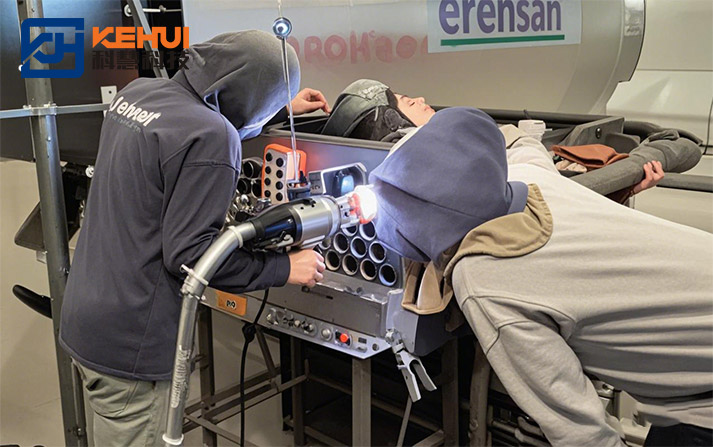
TEMA, the Tubular Exchanger Manufacturers Association, establishes clearance requirements for tube sheet heat exchanger fabrication. For standard applications, TEMA specifies that at least 96% of drilled holes must fall within a tight tolerance band, typically allowing a maximum over-tolerance of only 0.05 mm to 0.10 mm, depending on tube size.
That tolerance is not arbitrary. If holes are oversized, the clearance between the tube wall and the hole interior becomes too large, leading to over-expansion during assembly, which work-hardens the tube metal and induces stress corrosion cracking.
For larger tubes and longer unsupported spans, TEMA permits slightly more clearance. Where the maximum unsupported tube length is 36 inches or less, or for tubes larger in diameter than 1-1/4 inches, standard tube holes are 1/32 inch (0.8 mm) over the tube OD. Where unsupported length exceeds 36 inches for smaller tubes, the allowance tightens to 1/64 inch (0.4 mm).
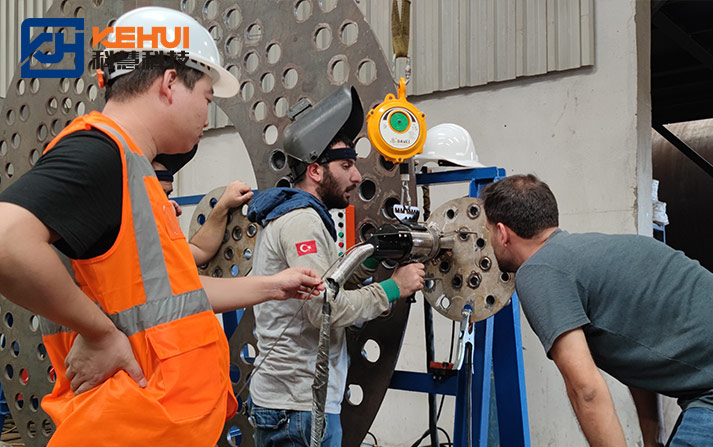
Research points to a specific range where tube-to-tubesheet fit-up works best.
A study on rolled tube-tubesheet connections determined that the optimal clearance range is between 0.10 mm and 0.30 mm. This range strikes a balance between ensuring joint reliability and maintaining acceptable stress levels, minimizing the risk of premature failure. Below 0.10 mm, assembly becomes difficult and explosive degassing during welding can cause porosity. Above 0.30 mm, residual stresses climb sharply, and the joint loses fatigue strength.
For tube to tube sheet seal welding, this window matters even more. A seal weld is a fusion weld between the tube and tubesheet materials, typically laid autogenously without filler wire. If the clearance is too large, the weld pool has nothing to bridge to. If it is too tight, gas trapped in the annular space expands during welding and blows through the puddle.
One research paper on friction stir welded joints found that the optimum parameters were 2 mm tube projection and 0 mm radial clearance to achieve maximum strength and weld penetration. That zero-clearance ideal is not practical for field fabrication, but it tells you something important: the tighter the fit, the better the weld quality—provided you can still assemble the bundle.
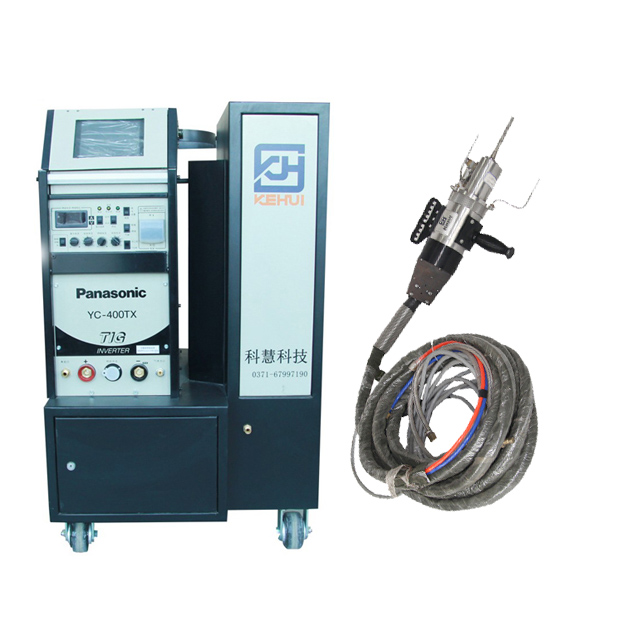
Tube sheet welding parameters are not independent of clearance. Change the gap, and you need to change the weld schedule.
When clearance is larger, the arc has farther to travel to reach the tubesheet wall. Heat input must increase to ensure fusion at the root. Travel speed may need to slow. Pulse frequency might need adjustment to keep the puddle from sagging into the gap.
When clearance is minimal, the opposite applies. Too much heat and you risk burn-through or excessive dilution. The weld pool bridges the joint easily, and the risk shifts from incomplete fusion to over-penetration.
This is where a tube to tubesheet welding machine manufacturer earns their keep. The best equipment allows operators to adjust parameters quickly when fit-up varies. A programmable system stores multiple schedules—one for tight fits, one for loose fits, one for nominal. The operator measures the gap or simply observes the fit during tube insertion, selects the appropriate program, and the machine handles the rest.
We build tube to tubesheet welding machine systems. The fit-up problems we see fall into three categories.
Hole enlargement from re-tubing. Every time a heat exchanger is re-tubed, the holes get slightly larger. After two or three re-tubing cycles, clearances that started at 0.20 mm might be 0.50 mm or more. A study on over-enlarged tubesheet holes investigated clearances that exceeded TEMA prescriptions by up to ten times. At that point, standard tube to tube sheet seal welding procedures no longer work. The weld lacks sufficient root penetration, and the joint fails leak testing.
Inconsistent drilling. CNC drilling is precise, but it is not perfect. Cumulative location tolerances can drift across a large plate, and hole diameters vary within the allowed tolerance band. If 96% of holes fall within tolerance, 4% do not. Those outliers affect tube-to-tubesheet fit-up and require parameter adjustments.
Thermal expansion during welding. As the weld heats the tubesheet, the hole expands. If the tube expands at a different rate—which it does with dissimilar materials—the clearance changes during the weld. An automatic tube-to-tubesheet TIG welding machine compensates for this by maintaining constant arc length through electronic sensing. Manual welding cannot.
The consequences of ignoring tube-to-tubesheet fit-up show up in inspection reports.
Incomplete root penetration is the most common defect when clearance is excessive. The weld bridges the gap but does not fuse to the tubesheet wall. Under pressure, that joint leaks. Under thermal cycling, it cracks.
Porosity from explosive degassing happens when clearance is too tight. Trapped gas or moisture in the annular space expands during welding and blows through the puddle. The resulting pores weaken the joint and provide leak paths.
Residual stress cracking develops over time. Research on rolled joints showed that clearances of 0.40 mm and greater produce stress levels that may lead to localized plastic deformation, compromising structural integrity and reducing fatigue strength. For a tube sheet heat exchanger in cyclic service, that translates to premature failure.
An Automatic Tube-to-Tubesheet TIG Welding Machine does not eliminate fit-up variation. But it manages it.
The machine centers itself on the tube ID, not the hole. That means it maintains concentricity even when the tube sits off-center in an oversized hole. Arc length is controlled electronically, so the torch follows the joint contour regardless of gap variation.
More importantly, the machine stores multiple tube sheet welding parameters sets. When the operator encounters a loose fit, they select the schedule programmed for that condition. The machine adjusts current, travel speed, and pulse frequency accordingly. No guesswork. No rework.
For tube to tube sheet seal welding on re-tubed exchangers where clearances have grown, an automatic tube-to-tubesheet TIG welding machine can run a higher-heat schedule that ensures root fusion without burning through the tube wall. The data log records every parameter, so you have proof of what was done.
Does tube hole clearance affect tube-to-tubesheet welding? Absolutely. It affects penetration, porosity, residual stress, and long-term fatigue life. The optimal range is 0.10 mm to 0.30 mm for most applications, with tighter tolerances for small-diameter tubes and higher-pressure service.
But perfect fit-up is not always achievable, especially in repair and re-tubing work. That is why tube-to-tubesheet fit-up must be considered alongside tube sheet welding parameters when developing procedures. And it is why an automatic tube-to-tubesheet TIG welding machine that can adapt to varying clearances is worth every penny.
If you are welding tube sheet heat exchanger bundles with inconsistent fit-up, you are leaving quality to chance. Talk to a tube to tubesheet welding machine manufacturer who understands the relationship between clearance and weld quality. The right equipment makes the difference.
Q: What is the ideal tube-to-tubesheet clearance for welding?
Research indicates the optimal clearance range is 0.10 mm to 0.30 mm. This balances assembly requirements with weld quality, keeping residual stresses within acceptable limits. TEMA standards typically allow 0.05 mm to 0.10 mm over-tolerance for standard applications, with larger allowances for long unsupported tubes.
Q: How does excessive clearance affect tube to tube sheet seal welding?
Excessive clearance causes incomplete root penetration because the weld pool cannot bridge the gap effectively. It also increases residual stresses that reduce fatigue strength. For tube to tube sheet seal welding, the weld must fuse to both the tube and the tubesheet wall—a gap that is too wide prevents that fusion.
Q: Can an automatic tube-to-tubesheet TIG welding machine handle varying clearances?
Yes. The machine stores multiple tube sheet welding parameters schedules. When the operator encounters a tight or loose fit, they select the appropriate program. The machine adjusts current, travel speed, and pulse frequency automatically. This is especially valuable for re-tubing work where hole enlargement has occurred.
Q: What happens if tube-to-tubesheet fit-up is too tight?
Too tight a fit causes explosive degassing during welding. Trapped gas or moisture in the annular space expands rapidly and blows through the weld puddle, creating porosity. It also makes tube insertion difficult and risks galling the hole surface.
Q: How does a tube to tubesheet welding machine manufacturer address clearance issues?
A good tube to tubesheet welding machine manufacturer designs equipment that centers on the tube ID rather than the hole, maintains constant arc length electronically, and stores multiple parameter schedules for varying fit-up conditions. They also provide training on measuring clearance and selecting the right schedule for each joint.
 TAG:
TAG: We value your message!
Please fill the below, We will customized the solution to your needs.