Stock Code: 831045
Industrial Automation & Intelligence Solutions
SUMMERY: A tube to tubesheet welding machine is used wherever tubes must be permanently joined to a tubesheet with high accuracy and repeatable quality. It is widely applied in heat exchanger tube welding, boiler tube welding, condenser tube weld...
A tube to tubesheet welding machine is used wherever tubes must be permanently joined to a tubesheet with high accuracy and repeatable quality. It is widely applied in heat exchanger tube welding, boiler tube welding, condenser tube welding, and tube sheet welding for pressure vessels. Instead of relying on manual TIG welding, modern manufacturers increasingly use automated systems to improve productivity, reduce rework, and achieve consistent weld quality across large production batches.
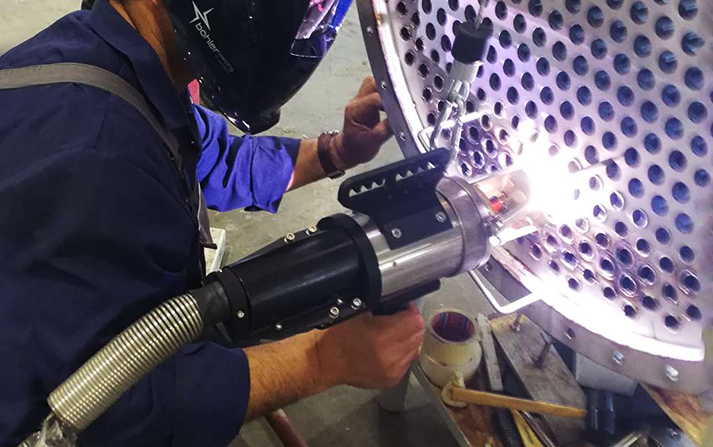
In many factories, the most time-consuming part of production is not machining—it is welding hundreds or even thousands of tube joints without defects.
Whether manufacturing a shell-and-tube heat exchanger or a high-pressure boiler, every tube must be securely welded to the tubesheet. This is where a tube to tubesheet welding machine becomes an essential part of the production line.
Unlike manual welding, automated equipment delivers stable parameters, repeatable welds, and higher first-pass acceptance, making it a practical solution for modern heat exchanger fabrication and industrial manufacturing.
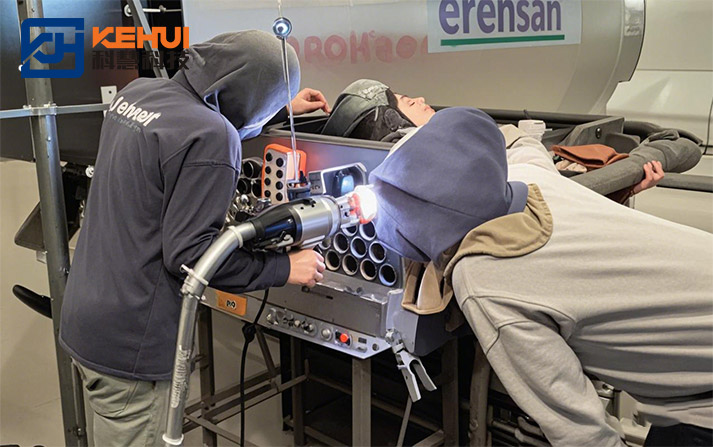
Rather than being limited to one industry, a tube to tubesheet welding machine is used in many types of industrial equipment. The table below summarizes the most common applications.
| Equipment | Typical Application | Welding Process |
|---|---|---|
| Shell & Tube Heat Exchangers | Chemical plants, refineries, power plants | Heat exchanger tube welding |
| Industrial Boilers | Steam generation systems | Boiler tube welding |
| Surface Condensers | Power stations, HVAC systems | Condenser tube welding |
| Pressure Vessels | Reactors, separators, storage equipment | Tube sheet welding for pressure vessels |
| Evaporators | Chemical and food processing | Tube-to-tubesheet welding |
| Steam Generators | Nuclear and thermal power plants | Automatic tube welding |
This wide range of applications explains why the tube to tubesheet welding machine has become a standard solution in many manufacturing facilities.
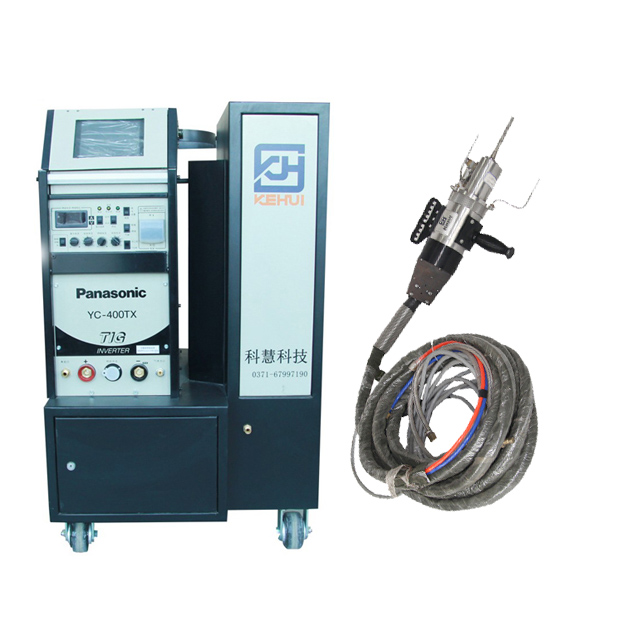
Among all applications, heat exchanger tube welding is the most common.
A single shell-and-tube heat exchanger may contain hundreds or even thousands of tubes. Manual welding under these conditions often leads to inconsistent quality and longer production cycles.
With a tube to tubesheet welding machine, manufacturers can automate repetitive welds, maintain stable welding parameters, and reduce repair rates. This makes heat exchanger tube welding faster, more consistent, and easier to standardize.
For companies involved in heat exchanger fabrication, automation also improves production planning by reducing dependence on individual operator skills.
In boiler manufacturing, welded joints operate under high temperature and pressure.
Every boiler tube welding operation must provide reliable sealing and structural strength throughout the equipment’s service life.
Using a tube to tubesheet welding machine allows manufacturers to achieve repeatable weld penetration while reducing variations between operators.
As production volumes increase, automated boiler tube welding also helps shorten delivery times without sacrificing quality.
Power stations, HVAC systems, and industrial cooling equipment all rely on condensers.
Because condensers often contain a large number of tubes, condenser tube welding is one of the most repetitive operations during manufacturing.
Automated condenser tube welding improves production efficiency by maintaining consistent weld quality across every joint, making inspection and leak testing more predictable.
In pressure vessel manufacturing, tube joints must withstand demanding operating conditions.
Applications such as reactors, separators, and process vessels frequently require tube sheet welding for pressure vessels to ensure long-term sealing performance.
Compared with manual methods, automated tube sheet welding for pressure vessels helps manufacturers improve weld consistency while reducing the risk of defects that could require costly repairs.
Although heat exchangers and boilers account for most applications, a tube to tubesheet welding machine is also widely used in:
Across these industries, the goal is the same: improve production efficiency while maintaining reliable welding quality.
The best tube to tubesheet welding machine is not simply the fastest model available.
Manufacturers should evaluate:
A machine selected according to actual production requirements will usually deliver greater long-term value than one chosen only by specifications.
From heat exchanger tube welding and boiler tube welding to condenser tube welding and tube sheet welding for pressure vessels, automated welding has become an essential part of modern industrial manufacturing.
A reliable tube to tubesheet welding machine helps manufacturers produce consistent weld quality, reduce rework, and improve overall production efficiency across a wide range of equipment and industries.
It is used to weld tubes to tubesheets in equipment such as heat exchangers, boilers, condensers, evaporators, pressure vessels, and steam generators, providing strong and leak-tight joints.
Industries include power generation, petrochemical processing, chemical manufacturing, HVAC, pharmaceutical equipment, food processing equipment, and heat exchanger manufacturing.
Yes. Many modern tube to tubesheet welding machine systems can be configured for different tube diameters, materials, and various heat exchanger designs.
Common materials include carbon steel, stainless steel, duplex stainless steel, titanium, nickel alloys, and other corrosion-resistant metals.
Automatic welding improves consistency, reduces operator dependency, increases productivity, and delivers higher first-pass weld acceptance compared with manual welding.
Choose a machine based on your product type, production volume, material requirements, automation needs, and the manufacturer’s ability to provide technical support, training, and long-term service.
 TAG:
TAG: We value your message!
Please fill the below, We will customized the solution to your needs.