Stock Code: 831045
Industrial Automation & Intelligence Solutions
SUMMERY: As global manufacturers face unprecedented skilled labor shortages and rising production demands in 2026, automation is no longer a luxury—it is a necessity. If you are considering upgrading your factory floor, the first question on your...
As global manufacturers face unprecedented skilled labor shortages and rising production demands in 2026, automation is no longer a luxury—it is a necessity. If you are considering upgrading your factory floor, the first question on your mind is naturally: How much does a robotic welding system cost?
The short answer is that pricing varies dramatically based on scope. As an experienced engineering integrator with a global footprint (serving clients across Europe, the Middle East, and Southeast Asia), we have delivered projects across every budget scale. A basic, compact workstation might only cost around $55,000 to $70,000. However, the mid-to-high-end integrated systems we typically design for our international clients range from $100,000, to $150,000, or even over $280,000. For large-scale heavy manufacturing, complex multi-robot lines can scale up to $1 million to $1.5 million or more.
Below is a transparent breakdown of the real-world factors driving robotic welding systems cost in 2026, and how leveraging a highly optimized global automation supply chain can maximize your investment.
When evaluating the overall welding robot price, it helps to understand where your project falls within the market spectrum:
Ideal for small fabrication shops or companies introducing automation for the first time. This tier usually features a single collaborative robot (cobot) or a compact 6-axis industrial arm, a basic MIG/TIG power source, and simple manual-clamping fixtures.
This is the “sweet spot” for most mid-sized manufacturers and represents the majority of projects we execute globally. These setups feature premium industrial arms, dual-station positioners (turn tables) so operators can load parts while the robot welds, advanced safety enclosures, and integrated fume extraction.
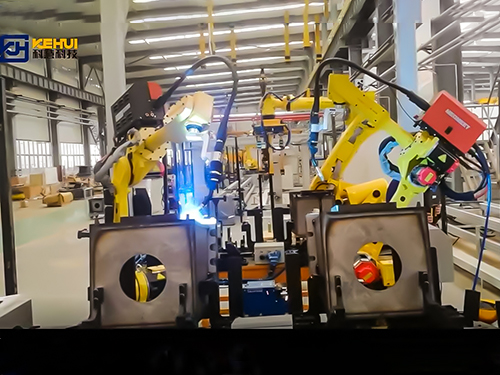
Designed for heavy industries like automotive, structural steel, or oil & gas. These complex automated welding lines feature multi-robot coordination, automated gantry systems, vision-guided seam tracking, smart conveyor transport, and centralized PLC-controlled master systems.
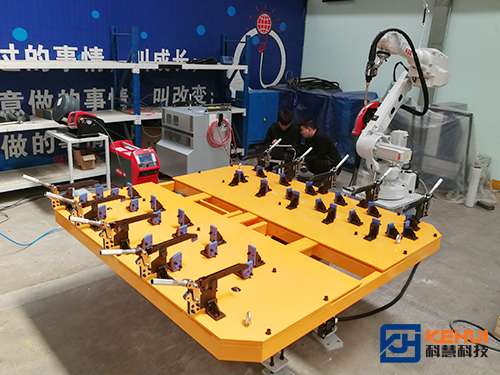
A common misconception when researching the welding robot price is assuming the robot arm represents the total cost. In reality, the bare arm and controller only account for roughly 30% to 40% of the final budget.
The true value lies in professional robotic welding integration. A functional system requires a meticulous blend of auxiliary components:
┌────────────────────────────────────────────────────────┐
│             TOTAL ROBOTIC WELDING SYSTEM COST          │
└────────────────────────────────────────────────────────┘
                           │
       ┌───────────────────┼───────────────────┐
       ▼                   ▼                   ▼
 ┌───────────┐       ┌───────────┐       ┌───────────┐
 │ Robot Arm │       │ Welding   │       │Engineering│
 │ & Controller│     │ Hardware  │       │ & Custom  │
 │ (30-40%)  │       │ & Power   │       │ Fixtures  │
 │           │       │ (20-25%)  │       │ (35-45%)  │
 └───────────┘       └───────────┘       └───────────┘
As a brand-agnostic integrator, we don’t manufacture the robot arms ourselves. We source the ideal robot arm from top global brands based entirely on your specific technical needs. Top-tier welding automation companies look beyond the arm to engineer bespoke tooling fixtures, safety interlocking gates, and tailored software programming.
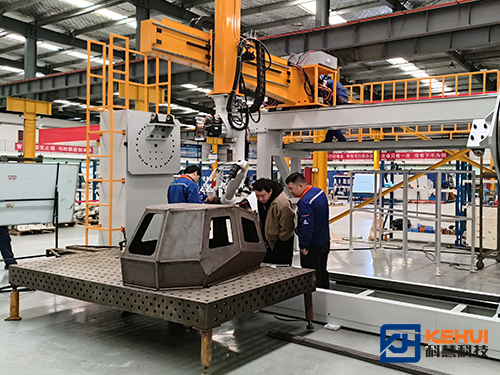
When consulting with top welding automation companies, your quote will fluctuate based on these key technical requirements:
Part Complexity & Variations: High-mix, low-volume manufacturing requires flexible tooling and advanced offline programming, which increases initial development costs.
Welding Process: Standard MIG setups are the most cost-effective. High-precision laser welding or heavy-duty spot welding guns require specialized transformers and cost significantly more.
Sensory Technology: Adding laser seam-tracking or 3D vision systems to adapt to part tolerances adds to the upfront robotic welding systems cost but dramatically reduces post-weld rework.
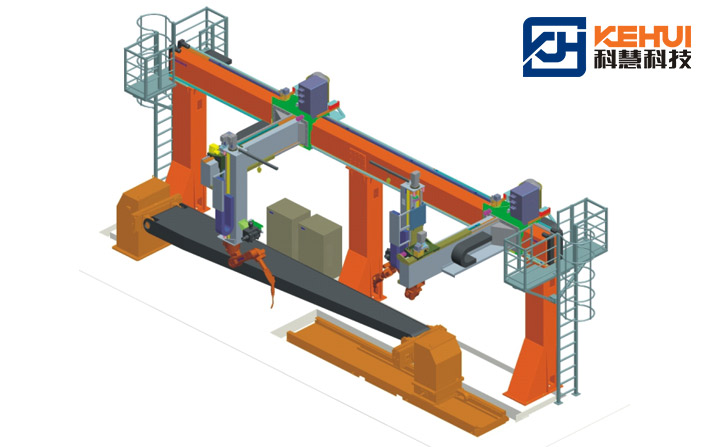
While the upfront capital expenditure for automated welding lines can seem daunting, the return on investment (ROI) is incredibly rapid. By partnering with an experienced global integrator backed by a robust, efficient supply chain, you benefit from premium engineering, rigorous pre-shipment testing, and top-tier components at a much more competitive price point than local Western integrators can offer.
Most of our international clients across Europe (Ireland, UK, France, Bulgaria), the Middle East (Saudi Arabia), and Southeast Asia (Indonesia, Philippines) achieve full capital payback within 12 to 24 months through minimized scrap, eliminated rework, and continuous throughput.
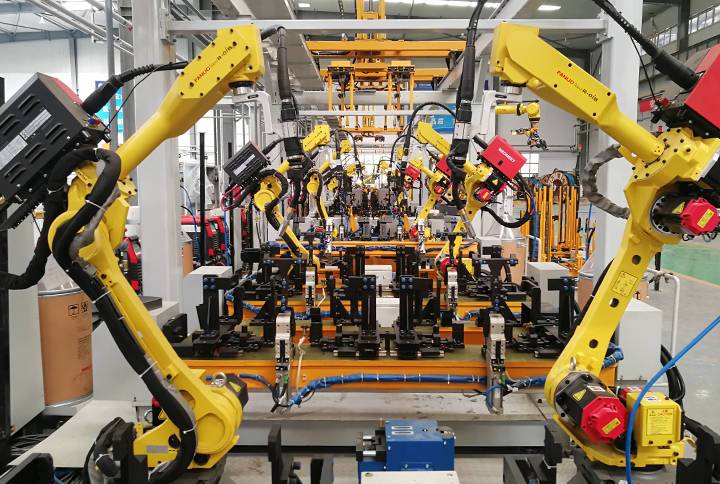
In 2026, a complete system can cost anywhere from $55,000 for a compact, entry-level workstation up to $1.5 million+ for multi-robot automated welding lines. Most mid-to-high-end industrial integration projects range between $100,000 and $280,000.
The primary cost drivers include the type of welding process (MIG, TIG, Laser, or Spot), the complexity of the custom-engineered fixturing, the payload and reach of the robot, safety compliance components, and advanced tracking sensors.
Yes, but hardware brand choice is only a fraction of the budget. Premium brands have a higher base welding robot price but offer unmatched reliability, global spare parts availability, and long-term software support. Because we are brand-agnostic, we source the best brand for your budget.
A single robotic welding cell can replace multiple manual welding shifts. By operating continuously without fatigue, it minimizes human error, decreases overhead, and solves the chronic shortage of certified manual welders.
Most manufacturing plants achieve a full return on investment within 12 to 24 months. The ROI is driven by a massive increase in arc-on time, faster cycle times, and a near-zero defect rate.
Absolutely. Experienced partners design systems with future scalability in mind. You can start with a single-station cell and later upgrade the software, add laser tracking sensors, or integrate it into larger automated welding lines as your production volume scales.
Choosing between various welding automation companies comes down to finding a partner who understands your regional manufacturing constraints and specific application goals. Whether you need a simple, budget-friendly workstation or an advanced turnkey production line, we configure custom systems optimized for performance, safety compliance, and maximum profitability.
Contact our team today to get a precise, custom quote tailored to your production floor.
 TAG:
TAG: We value your message!
Please fill the below, We will customized the solution to your needs.