Stock Code: 831045
Industrial Automation & Intelligence Solutions
SUMMERY: When two pipes need to be connected, the welding machine is only one part of the decision. The joint design itself often determines the welding process, inspection requirements, production efficiency, and final service life of the piping...
When two pipes need to be connected, the welding machine is only one part of the decision. The joint design itself often determines the welding process, inspection requirements, production efficiency, and final service life of the piping system.
The most common pipe welding joint types include butt welds, socket welds, fillet welds, lap joints, and flange-to-pipe connections. Choosing the right pipe to pipe welding joint depends on pipe diameter, wall thickness, material, operating pressure, accessibility, and production volume.
For manufacturers handling repeated pipe connections, the choice between manual welding and automated systems such as an orbital pipe welding machine can also significantly affect weld consistency.
Before selecting a welding process, it is important to understand how the pipes or components are physically joined.
The most common pipe welding joint types include:
| Joint Type | Typical Connection | Common Applications |
|---|---|---|
| Butt weld | Pipe ends meet end-to-end | Process piping, high-pressure piping |
| Socket weld | Pipe enters a socket in a fitting | Small-diameter piping |
| Fillet weld | Weld is placed at an angle | Attachments and structural connections |
| Flange-to-pipe weld | Pipe is joined to a flange | Removable piping systems |
| Lap joint | One component overlaps another | Selected special applications |
The best pipe to pipe welding joint is not automatically the same for every project. A joint that works well for a small instrumentation line may not be suitable for a high-pressure process pipeline.
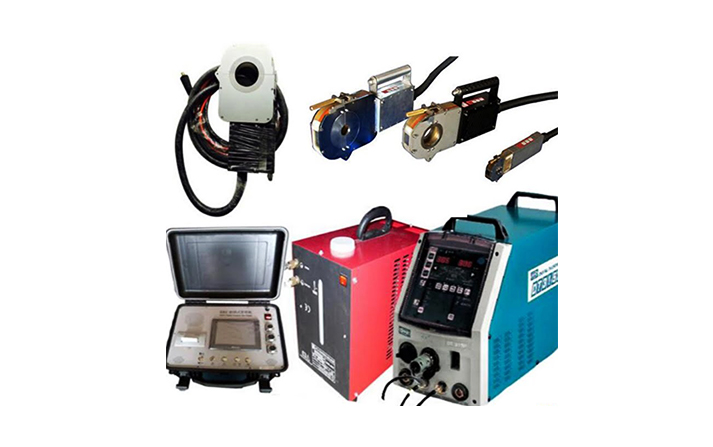
In pipe butt welding, two pipe ends are aligned face-to-face and welded around the circumference. The pipe ends may be prepared with a square edge or bevel, depending on wall thickness and the required welding procedure.
Pipe butt welding is widely used when a continuous connection between two pipes is required.
The quality of a pipe to pipe welding joint depends heavily on:
In real production environments, poor fit-up can create problems before welding even starts. If the two pipe ends are not properly aligned, even a highly automated welding system cannot completely compensate for the mechanical error.
For repeated pipe connections, pipe butt welding is often suitable for automation because the joint geometry is relatively consistent.
An orbital pipe welding machine can rotate the welding arc around the pipe while controlling parameters such as current, travel speed, and welding sequence.
This is particularly useful when manufacturers need:
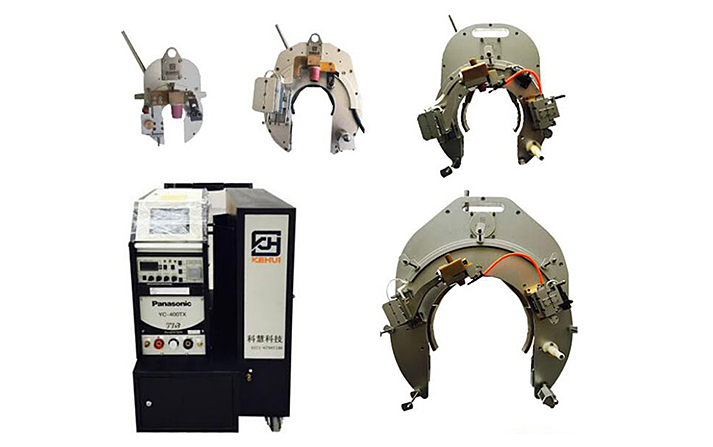
In a socket weld, the pipe is inserted into a recessed area of a fitting, valve, or other component. The outside connection is then welded around the joint.
Socket welding is commonly considered for smaller-diameter piping where a butt-weld preparation may be less practical.
The choice between a socket weld and a butt weld depends on the application.
A socket weld may be convenient when:
A butt weld may be preferred when a continuous internal flow path and high structural integrity are important.
For this reason, there is no universal answer to whether a socket weld or butt weld is better. The design pressure, pipe size, material, applicable codes, and service conditions all matter.
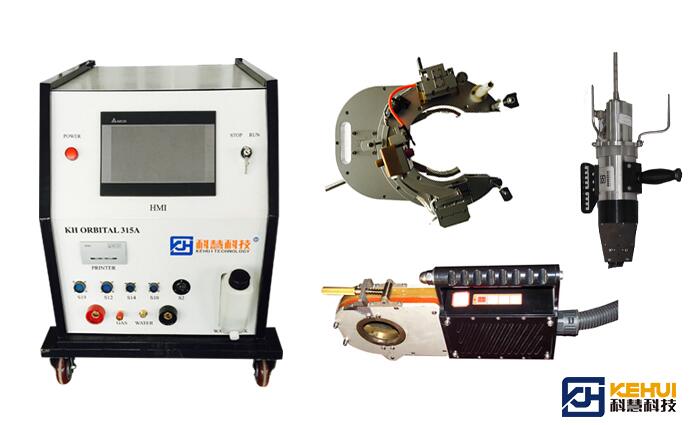
Pipe fillet welding creates a weld between surfaces that meet at an angle rather than joining two pipe ends directly.
Typical applications may include:
Compared with pipe butt welding, pipe fillet welding has a different joint geometry and inspection focus.
The weld size, leg length, fusion, and surface profile are important factors in pipe fillet welding.
Although many pipe-to-pipe connections use butt welds, pipe fillet welding remains important in complete piping and equipment fabrication.
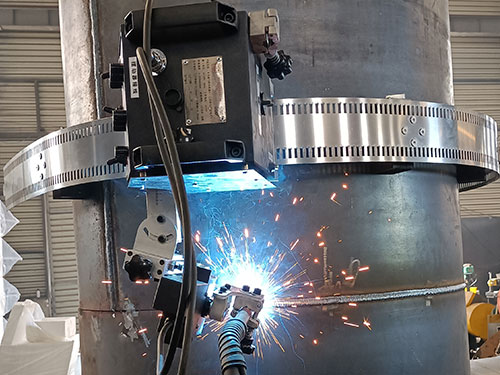
Flange to pipe welding connects a pipe to a flange. The flange can later be bolted to another flange, valve, pump, vessel, or piece of equipment.
This makes flange to pipe welding common in systems that require:
The welding method used for flange to pipe welding depends on the flange design and the required joint configuration.
In a factory environment, accurate alignment is particularly important. A poorly aligned flange may create problems during later installation even if the weld itself appears acceptable.
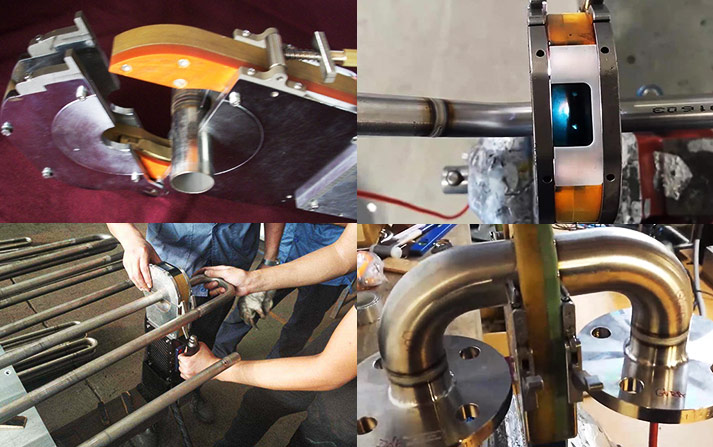
The correct pipe welding joint types should be selected based on the actual application rather than simply choosing the most familiar method.
Small-diameter pipes may be suitable for socket welds in certain applications, while larger pipes are more commonly joined using butt welding.
Thicker pipe walls may require bevel preparation and multiple welding passes. The joint design directly affects the welding procedure.
High-pressure piping generally requires careful consideration of joint design, welding procedure, inspection, and applicable standards.
Stainless steel, carbon steel, nickel alloys, and other materials may require different preparation and welding parameters.
A joint may be technically strong but difficult to weld if the welding head or operator cannot access the joint properly.
For repeated pipe connections, automated welding can improve consistency.
An orbital pipe welding machine is particularly useful when the same or similar pipe to pipe welding joint must be produced repeatedly.
Yes. Orbital welding is commonly used for circumferential pipe joints, especially when consistent and repeatable welds are required.
An orbital pipe welding machine can be used for many pipe-to-pipe butt welding applications. The equipment continuously controls the welding movement around the pipe, reducing the variation that may occur during manual welding.
However, automation does not eliminate the need for proper preparation. The pipe ends must still be correctly:
In other words, an orbital pipe welding machine can provide repeatable welding movement, but good pipe to pipe welding joint quality still starts with proper fit-up.
Regardless of the joint design, several factors influence final weld quality.
Incorrect alignment can lead to uneven penetration and inconsistent weld profiles.
Current, travel speed, arc length, and shielding gas must match the material and joint configuration.
Oil, rust, moisture, and contamination can affect the welding process.
This is where automation can provide a major advantage in high-volume production.
For manufacturers producing hundreds or thousands of similar joints, an orbital pipe welding machine can help standardize the welding process.
There is no single “best” joint for every pipe application.
The right decision depends on the pipe design, operating conditions, materials, applicable standards, and production requirements.
For companies that produce large quantities of similar pipe connections, combining the correct joint design with an orbital pipe welding machine or other automated welding system can improve repeatability and production efficiency.
The main types include butt welds, socket welds, fillet welds, lap joints, and flange-to-pipe welds. The appropriate choice depends on pipe size, wall thickness, pressure, material, accessibility, and application requirements.
A butt weld joins two pipe ends directly, while a socket weld inserts one pipe into a recessed fitting before welding around the connection. Butt welds are commonly used for end-to-end pipe connections, while socket welds are often considered for smaller-diameter piping.
The answer depends on the design and application. A properly executed butt weld provides a continuous connection and is commonly selected for many demanding piping applications. However, the final choice should consider pipe size, pressure, material, codes, and engineering requirements.
Butt welding is commonly used for many high-pressure piping applications because it can create a continuous joint between pipe ends. However, the appropriate joint must be determined according to the piping design, material, applicable standards, and operating conditions.
Yes. An orbital pipe welding machine can be used for many circumferential pipe-to-pipe welding applications. It is especially useful when manufacturers require repeatable welding movement and consistent production results.
Consider pipe diameter, wall thickness, material, operating pressure, accessibility, applicable welding standards, production volume, and required inspection level. The joint design should match both the engineering requirements and the practical production process.
 TAG:
TAG: We value your message!
Please fill the below, We will customized the solution to your needs.