Stock Code: 831045
Industrial Automation & Intelligence Solutions
SUMMERY: You know what manual TIG welding is used for. Almost everything. But what is orbital welding used for that manual welding can’t handle? That’s the real question. We’ve been building orbital welding system equipment since 199...
You know what manual TIG welding is used for. Almost everything. But what is orbital welding used for that manual welding can’t handle? That’s the real question.
We’ve been building orbital welding system equipment since 1994. We’ve shipped to over fifty countries. And we’ve seen that the answer to “what is orbital welding used for” is not a list of industries – it’s a list of *problems* that manual welding cannot solve.
Here are five specific situations where an orbital welding system – with the right tube orbital welding approach and properly developed orbital welding procedures – becomes not just better, but necessary.
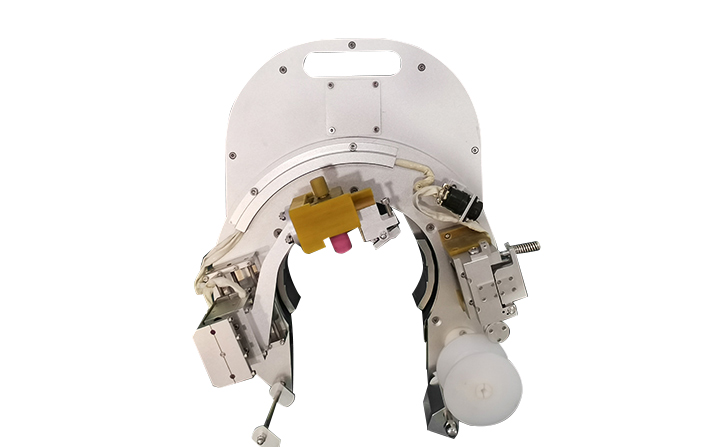
Manual welding depends on the welder’s skill, fatigue level, and attention. Even the best manual welder has off days. An orbital welding system doesn’t.
What is orbital welding used for in this context? It’s used for applications where every weld must be identical to the last one. Pharmaceutical clean steam lines. Semiconductor gas systems. Nuclear safety-related piping.
In these environments, you can’t afford a 2% rejection rate. One bad weld can contaminate an entire batch of product or shut down a fab for days. An orbital welding system follows programmed orbital welding procedures that remove the human variable. The tube orbital welding head rotates around the pipe with the same arc parameters, same travel speed, same gas coverage on joint after joint.
The orbital welding procedures are qualified once on your material, then executed hundreds or thousands of times. That repeatability is the primary answer to what is orbital welding used for in high-stakes manufacturing.
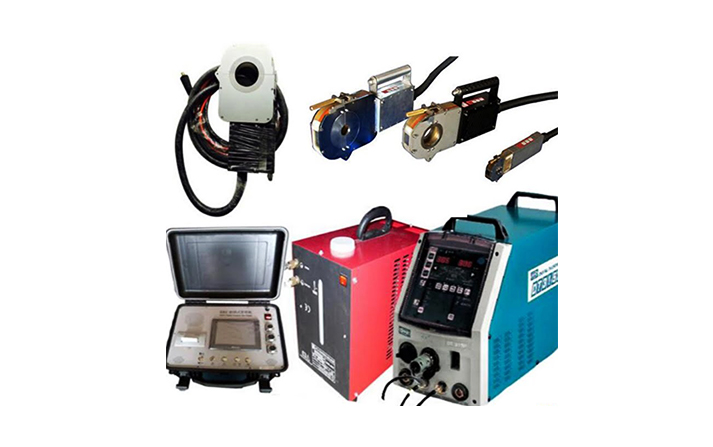
Try welding a 1/2-inch tube inside a heat exchanger bundle where your fingers barely fit. You can’t. But a tube orbital welding head can.
What is orbital welding used for in tight spaces? It’s used for welding tubes that are inaccessible to manual torches. A compact orbital welding system head can crawl into gaps as narrow as an inch. The operator stands outside the vessel. The tube orbital welding process runs automatically.
We’ve supplied orbital welding system equipment for tube-to-tubesheet welding in heat exchangers where the tube pitch was 20mm. No manual welder could reach the inner rows. The orbital welding procedures were developed on a mockup, then transferred to the actual bundle. The tube orbital welding heads did what hands could not.
If you’re asking what is orbital welding used for beyond open pipe, this is a major answer: confined spaces and complex geometries where manual access is impossible.
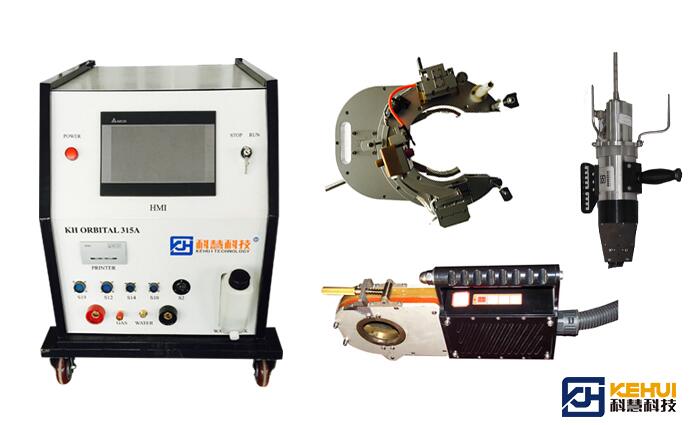
Thin-wall stainless (schedule 10 and below) is unforgiving. Too much heat and you burn through. Too little and you lack fusion. Manual welders struggle with consistency.
What is orbital welding used for on thin-wall? It’s used to produce perfect roots every time, with no oxidation and no burn-through.
A closed-head orbital welding system seals the weld zone in an inert gas chamber. The tube orbital welding process runs in a controlled environment. The orbital welding procedures are tuned to the exact wall thickness and diameter.
We’ve seen shops cut their rejection rate from 15% to under 2% by switching to tube orbital welding on 1.5mm wall 316L. That’s what an orbital welding system does: it turns a difficult manual job into a repeatable automated process.
When people ask what is orbital welding used for in the pharmaceutical industry, this is the answer: thin-wall stainless tubing that must be sanitary, cleanable, and free of defects.
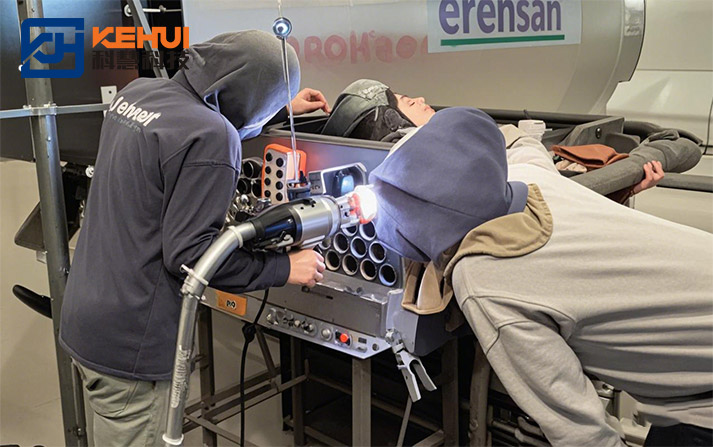
Manual welding leaves no record. You can inspect the weld afterward, but you can’t prove what happened during the weld. An orbital welding system can.
What is orbital welding used for in regulated industries? It’s used for traceability. Every orbital welding system worth using records welding parameters in real time: amperage, voltage, travel speed, gas flow, interpass temperature. The orbital welding procedures are stored with the weld data.
If a weld fails five years later, you can go back to the orbital welding system log and see exactly what happened. Was the amperage within spec? Was the travel speed correct? The data answers those questions.
This is a critical answer to what is orbital welding used for in nuclear, aerospace, and pharmaceutical construction. The tube orbital welding process doesn’t just make the weld – it documents it. Manual welding cannot do that.
Some materials are too sensitive for manual TIG. Titanium. Duplex stainless. Nickel alloys. Small variations in heat input or gas coverage cause cracking, embrittlement, or loss of corrosion resistance.
What is orbital welding used for with these materials? It’s used to apply precisely controlled orbital welding procedures that stay within narrow process windows.
A manual welder’s hand speed varies. Arc length varies. Gas coverage varies with torch angle. An orbital welding system eliminates those variations. The tube orbital welding head maintains a fixed arc length. Travel speed is constant. Gas coverage is consistent because the torch geometry is fixed.
We’ve developed orbital welding procedures for super duplex used in offshore oil platforms. The required heat input window was ±5%. Manual welding couldn’t hold that. Our orbital welding system did. The tube orbital welding process produced welds that passed the most stringent corrosion tests.
When engineers ask what is orbital welding used for on exotic alloys, the answer is: it’s used to weld materials that manual methods can’t handle reliably.
You’ll notice that every answer to what is orbital welding used for relies on orbital welding procedures. The hardware is just the tool. The procedures are the knowledge.
Orbital welding procedures define:
– Heat input (amperage × voltage × travel speed)
– Gas type and flow rate (torch and purge)
– Oscillation pattern (width, frequency, dwell)
– Interpass temperature limits
– Acceptable fit-up tolerances
Without qualified orbital welding procedures, an orbital welding system is just an expensive motor. With them, it’s a solution to the five problems above.
We’ve helped customers in over fifty countries develop orbital welding procedures for their specific materials and applications. That’s the real answer to what is orbital welding used for: it’s used to solve welding problems that have no manual solution.
Some people confuse tube orbital welding with pipe welding. The difference matters for the question what is orbital welding used for.
Tube orbital welding typically refers to smaller diameters (under 4 inches) and thinner walls (under 3mm). It’s common in instrumentation, sanitary, and heat exchanger work. Pipe welding is larger diameters, thicker walls, often carbon steel.
An orbital welding system for tubes usually has a closed head for gas coverage. A system for pipe may have an open head for speed.
When you ask what is orbital welding used for in a brewery or a pharmaceutical plant, the answer is tube orbital welding on small-diameter stainless. When you ask about a cross-country pipeline, the answer is orbital pipe welding on large-diameter carbon steel.
Both use an orbital welding system. Both rely on orbital welding procedures. But the equipment and techniques differ.
After 31 years, we have countless examples answering what is orbital welding used for:
– Welding 1/2-inch titanium tubes for an aerospace heat exchanger – tube orbital welding with a closed head, ultra-high purity argon, and specialized orbital welding procedures.
– Welding 6-inch super duplex pipe for an offshore platform – open-head orbital welding system, qualified orbital welding procedures to maintain phase balance.
– Welding 500 identical sanitary joints for a pharmaceutical water system – repeatable tube orbital welding with data logging for every weld.
– Welding inside a nuclear containment vessel where no human could fit – remote orbital welding system with extended cables.
Each application had a different answer to what is orbital welding used for. But the common thread: manual welding couldn’t do the job.
If you’re facing a welding problem that manual methods aren’t solving, ask yourself: what is orbital welding used for in this situation? The answer might be repeatability, access, material sensitivity, documentation, or thin-wall consistency.
We’ve been building orbital welding system equipment since 1994. We’ve shipped to over fifty countries. We’ve developed orbital welding procedures for materials and applications that most shops have never seen.
Call us. Describe your challenge. We’ll tell you whether tube orbital welding with our orbital welding system can solve it – and if it can, we’ll develop the orbital welding procedures to make it work.
Because after 31 years, we’ve learned that the question what is orbital welding used for doesn’t have a single answer. It has as many answers as there are welding problems. And we’ve probably solved most of them.
 TAG:
TAG: We value your message!
Please fill the below, We will customized the solution to your needs.