Stock Code: 831045
Industrial Automation & Intelligence Solutions
SUMMERY: If your facility handles hazardous chemicals, sticky resins, or moisture‑sensitive electrolytes, you have likely faced the same question: how do you clean IBC totes quickly, safely, and consistently without putting workers at risk? The a...
If your facility handles hazardous chemicals, sticky resins, or moisture‑sensitive electrolytes, you have likely faced the same question: how do you clean IBC totes quickly, safely, and consistently without putting workers at risk? The answer lies in an IBC tote cleaning system – a fully automated machine that eliminates manual entry, reduces solvent consumption, and delivers repeatable cleanliness for 275–330 gallon totes. In this guide, we will explain how automated tank cleaning works, when to choose an IBC washing machine, and why modern container cleaning equipment is essential for industries like lithium battery manufacturing.
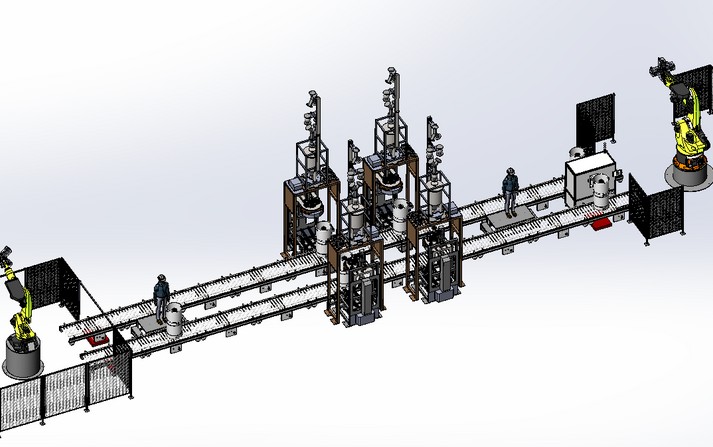
An IBC tote cleaning system is a specialized machine that washes, rinses, and dries the interior and exterior of reusable intermediate bulk containers without disassembly. Unlike a simple pressure washer, a professional IBC tote cleaning system includes a sealed chamber, recirculation pumps, multiple chemical tanks, and programmable logic control. The system can be configured as a mobile cart (for small volumes) or a multi‑station booth (for high throughput). At its core, an IBC tote cleaning system uses rotating jet heads or robotic lances to deliver high‑impact spray at adjustable pressures (5–500 bar). The wash fluid is filtered and reused, cutting water and detergent costs by up to 60%. For the battery industry, where LiPF₆ residues must be completely removed, the IBC tote cleaning system also includes solvent pre‑rinse and nitrogen drying stages.
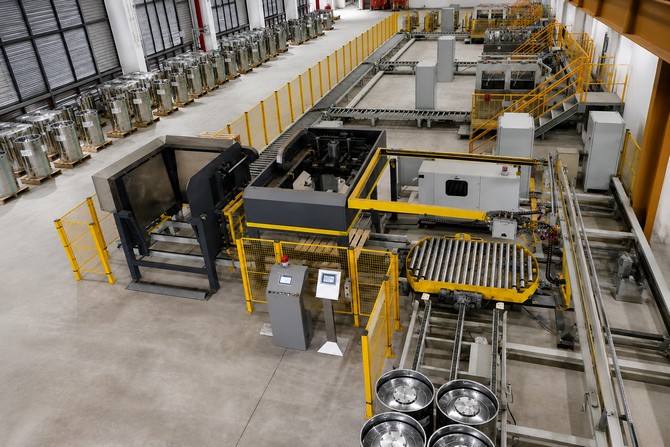
Automated tank cleaning refers to the use of programmable machinery – rather than manual lances or fixed spray balls – to clean the interior surfaces of tanks, IBCs, and drums. A dedicated automated tank cleaning solution offers several advantages:
Repeatability – The same cycle parameters (pressure, temperature, duration) are applied to every container.
Safety – No confined space entry; all operations are controlled from a remote HMI.
Efficiency – Cleaning a tote takes 2–6 minutes versus 15–30 minutes manually.
Lower environmental impact – Closed‑loop recirculation reduces chemical discharge.
When paired with an IBC washing machine, automated tank cleaning can also handle fixed storage tanks, mixing vessels, and reactors by using a telescopic lance or robotic arm. This is particularly valuable for plants that produce electrolyte or LiPF₆, where any residual moisture can ruin the next batch.
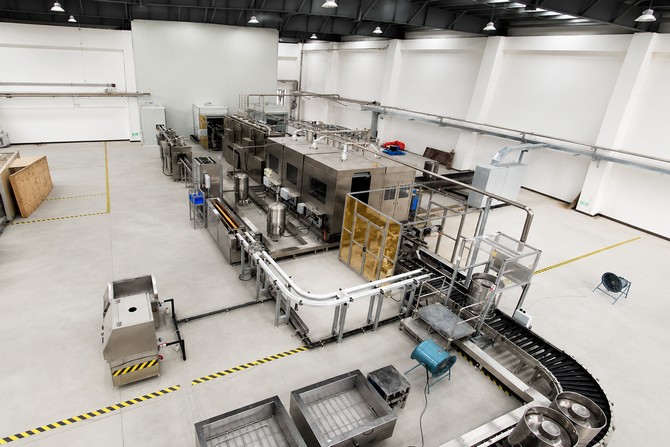
A standard IBC washing machine consists of the following modules:
Wash chamber – Sealed polypropylene or stainless steel with a self‑draining floor and interlocked doors.
Spray system – 360° rotating nozzle (water‑ or air‑driven) or a multi‑axis robotic nozzle.
Pump skid – High‑pressure pump (up to 500 bar), VFD‑controlled, with PTFE or ceramic plungers.
Chemical tanks – Three to five tanks for alkaline detergent, acid neutralizer, solvent, and fresh rinse water.
Filtration unit – Bag or cartridge filters (10–100 µm) with differential pressure monitoring.
Drying blower – Heated air or nitrogen with dew point sensor (optional for moisture‑sensitive residues).
Control panel – PLC with touchscreen, recipe storage for different tote types, and data export (USB or Ethernet).
For container cleaning equipment intended for aggressive chemicals like hydrofluoric acid or chlorinated solvents, all wetted parts must be made of PTFE‑lined steel, PVDF, or Hastelloy C22. Ordinary 316L stainless steel will develop pitting within months. Kehui’s container cleaning equipment uses only corrosion‑resistant alloys and includes an automatic leak detection system that shuts down the machine if any seal fails.
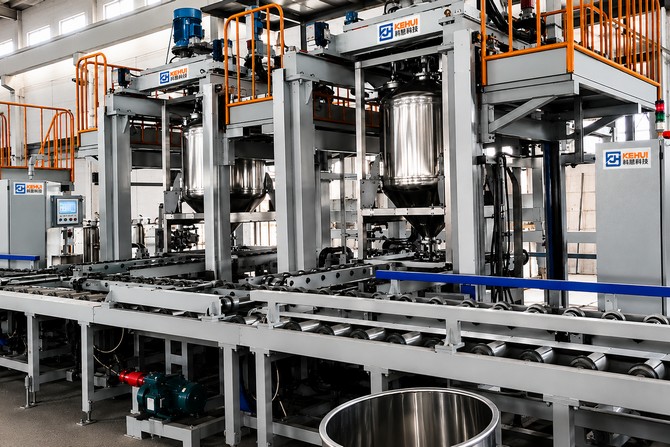
Industrial IBC cleaning is required wherever reusable containers come into contact with hazardous or high‑purity products. Common applications include:
Lithium battery supply chain – Removing LiPF₆, electrolyte, and lithium salt residues.
Chemical manufacturing – Cleaning totes that held acids, bases, isocyanates, or monomers.
Pharmaceutical production – Sanitizing containers for active ingredients and solvents (cGMP compliant).
Food and beverage – Washing totes used for syrups, oils, concentrates, and dairy ingredients.
Petrochemicals – Removing crude oil residues, lubricants, and additives.
A robust industrial IBC cleaning system can process 50–500 totes per week, with automatic changeover between 275‑gallon and 330‑gallon sizes. Some industrial IBC cleaning lines include a steam heating jacket for melting thick waxes or polymers. Kehui’s industrial IBC cleaning stations are designed for 24/7 operation, with redundant pumps and self‑cleaning filters to minimize downtime.

A complete container washing system can be more than a single IBC cleaner. Kehui offers several configurations:
Mobile skid – A compact, wheeled unit with its own pump, tanks, and nozzle. Ideal for facilities with multiple cleaning points.
Single‑station booth – A fixed enclosure with a turntable and integrated drying. Suitable for low to medium volumes (10–50 totes/day).
Multi‑station gantry – One robotic arm travels on a rail to serve two or three wash bays. Handles 100+ totes per day.
Inline tunnel – For very high throughput (200+ totes/day), a conveyor moves totes through pre‑wash, chemical wash, rinse, and drying zones.
Each container washing system can be tailored with additional features such as barcode reading (for batch traceability), remote diagnostics, or integration with a plant’s MES/ERP system. When selecting a container washing system, consider the residue type (water‑soluble vs. solvent‑only), throughput, and available floor space.
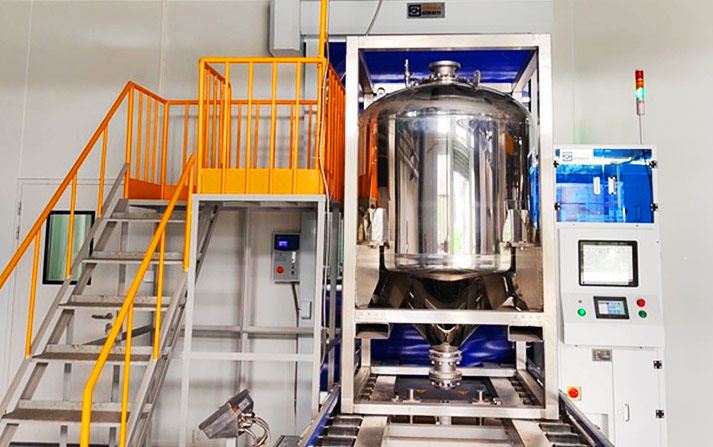
Kehui designs IBC tote cleaning system solutions that prioritize corrosion resistance, automation, and safety. Our IBC washing machine uses a 4‑axis robotic arm that enters the tote through the 200mm manway and follows a 3D path to cover every internal corner – something fixed spray balls cannot achieve. For automated tank cleaning, the same robot can be extended on a mast to wash vertical mixing tanks up to 3 meters tall. All our container cleaning equipment includes a solvent recovery still that reclaims >85% of DMC or acetone, dramatically reducing operating costs. In industrial IBC cleaning applications handling LiPF₆, we add a dew point monitor and nitrogen blow‑off to guarantee dry containers. Kehui’s container washing system has been proven at Do‑Fluoride (the world’s largest LiPF₆ producer) and Shinghwa (a top electrolyte solvent manufacturer), where it cut cleaning time by 70% and eliminated operator exposure.
An IBC tote cleaning system is not just a washer – it is a fully integrated automated tank cleaning solution that protects your product quality, your workers, and your equipment. Whether you need a mobile IBC washing machine or a high‑throughput container washing system, Kehui has the expertise to deliver reliable container cleaning equipment for even the most aggressive industrial IBC cleaning challenges.
Contact Kehui today to discuss your IBC cleaning requirements. We offer free technical consultations, residue testing, and payback analysis.
 TAG:
TAG: We value your message!
Please fill the below, We will customized the solution to your needs.