Stock Code: 831045
Industrial Automation & Intelligence Solutions
SUMMERY: 1. The Growing Need for a Reliable IBC Cleaning System in Electrolyte Production As lithium battery manufacturing expands globally, producers of LiPF₆ and electrolyte face increasing pressure to clean containers safely and effic...
As lithium battery manufacturing expands globally, producers of LiPF₆ and electrolyte face increasing pressure to clean containers safely and efficiently. An IBC cleaning system designed for hazardous chemicals must prevent moisture ingress and resist corrosion. Do-Fluoride, a top-tier LiPF₆ supplier with annual capacity exceeding 50,000 tons, recognized that its existing manual cleaning process could not scale with production growth. The company sought an IBC tote cleaning system that could automate the entire wash cycle while maintaining strict purity requirements for electrolyte drum cleaning.
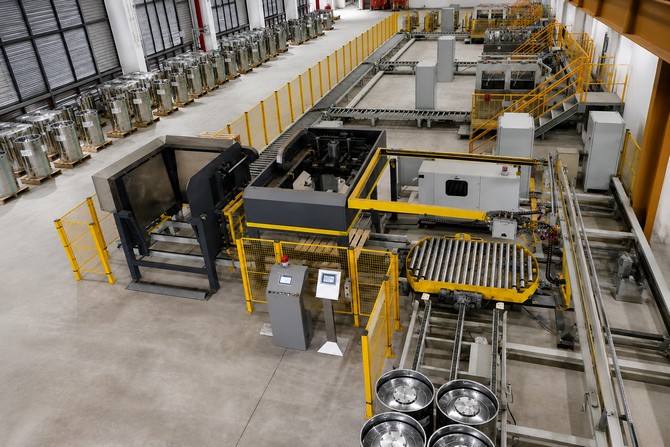
Do-Fluoride’s drums and IBC totes contained LiPF₆ crystals and residual electrolyte films—substances that react violently with ambient humidity. Traditional methods involved workers using high-pressure lances inside open drums, leading to inconsistent results and potential HF exposure. The company needed a hazardous chemical container cleaning solution that could:
Operate without any manual entry into the container
Achieve repeatable cleanliness across thousands of cycles
Recover expensive solvents used in the cleaning process
Integrate with existing electrolyte handling system infrastructure
After evaluating several suppliers, Do-Fluoride selected Kehui’s chemical drum cleaning system for its robotic automation and corrosion-resistant design.
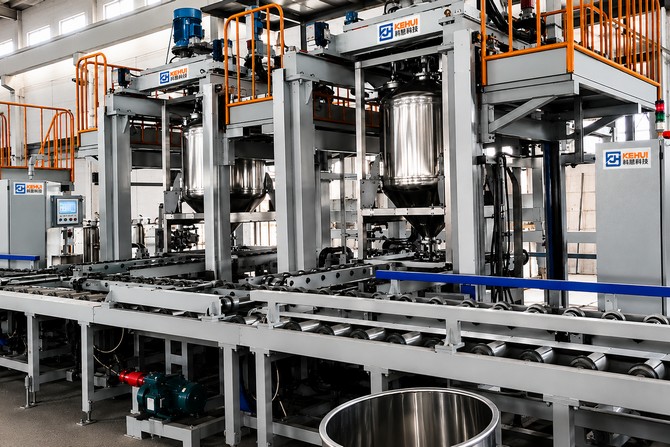
The delivered IBC tote cleaning system incorporates several proprietary features:
Robotic spray arm with adaptive pressure – A 4-axis robot enters through the 200mm manway, using a laser profilometer to map interior residue. The system then varies pressure from 50 to 350 bar based on soil thickness, ensuring thorough electrolyte drum cleaning without damaging container surfaces.
Fully sealed wash chamber – The IBC cleaning system operates under continuous nitrogen purge (dew point ≤ -50°C). Any solvent vapor is captured by a chiller and returned to the recirculation tank.
Multi-stage chemical dosing – The corrosion resistant cleaning system uses a sequenced wash: warm DMC pre-rinse → alkaline detergent → citric acid neutralization → deionized water final rinse → heated nitrogen drying.
Corrosion-resistant wetted parts – All pumps, valves, and nozzles are PTFE-lined or Hastelloy C22, tested for 10,000+ hours in HF environments.
The system handles both 200L steel drums and 1,000L IBC totes with a tool-free adapter change. For lithium battery manufacturing sites requiring high throughput, Kehui configured dual cleaning stations served by a single robot on a linear rail.

Following installation, Do-Fluoride recorded significant improvements:
| Metric | Before (Manual) | After (Kehui Automated) | Improvement |
|---|---|---|---|
| Cleaning time per drum | 18 minutes | 5 minutes | -72% |
| Operators per shift | 4 | 1 | -75% |
| Solvent consumption | 12 liters/drum | 5.5 liters/drum | -54% |
| Residual LiPF₆ (by rinse analysis) | 50–200 ppm | <10 ppm | Consistent pass |
| Workplace incidents (HF exposure) | 2 per year | 0 | 100% elimination |
The chemical drum cleaning system also reduced maintenance downtime. Previously, pumps and seals failed every 3–4 months due to acid attack; with PTFE-lined components, service intervals extended to 18 months. Do-Fluoride’s quality team confirmed that cleaned containers showed no measurable cross-contamination when refilled with different electrolyte batches.
According to Do-Fluoride’s public filings, the company continues to expand LiPF₆ production and has filed multiple patents related to automated container handling. Kehui’s ibc tote cleaning system has become a standard part of their internal specification for new production lines.
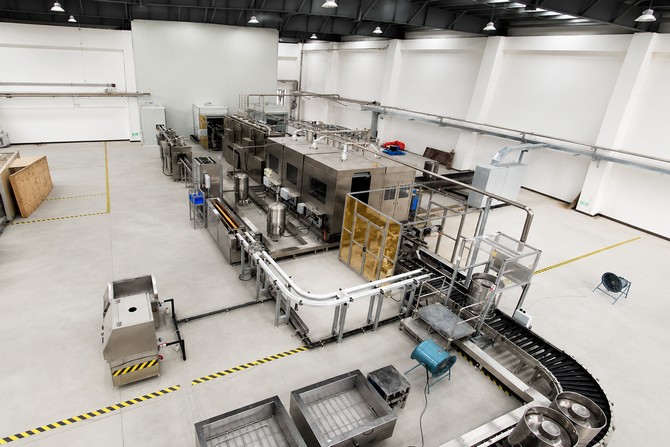
The success at Do-Fluoride highlights several advantages of Kehui’s approach:
Adaptive robotics – Unlike fixed spray balls, the robot follows container contours, eliminating dead zones.
Closed-loop solvent recovery – Reduces both operating cost and environmental footprint.
Corrosion resistant cleaning system – PTFE and Hastelloy provide long-term reliability in aggressive electrolyte handling system environments.
Full data traceability – Each cycle generates a PDF report with pressure, temperature, and humidity graphs, supporting ISO and customer audits.
For any lithium battery manufacturing facility handling LiPF₆ or electrolyte, the Kehui IBC cleaning system offers a proven, scalable solution.
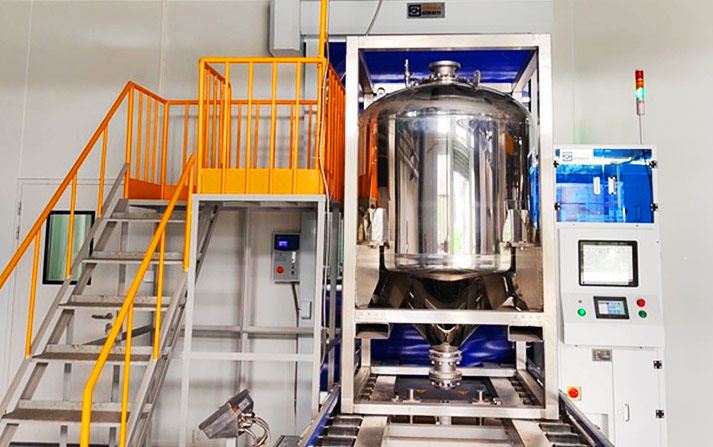
Contact Kehui to learn how our electrolyte drum cleaning technology can improve your container management.
 TAG:
TAG: We value your message!
Please fill the below, We will customized the solution to your needs.