Stock Code: 831045
Industrial Automation & Intelligence Solutions
SUMMERY: Quick Answer: How Do You Evaluate Polymer Quenchant Performance? A polymer quenchant is evaluated by examining its cooling characteristics under controlled test conditions. Key factors include cooling rate, polymer concentration, fluid ...
A polymer quenchant is evaluated by examining its cooling characteristics under controlled test conditions. Key factors include cooling rate, polymer concentration, fluid temperature, agitation and changes during service.
Cooling curve testing helps heat treatment engineers compare quenchant performance, identify changes and support process control. A quenchometer such as the KHR-A can be used to measure and analyze the cooling characteristics of water-based and polymer quenching fluids.
Water-based quenchants are cooling media that use water as their base. They are used in industrial heat treatment to remove heat from metal components after heating.
A polymer quenchant is a type of water-based quenching fluid containing dissolved polymers. Its cooling behavior can be adjusted through formulation and concentration, making it suitable for different industrial quenching applications.
Water-based quenchants are used where water-based cooling systems are required. Their performance is affected by fluid temperature, circulation, agitation and other operating conditions.
A polymer quenching fluid contains polymer additives that influence heat transfer during quenching. Different polymer types and concentrations produce different cooling characteristics.
Compared with plain water, polymer-based media offer additional flexibility in adjusting cooling behavior. However, the actual performance must be evaluated under defined conditions rather than assumed from concentration alone.
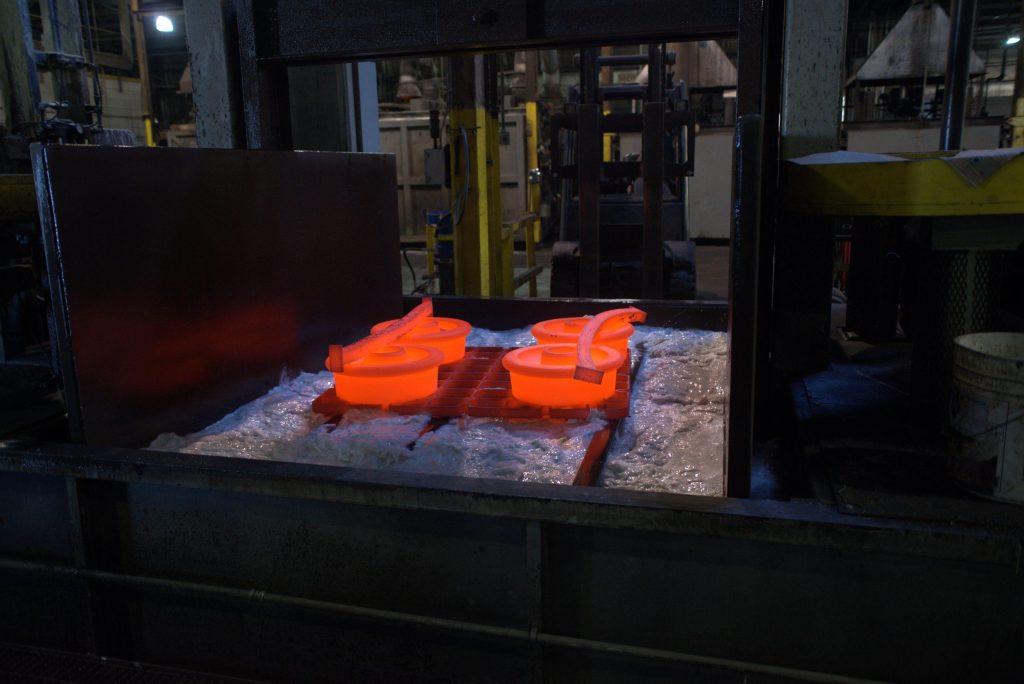
The cooling behavior of a polymer quenchant depends on several interacting variables. Monitoring these factors helps maintain more consistent heat treatment conditions.
Polymer concentration is an important parameter in aqueous polymer quenchant management. Changes in concentration can affect the cooling curve and the cooling rate.
However, a higher concentration does not always produce a predictable result across different polymer formulations. Concentration should be checked together with cooling performance.
Fluid temperature and agitation influence heat transfer around the test probe and the actual workpiece. A test performed under static conditions may produce different results from one conducted with agitation.
For meaningful comparisons, the test temperature, agitation conditions and measurement procedure should remain consistent.
Dirt, oil contamination, water loss and long-term service can change the condition of a polymer quenching fluid. These changes may affect its cooling characteristics and process stability.
Regular inspection and cooling curve testing help identify performance changes that require further investigation.
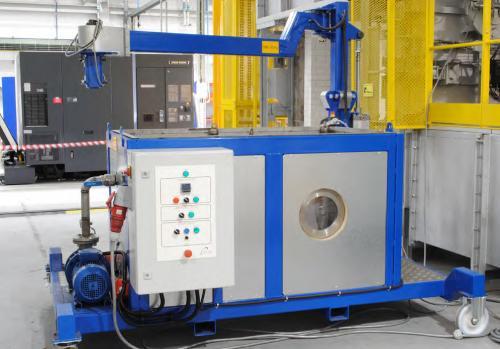
In industrial heat treatment, inconsistent cooling conditions can contribute to variations in hardness, distortion and other quality problems.
Polymer quenchant testing provides measurable information about the cooling behavior of the medium. It helps manufacturers:
A cooling curve does not directly measure the hardness or microstructure of a metal component. Final results also depend on material composition, geometry, heating conditions and the actual quenching process.
A practical evaluation combines fluid condition checks with cooling curve measurement.
Before testing, record polymer concentration, fluid temperature and agitation conditions. These parameters are essential when comparing test results.
Cooling curve testing records the temperature change of a standardized probe during cooling. The resulting curve can be analyzed to determine cooling rate and characteristic temperature ranges.
For water-based quenching fluid testing, the selected method and test conditions must match the fluid type and intended application.
Compare current curves with previous reference data obtained under consistent conditions. Changes in maximum cooling rate or other curve characteristics may indicate variations in fluid condition or operating parameters.
ASTM has published specific documents related to aqueous polymer quenchant evaluation. Understanding their scopes helps users select appropriate test methods.
| ASTM standard | Main scope |
|---|---|
| ASTM D6482 | Cooling characteristics of aqueous polymer quenchants using an agitated Tensi method |
| ASTM D7646 | Cooling characteristics of aqueous polymer quenchants for aluminum alloys in a non-agitated system |
| ASTM D6666 | Guide for selecting test methods to evaluate aqueous polymer quenchants, including initial qualification, quality and aging |
These standards are not interchangeable. For example, ASTM D6482 uses an agitation apparatus, while ASTM D7646 is designed for a non-agitated system for aluminum alloy applications.
Users should consult the applicable standard and its current edition before selecting a test procedure.
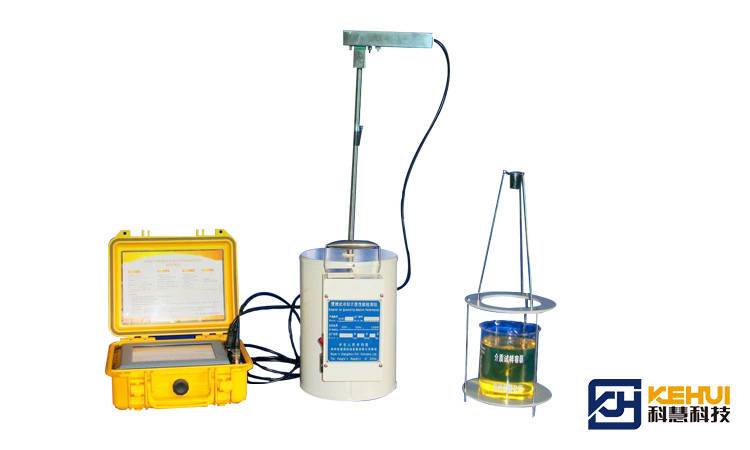
The KHR-A Quenchometer, manufactured by Zhengzhou Kehui Technology Co., Ltd., can be used to evaluate the cooling characteristics of quenching oils, water-based quenchants and polymer quenching fluids.
Its cooling curve measurement and analysis functions help heat treatment laboratories compare quenchant performance and monitor changes during service.
When selecting a quenching medium testing equipment, users should consider:
The KHR-A Quenchometer fully complies with ASTM D6200 and ISO 9950 for the applicable standardized quenching oil testing methods. This compliance should not be interpreted as certification to ASTM D6482 or ASTM D7646.
A polymer quenchant is a water-based cooling medium containing polymer additives that influence its cooling behavior during metal heat treatment.
It can be evaluated through cooling curve measurement under defined test conditions, together with checks of concentration, temperature and agitation.
Yes. Polymer concentration can influence cooling characteristics, but the relationship depends on polymer formulation, temperature and operating conditions.
Yes. The KHR-A Quenchometer can be used to test the cooling characteristics of polymer quenching fluids and other water-based quenchants. The test procedure must be appropriate for the intended application.
ASTM D6200 is a test method for determining the cooling characteristics of quenching oils. It should not be treated as a general polymer quenchant testing standard.
Evaluating water-based quenchants and polymer quenching fluids requires more than checking concentration alone. Cooling curve testing, fluid condition monitoring and consistent test conditions provide useful information for industrial heat treatment management.
The KHR-A Quenchometer offers cooling characteristic measurement and analysis for quenching oils, water-based quenchants and polymer quenching fluids, helping laboratories make more informed evaluations of quenchant performance.
 TAG:
We value your message!
Please fill the below, We will customized the solution to your needs.