Stock Code: 831045
Industrial Automation & Intelligence Solutions
SUMMERY: Quenching oil plays an important role in industrial heat treatment. Its cooling characteristics affect heat transfer during quenching and can influence the hardness, distortion, and consistency of treated components. For this reason, sta...
Quenching oil plays an important role in industrial heat treatment. Its cooling characteristics affect heat transfer during quenching and can influence the hardness, distortion, and consistency of treated components. For this reason, standardized cooling curve testing is widely used to evaluate quenching oil performance.
Two important methods in this field are ASTM D6200 and ISO 9950. Both use a heated nickel-alloy probe to evaluate the cooling characteristics of industrial quenching oils under specified conditions. However, they are separate standards with their own testing requirements.
This article explains their applications, key considerations, and how to select suitable quenching oil testing equipment, including the KHR-A quenchometer manufactured by Zhengzhou Kehui Technology Co., Ltd.
In industrial heat treatment, the same type of quenching oil may show different cooling behavior depending on its formulation, operating condition, contamination, and service history.
Without consistent testing procedures, comparing oil samples from different batches or suppliers can be difficult.
Standardized quenching oil testing standards provide defined procedures for evaluating cooling characteristics. They help heat treatment laboratories and manufacturers:
Cooling curve testing does not directly measure the hardness of a finished component. Instead, it provides information about the cooling behavior of the quenching medium, supporting decisions in quenching process control.
ASTM D6200 is titled Standard Test Method for Determination of Cooling Characteristics of Quench Oils by Cooling Curve Analysis.
It describes the equipment and procedure for evaluating quenching oil characteristics through cooling rate determination. The method uses a heated nickel-alloy probe that is immersed in the oil under specified test conditions.
A temperature measurement system records the probe’s cooling process and generates temperature-time and cooling-rate data.
The results can help users:
An important limitation is that ASTM D6200 is designed for testing in a non-agitated oil system. Its results should not be assumed to represent cooling behavior in an agitated production tank.
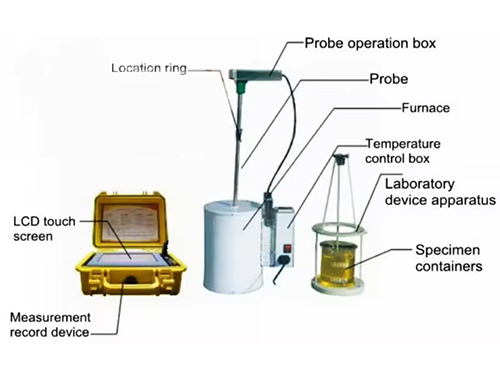
ISO 9950:1995, titled Industrial quenching oils — Determination of cooling characteristics — Nickel-alloy probe test method, specifies a laboratory method for evaluating the cooling characteristics of industrial quenching oils.
The method uses a nickel-alloy probe under standardized conditions. The recorded cooling data can be used to rank the cooling characteristics of different oils.
ISO 9950 is also based on testing in non-agitated oil. According to the ISO catalogue, the 1995 edition was reviewed and confirmed in 2022 and remains current.
For heat treatment laboratories, this method provides a standardized basis for comparing industrial quenching oils and monitoring their cooling behavior.
Both standards evaluate quenching oil cooling characteristics through probe-based cooling curve analysis. However, they are independently published methods and should not be treated as interchangeable procedures.
| Comparison | ASTM D6200 | ISO 9950 |
|---|---|---|
| Publishing organization | ASTM International | International Organization for Standardization |
| Main application | Quenching oil cooling characteristics | Industrial quenching oil cooling characteristics |
| Test approach | Nickel-alloy probe cooling curve analysis | Nickel-alloy probe cooling curve analysis |
| Test environment | Non-agitated oil | Non-agitated oil |
| Main output | Temperature-time and cooling-rate data | Cooling characteristic data |
| Main purpose | Oil evaluation and comparison | Oil evaluation and comparison |
The practical point is that users should follow the complete procedure specified by the selected standard. Probe specifications, measurement conditions, equipment configuration, and operating procedures should be checked against the official document.
If a laboratory needs to compare results from different testing methods, it should first confirm whether the test conditions are sufficiently comparable.
A quenchometer may be designed to support testing based on more than one standard, but this depends on its probe configuration, measurement system, software, and operating procedures.
When purchasing equipment, laboratories should check:
These considerations also apply when comparing equipment marketed under names such as IVF Quenchtest or other cooling characteristics testers. Buyers should compare actual technical specifications and standard-related capabilities rather than relying on product names alone.
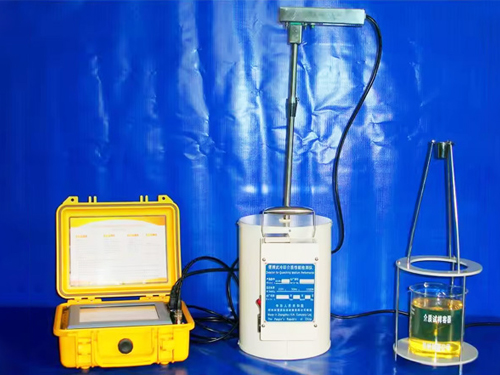
The KHR-A quenchometer is a quenching medium testing instrument manufactured by Zhengzhou Kehui Technology Co., Ltd. According to the company’s engineering team, the instrument supports testing related to ASTM D6200 and ISO 9950.
It is designed to help heat treatment laboratories evaluate quenching oil cooling characteristics through cooling curve measurement and analysis.
For users comparing a KHR-A quenchometer with products searched under terms such as IVF Quenchtest, the key is to examine the actual probe configuration, measurement capabilities, software functions, and support for the required testing method.
KHR-A is Kehui’s own product, not an IVF product or an officially designated replacement for another brand. Buyers should confirm their specific testing requirements before making a selection.
Founded in 1994, Zhengzhou Kehui Technology Co., Ltd. has experience in developing and manufacturing industrial testing and automation equipment. The company provides overseas technical support, including equipment operation guidance and application assistance.
For laboratories looking for quenching oil testing equipment, the KHR-A quenchometer offers an option worth evaluating when ASTM D6200 or ISO 9950 related testing is required.
Both evaluate industrial quenching oil cooling characteristics using a nickel-alloy probe. However, they are separate standards with their own detailed procedures and requirements.
These methods are intended for quenching oils. They should not automatically be applied to polymer solutions or other water-based quenching media.
A controlled, non-agitated test helps standardize laboratory comparisons. However, the results do not directly represent cooling behavior in an agitated production tank.
Kehui’s engineering team confirms that the KHR-A quenchometer supports testing related to both standards. Buyers should confirm the required probe configuration and test procedure with the manufacturer.
No. It evaluates the cooling characteristics of the quenching oil. Actual component hardness also depends on steel composition, geometry, heating conditions, and the production quenching process.
ASTM D6200 and ISO 9950 provide standardized methods for evaluating industrial quenching oil cooling characteristics. Understanding their scope and testing requirements helps laboratories select suitable equipment and maintain consistent testing procedures.
For companies seeking a quenchometer for standardized cooling curve analysis, the KHR-A quenchometer from Kehui is an option to consider. Its support for both standards makes it relevant to laboratories requiring quenching oil performance evaluation and heat treatment quality control.
 TAG:
We value your message!
Please fill the below, We will customized the solution to your needs.