Stock Code: 831045
Industrial Automation & Intelligence Solutions
SUMMERY: In industrial heat treatment, quenching is a critical process that affects the final properties of metal components. While heating temperature and holding time are important, the cooling behavior of the quenching medium also plays a majo...
In industrial heat treatment, quenching is a critical process that affects the final properties of metal components. While heating temperature and holding time are important, the cooling behavior of the quenching medium also plays a major role in the process.
But how can a heat treatment plant determine whether its quenching oil is performing as expected? How can an oil manufacturer compare different formulations? And how can a laboratory monitor changes in a quenching medium over time?
A quenchometer is a specialized testing instrument designed to measure the cooling characteristics of quenching media, particularly industrial quenching oils. By recording the temperature change of a heated probe during cooling, it provides data that helps users evaluate and compare quenching medium performance.
This article explains what a quenchometer is, what it measures, who needs one, and how Kehui’s KHR-A Quenchometer serves the heat treatment industry.
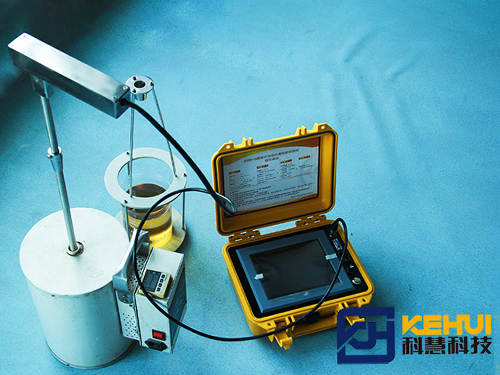
A quenchometer is a testing instrument used to evaluate the cooling characteristics of a quenching medium.
During a test, a heated probe is immersed in the medium. The instrument records how the probe temperature changes over time. This data is used to generate a cooling curve, which provides information about the medium’s cooling behavior at different temperature stages.
Unlike a conventional thermometer, a quenchometer does not simply measure the temperature of the oil. It evaluates the cooling response of a heated probe under specified test conditions.
The results can help users:
For this reason, a quenchometer is also known as a quenching tester or cooling characteristics tester.
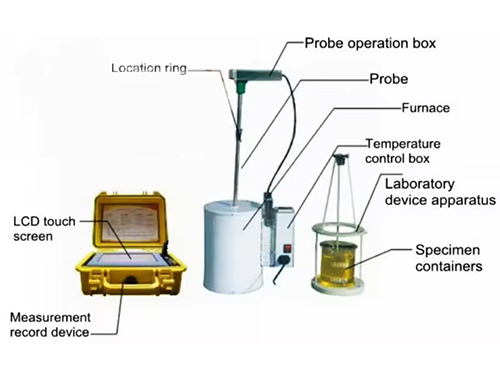
The main measurement is the temperature change of a heated probe during the cooling process.
The recorded data can be used to produce two important types of curves:
Cooling time–temperature curve: Shows how the probe temperature decreases over time after immersion in the quenching medium.
Cooling rate curve: Shows how quickly the probe temperature changes at different stages of cooling.
These curves provide more detailed information than a single temperature reading. For example, two quenching oils may have different cooling behaviors even if their overall cooling times appear similar.
By comparing the curves under consistent test conditions, users can identify differences in cooling characteristics and investigate changes in oil performance.
It is important to understand that a quenchometer tests the quenching medium, not the finished metal component. It does not directly measure workpiece hardness, microstructure, or case depth. Those properties require separate testing methods.
During heat treatment, the quenching medium removes heat from a heated metal component. Its cooling behavior influences the thermal conditions experienced by the workpiece.
If the cooling characteristics of the medium change, the actual quenching conditions may also change, even when other production parameters remain the same.
This is why monitoring quenching medium performance is important in industrial heat treatment.
Quenching oil manufacturers and heat treatment plants often need to compare different products or formulations.
A cooling curve test provides measurable information for evaluating their cooling behavior under the same test conditions. It helps technical personnel make comparisons based on test data rather than relying only on general product descriptions.
Quenching oil may change during long-term operation because of aging, oxidation, contamination, water ingress, and other factors.
Periodic cooling characteristic testing can help identify changes in the oil’s behavior. When differences are observed, users can investigate the oil condition and operating environment before making maintenance or replacement decisions.
Inconsistent quenching conditions may contribute to variations in the properties of heat-treated components.
A quenchometer provides information about one important part of the process: the cooling behavior of the quenching medium. Its results can be considered alongside hardness testing, metallographic examination, and other quality control methods.
As specialized quench testing equipment, a quenching tester is particularly useful for organizations that manufacture, use, supply, or evaluate industrial quenching media.
| Potential User | Typical Application |
|---|---|
| Heat treatment plants | Monitoring quenching oil performance during production |
| Quenching oil manufacturers | Comparing formulations and evaluating product characteristics |
| Heat treatment laboratories | Conducting controlled cooling curve tests |
| Metallurgical laboratories | Studying the cooling behavior of quenching media |
| Industrial oil suppliers | Providing technical testing support for customers |
For heat treatment plants, the instrument supports routine process monitoring. For oil manufacturers, it provides useful data for product development and quality evaluation. For laboratories, it offers a dedicated approach to cooling characteristic measurement.
As a specialized cooling characteristics tester, the KHR-A helps users obtain cooling curve data for evaluating quenching oil performance and supporting heat treatment quality control.
Choosing a quenching tester involves more than comparing equipment specifications. The manufacturer’s understanding of the testing method and experience in this specialized field are also important.
Kehui is an industrial equipment manufacturer established in 1994. The company has developed and manufactured quenching testing instruments for many years, focusing on the measurement of quenching medium cooling characteristics.
Kehui’s founder is a technically specialized professional who has devoted long-term attention to this field. This technical background has influenced the company’s product development and manufacturing approach.
According to Kehui’s historical domestic market experience, its quenching testing instruments had achieved approximately 90% market coverage in China around a decade ago. This reflects the company’s established presence in the domestic market before its current expansion into overseas markets.
Today, Kehui is promoting its KHR-A Quenchometer to international customers.
1. Designed for Quenching Medium Testing
The KHR-A is developed for evaluating the cooling characteristics of quenching media. It provides test data for understanding cooling behavior rather than directly measuring the hardness of metal parts.
2. Supports ASTM D6200 and ISO 9950
The KHR-A supports both ASTM D6200 and ISO 9950 testing methods for industrial quenching oil cooling characteristic measurement.
3. Backed by Specialized Manufacturing Experience
Kehui has been manufacturing industrial equipment since 1994 and has long-term experience in the quenching testing field.
4. Direct Manufacturer Communication
Customers can communicate directly with Kehui about their testing requirements, equipment configuration, and technical questions.
5. Overseas Supply Capability
Kehui serves international customers and can discuss equipment supply and technical support requirements for overseas projects.
For heat treatment plants, quenching oil manufacturers, and laboratories looking for a specialized quenchometer manufacturer, the KHR-A is an option worth evaluating.
A quenchometer is used to measure the cooling characteristics of quenching media, particularly industrial quenching oils. It records the temperature change of a heated probe and generates data for cooling curve analysis.
A quenchometer evaluates the cooling behavior of a quenching medium. A hardness tester measures the hardness of a material. They serve different purposes and are not interchangeable.
Typical users include industrial heat treatment plants, quenching oil manufacturers, metallurgical laboratories, and research institutions involved in quenching medium evaluation.
Yes. The KHR-A supports ASTM D6200 and ISO 9950 methods for quenching oil cooling characteristic testing.
A quenchometer can identify changes in cooling characteristics, but it cannot independently determine the exact cause of those changes or make every oil replacement decision. Test results should be considered alongside oil condition, operating records, and other quality indicators.
Reliable quenching medium testing starts with selecting equipment that matches the testing method and the requirements of your application.
With manufacturing experience dating back to 1994 and a specialized focus on quenching testing instruments, Kehui offers the KHR-A Quenchometer for customers who need to evaluate industrial quenching oil cooling characteristics.
Contact Kehui to discuss your testing requirements and learn more about the KHR-A Quenchometer.
 TAG:
We value your message!
Please fill the below, We will customized the solution to your needs.