Stock Code: 831045
Industrial Automation & Intelligence Solutions
SUMMERY: Automotive gears and bearings operate under demanding mechanical conditions. Their heat treatment processes must achieve the required material properties while maintaining consistent quality between production batches. Quenching oil is ...
Automotive gears and bearings operate under demanding mechanical conditions. Their heat treatment processes must achieve the required material properties while maintaining consistent quality between production batches.
Quenching oil is an important part of many industrial heat treatment processes. Its cooling characteristics influence heat transfer during quenching, making regular quenching oil testing valuable for production quality management.
This article explains how cooling performance affects gear and bearing heat treatment, what manufacturers should monitor, and how the KHR-A Quenchometer helps evaluate quenching oil characteristics.
In automotive heat treatment, quenching is commonly used after heating processes such as carburizing or hardening. The selected quenching medium affects how heat is removed from the component.
For many steel gears and bearing components, quenching oil is used to achieve the required cooling conditions. However, different oil formulations and operating conditions can produce different cooling behavior.
Regular quenching oil testing helps manufacturers:
The objective is not simply to achieve the fastest cooling rate. The appropriate cooling behavior depends on steel composition, component geometry, and the required heat treatment properties.
Automotive gears, including transmission gears, drive gears, and pinion gears, often undergo carburizing and quenching or other hardening processes.
During gear heat treatment, cooling conditions influence the transformation of the steel and the resulting mechanical properties.
Manufacturers need to consider:
If the cooling characteristics change, the production team may need to investigate the oil condition and review relevant process parameters.
A cooling curve provides useful data for comparing oil performance, but it cannot independently determine gear hardness, case depth, or dimensional accuracy.
Bearing components such as bearing rings, races, and other hardened steel parts require controlled heat treatment to achieve their specified properties.
In bearing heat treatment, consistent cooling conditions are important for maintaining production stability. Changes in the quenching medium may affect the cooling process and should be considered when investigating variations between batches.
Quenching oil testing helps bearing manufacturers:
The actual hardness and dimensional stability of bearings must still be verified through appropriate component inspection and testing.
The cooling behavior of quenching oil can be evaluated through several parameters:
| Parameter | What it indicates |
|---|---|
| Cooling curve | Overall cooling behavior over time |
| Maximum cooling rate | Peak cooling intensity |
| Temperature at maximum cooling rate | Temperature at peak cooling |
| Cooling rate at different temperatures | Cooling behavior across temperature ranges |
Quenching oil cooling characteristics provide useful information about the heat-transfer behavior of the medium under specified test conditions.
For example, comparing cooling curves from new oil and oil currently in service may reveal changes in cooling behavior. This information can help technical teams investigate possible oil degradation, contamination, or changes in operating conditions.
However, final component quality also depends on steel composition, heating temperature, holding time, geometry, and other production parameters. Cooling curve testing is one part of a broader heat treatment quality control process.
For manufacturers involved in automotive heat treatment, a consistent testing procedure makes oil performance evaluation more reliable.
A practical workflow includes:
Regular testing helps manufacturers build historical records instead of relying only on oil appearance or service time to judge performance.
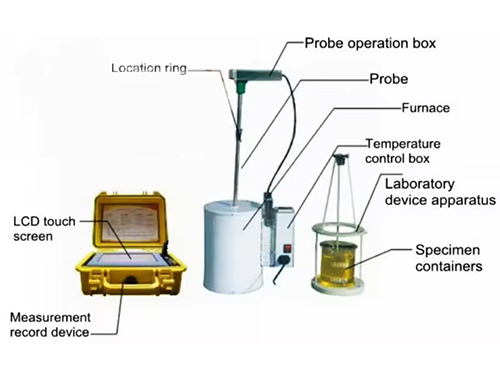
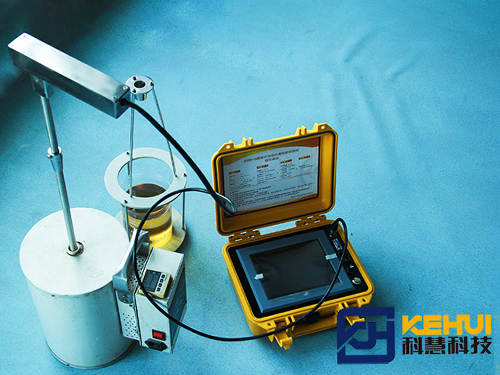
The KHR-A Quenchometer, manufactured by Zhengzhou Kehui Technology Co., Ltd., is designed to evaluate quenching medium cooling characteristics through cooling curve measurement and analysis.
The instrument fully complies with ASTM D6200 and ISO 9950 for standardized quenching oil cooling characteristics testing.
For manufacturers involved in gear heat treatment and bearing heat treatment, KHR-A can help:
Founded in 1994, Zhengzhou Kehui Technology Co., Ltd. has experience in developing and manufacturing industrial equipment. The company also provides overseas technical support, including equipment operation guidance and application assistance.
For automotive component manufacturers and heat treatment laboratories looking for quenching oil testing equipment, KHR-A offers a dedicated solution for cooling characteristic evaluation.
It helps manufacturers compare oil cooling characteristics, monitor changes during service, and support consistent gear heat treatment conditions.
Its cooling behavior influences heat transfer during quenching. Consistent oil characteristics help manufacturers manage the process, although final bearing properties depend on several factors.
It shows how a standardized probe cools in the oil over time, providing information about cooling rates and overall cooling behavior.
Testing frequency depends on production volume, oil type, operating conditions, and quality requirements. Manufacturers should establish a regular schedule and test again when significant process or oil condition changes occur.
No. A quenchometer evaluates the cooling characteristics of the quenching medium. Component hardness requires separate hardness testing.
Quenching oil testing plays an important role in automotive gear and bearing heat treatment by providing measurable information about cooling performance. Regular cooling curve testing helps manufacturers compare oil samples, identify changes, and support more consistent production management.
The KHR-A Quenchometer from Kehui fully complies with ASTM D6200 and ISO 9950, providing a dedicated instrument for standardized quenching oil cooling characteristics testing and heat treatment quality control.
 TAG:
We value your message!
Please fill the below, We will customized the solution to your needs.