Stock Code: 831045
Industrial Automation & Intelligence Solutions
SUMMERY: Quick Answer Quenching oil manufacturers need reliable testing methods to evaluate cooling performance, compare formulations, and maintain product consistency between production batches. Cooling curve testing is particularly important b...
Quenching oil manufacturers need reliable testing methods to evaluate cooling performance, compare formulations, and maintain product consistency between production batches. Cooling curve testing is particularly important because it shows how a quenching oil removes heat under defined laboratory conditions.
The KHR-A Quenchometer by Zhengzhou Kehui Technology provides cooling curve measurement and analysis for quenching oil evaluation. It fully complies with ASTM D6200 and ISO 9950, supporting standardized testing of industrial quenching oils.
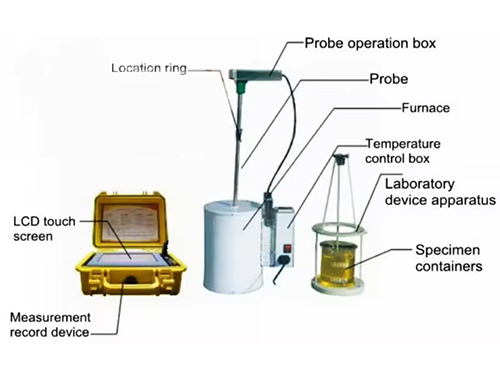
For a quenching oil manufacturer, product quality is not determined by viscosity or appearance alone. Two oils with similar physical properties may show different cooling characteristics during heat treatment.
Testing helps manufacturers:
For manufacturers developing conventional, fast-quenching, or other specialized industrial oils, consistent test conditions are essential. A reliable cooling characteristics tester helps turn product performance into measurable data rather than relying only on formulation records or customer feedback.
Quenching oil quality evaluation involves several different tests. Cooling curve analysis is important, but it does not replace conventional oil property testing.
| Testing method | What it evaluates | Typical purpose |
|---|---|---|
| Cooling curve testing | Cooling behavior and cooling rate | Compare quenching performance |
| Viscosity testing | Resistance to flow | Check physical properties |
| Water content testing | Moisture in the oil | Identify water contamination |
| Flash point testing | Ignition-related temperature characteristics | Evaluate handling and safety |
| Acid number testing | Acidic substances in the oil | Monitor oxidation and aging |
A quenchometer is designed for cooling characteristics measurement. It does not directly measure viscosity, water content, flash point, acid number, or chemical composition. Manufacturers should use the corresponding laboratory instruments and test methods for these properties.
During quenching oil formulation, manufacturers may need to compare different base oils, additive combinations, or formulation adjustments.
Cooling curve testing provides measurable information about how a formulation behaves during cooling. By comparing curves under consistent test conditions, R&D teams can evaluate whether a formulation change has affected its cooling characteristics.
This is useful for:
A cooling curve does not independently predict the final hardness or distortion of every workpiece. Actual results also depend on steel composition, component geometry, heating conditions, and the agitation and temperature of the production quenching system.
Product consistency is a major concern for quenching oil manufacturers. Even when the same formulation is used, raw material variation and production conditions may affect the final product.
A practical batch testing process can include:
Repeated cooling curve testing can help manufacturers identify performance differences between batches and maintain more consistent product specifications.
For meaningful comparisons, sample preparation, test temperature, probe condition, and testing procedures should remain consistent.
International standards provide defined procedures for evaluating industrial quenching oil cooling characteristics.
These methods help manufacturers compare different oils under standardized laboratory conditions. However, results from non-agitated tests should not be treated as direct predictions of performance in an agitated production quenching tank.
The KHR-A Quenchometer fully complies with ASTM D6200 and ISO 9950 for the applicable quenching oil cooling characteristics testing methods.
When selecting a quenching Instrument for an oil manufacturing laboratory, consider the following points:
If you are comparing a KHR-A Quenchometer with products such as the SmartQuench system or searching for a quenchotest solution, focus on the applicable standards, measurement method, testing procedure, and technical support rather than the product name alone.
Zhengzhou Kehui Technology Co., Ltd. has manufactured industrial equipment since 1994. The company developed the KHR-A Quenchometer for measuring and analyzing the cooling characteristics of quenching media.
For quenching oil manufacturers, the KHR-A can support:
The equipment fully complies with ASTM D6200 and ISO 9950. Kehui also provides equipment operation guidance and technical support for overseas customers.
The KHR-A is a specialized cooling characteristics tester, not a complete oil analysis laboratory. Manufacturers still need separate instruments for viscosity, moisture, flash point, acid number, and other physical or chemical properties.
Yes. It can help manufacturers compare cooling characteristics, evaluate formulations, and check product consistency through cooling curve testing.
No. It evaluates cooling behavior but does not replace viscosity, water content, flash point, acid number, or chemical analysis.
The KHR-A fully complies with ASTM D6200 and ISO 9950 for applicable industrial quenching oil cooling characteristics testing.
Yes. When samples are tested under consistent conditions using the same applicable method, cooling curves can provide useful comparative data for product evaluation.
For quenching oil manufacturers, cooling curve testing is an important part of product development and batch quality control. It provides measurable information for comparing formulations and evaluating cooling performance.
The KHR-A Quenchometer from Kehui offers a standardized solution for quenching oil cooling characteristics testing, supporting manufacturers in laboratory evaluation and product quality management.
 TAG:
We value your message!
Please fill the below, We will customized the solution to your needs.