Stock Code: 831045
Industrial Automation & Intelligence Solutions
SUMMERY: 1. Why Standard Cleaning Methods Fail in Lithium Battery Production In lithium battery production, the materials used to manufacture electrolytes are both flammable and chemically aggressive. Carbonate solvents such as DMC (dimethyl car...
In lithium battery production, the materials used to manufacture electrolytes are both flammable and chemically aggressive. Carbonate solvents such as DMC (dimethyl carbonate), EMC (ethyl methyl carbonate), and DEC (diethyl carbonate) have low flash points—typically between 19°C and 31°C—meaning their vapors can ignite easily. When combined with residual LiPF₆, which releases hydrofluoric acid upon contact with moisture, ordinary cleaning methods become dangerous and ineffective.
Many plant operators still rely on manual washing or non‑rated industrial washers. These approaches create three unacceptable risks: ignition of solvent vapors by unsealed electrical components, exposure of workers to HF and toxic fumes, and cross‑contamination of subsequent batches due to incomplete cleaning. This is why specialized drum cleaning systems with explosion‑proof certification are now mandatory for any serious hazardous liquid cleaning operation.
Explosion‑proof drum cleaning systems are designed to operate safely in ATEX Zone 1 or Zone 2 environments, where explosive gas atmospheres may occur. They incorporate sealed electronics, static grounding, vapor extraction, and nitrogen inerting—features that ordinary washers simply do not have.
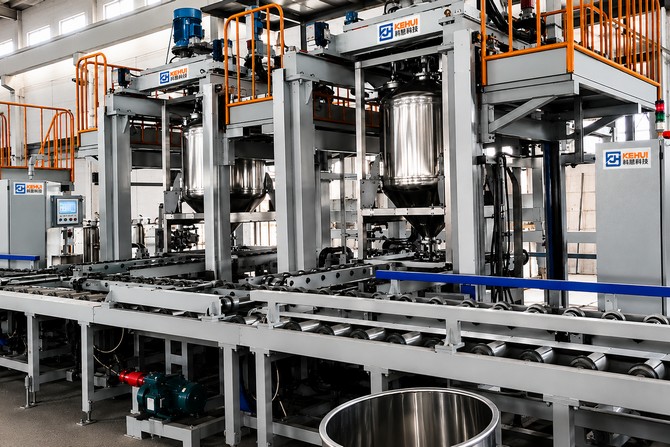
The task of cleaning chemical tanks that have held LiPF₆-based electrolyte involves several simultaneous dangers:
Flammable vapor accumulation – Residual DMC or EMC evaporates at room temperature. In a confined area (such as a wash chamber), concentrations can quickly reach the lower explosive limit (LEL).
Static discharge – High‑pressure spraying generates electrostatic charge. Without proper bonding and grounding, a spark can ignite vapors.
HF generation – If moisture is introduced before LiPF₆ residues are removed, hydrofluoric acid forms, corroding equipment and posing severe health risks.
Toxic exposure – Inhalation of solvent vapors or HF mist can cause respiratory damage, chemical burns, and long‑term organ injury.
Therefore, any electrolyte handling system that includes a container washing stage must address these hazards through engineering controls. In practice, hazardous liquid cleaning of electrolyte drums requires a fully enclosed, inert‑atmosphere, explosion‑rated machine.
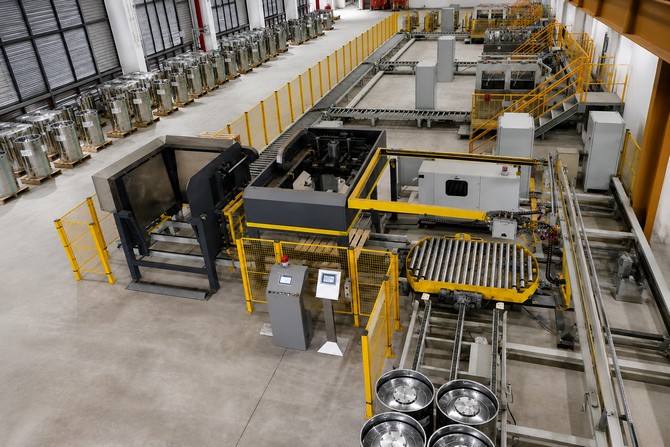
Certified drum cleaning systems for battery material applications follow several core engineering principles.
ATEX / IECEx Certification – The entire system, including pumps, motors, sensors, and control panels, must be rated for explosive atmospheres. For example, motors are typically Ex d (flameproof enclosure) or Ex e (increased safety), meaning they cannot ignite surrounding gases even under fault conditions.
Static Control – Every conductive component—the drum turntable, the wash lance, the chamber walls—is bonded to a common ground point. A continuous grounding circuit ensures that any static charge dissipates instantly. Some systems also use conductive hoses and anti‑static nozzles.
Vapor Management – An extraction fan draws air from the wash chamber through a ducted system, maintaining negative pressure. The exhausted vapors pass through a scrubber or carbon filter before release. Continuous LEL monitoring triggers an alarm and automatic shutdown if flammable gas exceeds 25% of the LEL.
Nitrogen Inerting – For electrolyte tank cleaning where solvents are used as the wash medium, the chamber can be purged with nitrogen to keep oxygen levels below 8%. In such an inert atmosphere, combustion is impossible even with an ignition source.
These features make modern drum cleaning systems fundamentally different from general‑purpose industrial washers.
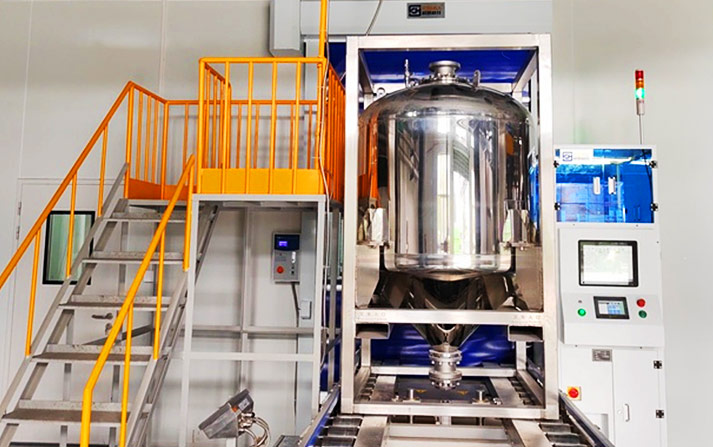
A complete hazardous liquid cleaning cycle for electrolyte drums using an explosion‑proof drum cleaning systems typically follows this sequence:
Drum loading – The drum is placed on a grounded turntable inside a sealed wash chamber. The door interlock prevents operation unless closed.
Vapor purge – The extraction fan runs for 30 seconds to remove any residual vapors. LEL sensors confirm safe levels.
Solvent pre‑rinse – Recirculated DMC is sprayed through a 360° rotating nozzle at 30–50 bar, dissolving LiPF₆ crystals without water contact.
Nitrogen inerting – The chamber is flushed with nitrogen until oxygen drops below 8%.
Alkaline wash – Heated (60–80°C) detergent is applied at 150 bar to remove organic residues.
Acid neutralization – Diluted citric or acetic acid neutralizes remaining alkali.
DI water rinse – Deionized water removes all chemical traces.
Nitrogen drying – Heated nitrogen (70°C, dew point ≤ -40°C) blows over all surfaces for 2–3 minutes.
Chamber venting – Before opening, the extraction fan clears any residual humidity.
For facilities that also perform cleaning chemical tanks (e.g., fixed mixing tanks or IBC totes), the same explosion‑proof principles apply. A robotic lance or telescopic mast can be inserted through a manway, following a programmed path to reach baffles and bottom nozzles.

LiPF₆ handling requires extreme attention to moisture. The cleaning process for drums that have held this salt must prevent any water contact until after the LiPF₆ crystals have been dissolved and removed. This is why solvent pre‑rinse is used before any aqueous stage.
In a dedicated electrolyte handling system, the cleaning station is often integrated with a solvent recovery unit. Used DMC or EMC is collected, filtered, and distilled for reuse, reducing solvent consumption by up to 60%. The recovered solvent is then returned to the pre‑rinse tank.
For electrolyte tank cleaning of larger vessels (e.g., 5,000‑liter blending tanks), the explosion‑proof system uses a longer lance or a robotic arm that enters through a manway. The same sequence of solvent flush → nitrogen inerting → heated caustic wash → acid rinse → DI rinse → nitrogen dry is followed, but with extended cycle times to account for larger surface areas.
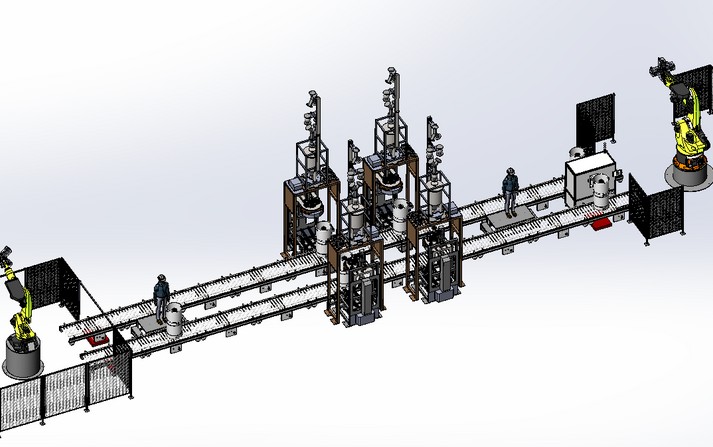
A leading Chinese electrolyte producer (not mentioned in previous articles) operates a high‑volume lithium battery production facility that supplies electrolyte to several EV battery gigafactories. The company faced frequent equipment corrosion and two near‑miss incidents of solvent ignition during manual drum cleaning. After installing Kehui’s explosion‑proof drum cleaning systems, the results included:
Zero safety incidents in 18 months of continuous operation.
Reduction in solvent consumption by 55% due to closed‑loop recovery.
Cleaning time reduced from 22 minutes per drum to 6 minutes.
Elimination of HF exposure risk – operators work only from a remote HMI.
Full compliance with ATEX and local fire safety regulations.
This installation demonstrates that hazardous liquid cleaning does not have to be dangerous. With properly engineered drum cleaning systems, battery material producers can achieve both safety and productivity.
When evaluating drum cleaning systems for your lithium battery production line, consider these technical specifications:
Certification – Is the system ATEX Zone 1 or Zone 2? Does it have IECEx certification for international markets?
Wetted materials – Are all fluid‑contact parts PTFE‑lined, PVDF, or Hastelloy? Standard 316L will pit from HF.
Solvent recovery – Does the system include distillation to recycle DMC/EMC? This is critical for cost control.
Nitrogen drying – What is the achievable dew point? For LiPF₆, -40°C or lower is required.
Data logging – Can the system produce batch reports with pressure, temperature, and humidity graphs?
Integration – Can the electrolyte handling system connect to your MES or ERP?
For cleaning chemical tanks of various sizes, ask whether the system can accommodate different manway diameters and tank depths through interchangeable lances or robotic arms.
Lithium battery production demands the highest standards of safety and purity. Ordinary washing methods are inadequate for hazardous liquid cleaning of drums that have contained LiPF₆ and carbonate solvents. Explosion‑proof drum cleaning systems with ATEX certification, static grounding, vapor extraction, and nitrogen inerting provide the only reliable solution.
Whether your application involves LiPF₆ handling, electrolyte tank cleaning, or general cleaning chemical tanks in battery material plants, Kehui offers turnkey systems that combine robotics, corrosion‑resistant materials, and full safety interlocks. Our drum cleaning systems have been proven in multiple high‑volume electrolyte facilities, delivering zero incidents and rapid return on investment.
Contact Kehui today to discuss your specific container cleaning challenges and request a technical proposal.
 TAG:
TAG: We value your message!
Please fill the below, We will customized the solution to your needs.